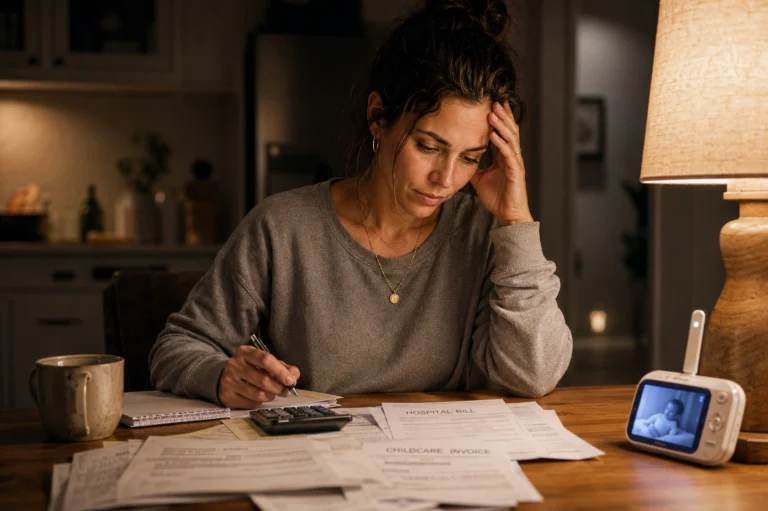

A comfort first lifestyle doesn’t need a bigger budget, just a different one. Swapping a handful of expensive comfort defaults, delivery orders, subscription boxes, impulse buys dressed up as self-care, for slower, mostly unpaid rituals commonly frees up somewhere between $50 and $150 a month, without cutting anything that actually matters to you.
This is written for women in 2026 who are tired, a little overstimulated, and ready to choose comfort on purpose instead of buying it by accident. Pinterest’s own trend forecasting for the year points to exactly this shift: people reaching for everyday rituals and safe havens instead of constant novelty. This piece turns that shift into something practical and budget-aligned, not just a mood board.
A comfort first lifestyle replaces expensive comfort habits with slower, mostly free rituals that meet the same emotional need. Built around a consistent daily sequence rather than one-off purchases, this approach commonly saves $50 to $150 a month while making daily life feel calmer, less reactive, and more genuinely your own.
What Comfort First Actually Means (And Why It Isn’t Just Indulgence)
Comfort has a branding problem. It gets filed under indulgence, treated as something you earn after a hard week rather than something you’re allowed to build a life around. That framing is exactly backwards, and it’s expensive to maintain.
Real comfort isn’t a candle or a loungewear set. It’s a repeated, reliable sequence. Morning tea on the balcony instead of scrolling in bed. Folding warm laundry slowly instead of rushing it. A specific hour where the phone goes somewhere else entirely. None of that requires a purchase. Most of it requires the opposite: fewer purchases, more repetition.

The Hard Numbers on What These Rituals Actually Save
Here’s a plain accounting of it. A single weekly delivery order swapped for a home-cooked comfort meal saves somewhere around $15 to $30 each time, adding up to $60 to $120 a month on its own. One unused subscription, the kind bought during a stressful week and forgotten, typically runs $10 to $20 a month, money spent on comfort that isn’t even being felt anymore. Add a few smaller impulse buys reframed as self-care, a $20 candle here, a $30 loungewear set there, purchased more out of habit than actual need, and the real monthly total creeps well past $100 without a single big purchase involved.
Put together, a genuinely comfort first lifestyle, one built on rituals instead of purchases, tends to free up somewhere between $50 and $150 a month, general estimate, not a specific cited figure, simply by replacing bought comfort with repeated comfort.
I am not a financial advisor and this is not financial advice. For your specific spending patterns and budget, look at your own numbers before assuming any of this applies exactly as written.
The Belief That Turns Comfort Into an Expensive Luxury
Somewhere along the way, comfort got treated as something that has to be bought to count. A candle to prove you’re relaxing. A specific brand of blanket to prove you’re cozy. A subscription box to prove you’re taking care of yourself. None of that is comfort. It’s marketing wearing comfort’s coat.

The actual belief worth retiring is this: that unpaid rituals don’t count as real self-care because they don’t come in packaging. A cup of tea in a mug you already own does the same emotional work as one bought specifically for the aesthetic. The packaging was never the point.
Comfort First Lifestyle Rituals That Actually Save Money
A comfort first lifestyle holds together through a small number of repeated rituals, not a growing collection of cozy purchases.
Rituals That Replace Spending, Not Add to It
Morning: ten minutes with a hot drink before checking a phone at all, somewhere quiet, even a balcony or a single chair by a window. Midday: a short walk instead of a delivery order eaten at a desk. Evening: folding laundry slowly, by hand, instead of speed-running it while scrolling, which sounds small and does more for a racing mind than it should. None of these cost anything beyond what’s already being spent.
Protecting your peace and protecting your money turn out to be far more connected than they first appear. Why protecting your peace and protecting your money aren’t separate goes further into that overlap, for anyone who wants to understand the deeper pattern behind it.

If a genuine small splurge still belongs somewhere in this, it’s worth choosing it on purpose rather than defaulting into it. The small splurges worth choosing on purpose covers exactly how to pick those intentionally, without letting them quietly become the whole routine again.
One habit is worth automating above the rest: moving whatever gets freed up each month, even a small amount, directly into savings before it can be spent on the next “cozy” purchase. A 90-day plan that automates the boring part walks through exactly how to set that up without needing to think about it every week.
Where This Can Go Wrong (The Comfort Trap)
Here’s the honest catch. Comfort culture online has already started selling itself back to people as a new category of spending. Branded candles. Specific blanket brands. A loungewear “capsule” that costs more than actual outerwear. The rituals above only save money if they stay unpaid rituals instead of quietly becoming a shopping list with a softer name.
Before buying anything labeled cozy, comfort, or self-care, it’s worth asking what it actually costs relative to your own time and money. The real hourly wage calculator turns that question into an actual number instead of a feeling, which makes the “is this worth it” decision a lot less foggy.
Building a Comfort First Lifestyle Season by Season
A comfort first lifestyle doesn’t look identical in July and January, and treating it like a fixed checklist is one of the fastest ways to abandon it by the second month. What holds a comfort first lifestyle together across a full year is fewer rigid rules and more seasonal permission.
In colder months, a comfort first lifestyle leans harder on indoor rituals: the balcony tea might move to a window seat instead, the folding-laundry ritual gets paired with something warm simmering on the stove instead of takeout, and the phone-down hour might start earlier simply because the evenings start earlier. None of that requires new spending, just a seasonal shift in when and where the same rituals happen.
In warmer months, a comfort first lifestyle has more room to move outdoors entirely. The community garden hour becomes easier to maintain. A short evening walk replaces some of what a heavier winter routine handled indoors. The core habits, protecting an hour, choosing repetition over purchase, stay exactly the same. Only the setting changes.
This matters because a lot of comfort-focused content assumes one static routine will carry a person through an entire year, and when it inevitably stops fitting in a different season, it gets read as failure rather than a normal, expected shift. A comfort first lifestyle that survives past a few weeks tends to be the one built with enough flexibility to bend with the calendar instead of breaking against it.
Money habits shift seasonally too, and a comfort first lifestyle that ignores this tends to quietly slip. Holiday months bring more pressure to buy comfort rather than build it, gift guides reframed as self-care, seasonal candles, limited-edition cozy sets. Naming that pressure out loud, even just privately, makes it easier to recognize when a purchase is solving an emotional need a free ritual could solve instead.
Comfort First Lifestyle Habits for Days That Do Not Go as Planned
Not every day allows for a slow morning or an unhurried folding session, and a comfort first lifestyle has to hold up on the hard days too, not just the easy ones, or it is not really a lifestyle at all.
On a day that has already gone sideways, a full ritual sequence is not realistic, and trying to force one usually backfires into guilt instead of comfort. A scaled-down version works better: choosing one ritual instead of the usual three, and treating that as complete rather than a lesser version of the plan. Five minutes with a warm drink counts. A single load of laundry folded slowly, even if the rest of the pile waits until tomorrow, counts. The point was never volume.
Travel and disrupted routines pose a similar challenge. A comfort first lifestyle does not require a specific balcony or a specific chair to work, it requires the underlying pattern: a quiet stretch of time claimed on purpose, wherever that happens to be possible that day. A hotel room windowsill works the same way a home balcony does. A phone-down hour works identically whether it happens at home or somewhere unfamiliar.
The habit worth building is not a rigid schedule. It is the smaller skill of noticing when a day has gotten loud and choosing, even briefly, to make one part of it quieter on purpose. That skill travels. A purchased routine, tied to specific products or a specific space, does not.
Building that flexibility in early avoids the common trap where a comfort first lifestyle gets treated as all-or-nothing, abandoned entirely the first week it does not go perfectly, rather than adjusted and continued. A comfort first lifestyle built around a skill rather than a set of props is the version that actually lasts past the first month, which is usually where most well-intentioned routines quietly fall apart.
Making a Comfort First Lifestyle Work When You Do Not Live Alone
A comfort first lifestyle gets harder to protect when a household includes roommates, a partner, or kids, since a quiet phone-down hour is a lot easier to claim in an empty apartment than in a shared one. That does not make it impossible, it just changes the shape of the habit.
Naming the ritual out loud to whoever shares the space tends to work better than trying to protect it silently and getting frustrated when it gets interrupted anyway. A short, specific request, ten minutes on the balcony before anyone needs anything, tends to get respected precisely because it is short and specific, not vague and open-ended. Shared households can also turn a comfort first lifestyle into something collective rather than solitary: folding laundry together instead of alone, a shared phone-down hour after dinner instead of separate corners of the house, a slow Sunday morning that includes everyone rather than requiring solitude to count.
Kids add a different kind of challenge, since a comfort first lifestyle built entirely around solo quiet time will not survive a household with young children in it. The habits still translate, just at a different scale. A ten-minute ritual can become a two-minute one, tea drunk while still technically on duty rather than tea drunk in true silence. Folding laundry slowly can happen with a toddler nearby instead of in an empty room. The emotional function, choosing to do something unhurried on purpose instead of rushing through everything, still holds even when the setting is far from peaceful.
The version of a comfort first lifestyle that assumes total solitude is not realistic for a lot of households, and it does not need to be. What matters is the underlying shift, choosing repetition over purchase, protecting a small stretch of unhurried time, not the specific configuration of who is or is not in the room while it happens.
The Quiet Rebellion of Choosing This on Purpose
If the exhaustion driving this feels financial, start with the ritual that replaces the most expensive habit first, usually the delivery order or the forgotten subscription. If it feels more like noise and overstimulation, start with the phone-down hour instead, since that’s the one doing the most emotional work regardless of budget.

Either way, comfort first lifestyle habits were never about doing less. They were about spending less on the wrong things and paying real attention to the right ones, which counts as rebellion in a world that profits when you don’t notice the difference.
People Also Ask
A few questions come up consistently around this particular shift.
What does “comfort first lifestyle” actually mean?
A comfort first lifestyle means choosing repeated, mostly free rituals, a consistent morning routine, a phone-down hour, a slower version of daily tasks, over expensive comfort purchases that provide the same feeling temporarily and cost far more over time.
How much money can comfort-focused rituals actually save each month?
Most people find somewhere between $50 and $150 a month freed up, general estimate, mainly by replacing delivery orders, forgotten subscriptions, and small impulse “self-care” purchases with repeated, unpaid rituals that meet the same need.
Isn’t prioritizing comfort just another way to justify spending?
Not when it’s built around rituals instead of purchases. The comfort first approach specifically replaces spending with repetition, a routine you can do for free, rather than adding a new category of “cozy” products to justify.
What’s the easiest comfort ritual to start with no budget at all?
A phone-down hour, even just thirty minutes in the evening with no screen at all, tends to be the easiest starting point. It costs nothing, requires no new purchase, and directly targets the overstimulation most comfort-focused spending is actually trying to soothe.s to be the easiest starting point. It costs nothing, requires no new purchase, and directly targets the overstimulation most comfort-focused spending is actually trying to soothe.