A well-made set of press-on nails costs almost nothing to produce and routinely sells for thirty dollars or more, which is the exact math that’s turned this into one of the fastest-growing creative side incomes among women who never touched acrylic or gel-nail training in their life. A press on nail business isn’t about nail school or salon experience. It’s a design and packaging business that happens to use nails as the product, and understanding it that way, as a real product business with real inventory and real customers, changes almost everything about how to actually build one from scratch.
This is not a tutorial on how to paint a French tip or apply an ombre gradient. Plenty of content already covers nail art technique. This press on nail business guide covers the earning side specifically: which design categories customers are actually searching for right now, how to build a real product catalog instead of one-off designs, how to list and photograph a set so it actually sells, where to sell, how to price honestly, and what running this as a real business, not a hobby with an Etsy shop attached, actually requires.
A press on nail business earns money by producing a catalog of pre-designed, reusable nail sets organized around specific trending categories, rather than one generic style, then selling that catalog through a platform with real buyer traffic, priced to reflect both materials and design time, not guessed at.
Why Press-On Nails Work as a Real Product Business
Unlike a service-based nail business, where income is capped by hours in a day sitting across from one client, a press on nail business works differently, a press-on set is a manufactured product. Once a design exists, it can be reproduced and sold repeatedly without redoing the creative work each time, which is the entire structural advantage over traditional salon-based nail income.
The barrier to entry is genuinely low. No cosmetology license is required to make and sell press-on nails in most states, since you’re creating a wearable product rather than performing a service on a client’s natural nails, though this varies enough by state that confirming your own state’s specific rules before selling is worth a direct check. Materials, nail tips, gel polish or nail polish, topcoat, adhesive tabs or glue, are inexpensive and widely available.
Building a Real Design Catalog Instead of One-Off Styles
The single biggest mistake beginners make when starting a press on nail business is treating each nail set as a one-time creative project instead of building toward an organized, repeatable catalog. A shop with ten to fifteen distinct, well-photographed categories reads as a real business to a browsing customer. A shop with three random, unrelated sets reads as someone still figuring things out.
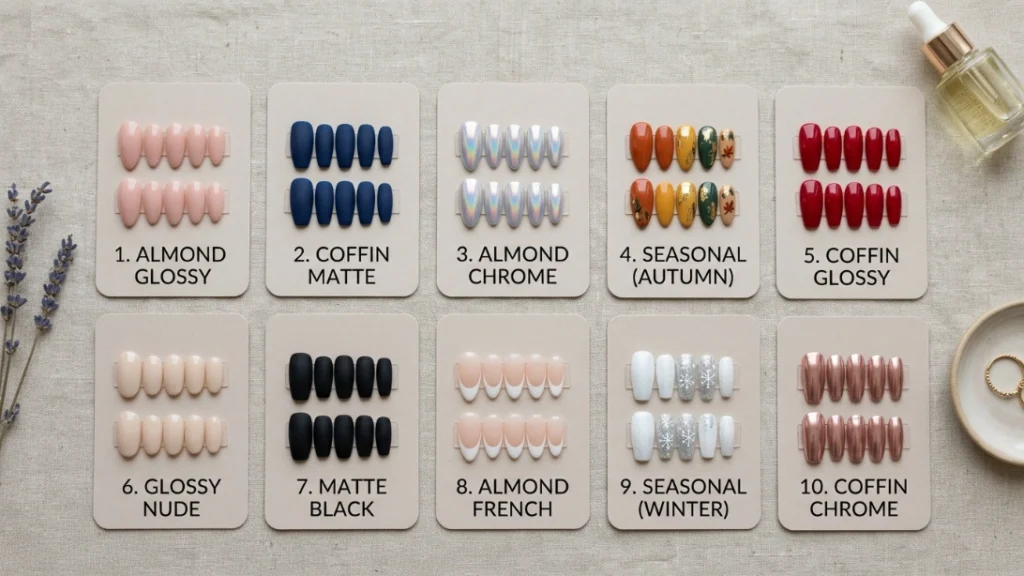
Here are the real category directions worth building a product line around, each with its own specific customer intent behind it.
Teen nails target a younger customer base looking for playful, trend-driven designs, often built around whatever’s currently popular on social platforms, bright colors, fun charms, novelty shapes.
Back-to-school nails are a genuine seasonal spike, typically searched heavily in the weeks before a new school year, built around clean, simple designs appropriate for a school dress code alongside a few bolder statement options.
Seasonal nails, built around whichever season is currently active, spring florals, autumn tones, winter metallics, function as an evergreen category that simply refreshes its specific colorway on a predictable calendar.
Holiday and month-specific nails, an August-specific back-to-school crossover set, a Halloween set, a Christmas set, a Valentine’s set, work similarly to seasonal nails but with a tighter, more urgent purchase window tied to a specific date.
Summer nails deserve their own category distinct from general seasonal design, since summer specifically tends to skew toward brighter, higher-saturation colors and vacation-themed motifs.
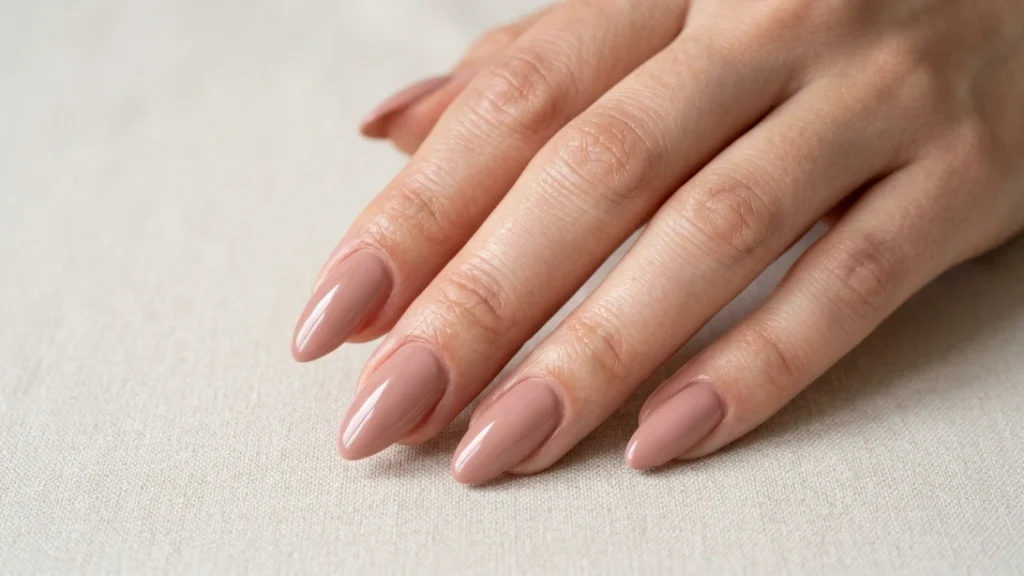
Almond-shaped nails represent one of the most consistently requested shapes, a rounded, tapered point that reads as elegant without the length or dramatic angle of more extreme shapes.
Coffin-shaped nails, squared off at the tip with tapered sides, remain one of the most searched specific shape terms in this entire space, appealing to a customer looking for a bolder, longer look.
Glossy finish nails, a high-shine topcoat applied over any design, function less as a standalone category and more as a finish option that should be available across your entire catalog.
Matte finish nails work as the natural counterpart to glossy, appealing specifically to a customer who finds high-shine finishes too flashy, and offering both finishes on your most popular designs effectively doubles your addressable catalog.
Short and natural-length nails matter as a category too often ignored by sellers who default to longer, more dramatic lengths, expanding your buyer pool meaningfully for workplace-restricted customers.
Ten distinct categories, each with a real, specific customer intent behind it, gives you a genuine catalog rather than a scattered handful of designs, and it’s worth building toward covering most or all of these before expecting consistent, category-driven search traffic to your shop rather than relying on luck or a single viral post to carry sales.
How Designs Actually Get Created, at the Business Level
The creative process itself, applying color, adding detail work, sealing a finish, isn’t the focus of this press on nail business guide, but understanding how design creation fits into a real production workflow matters for anyone treating this as a business rather than a craft hobby.
Batch producing a design, making several identical or near-identical sets of your best-selling styles at once rather than one at a time, is what separates a business that can actually fulfill consistent order volume from one that bottlenecks on a single seller hand-making everything reactively. Keeping a simple reference system, a photo and a written note of exactly which products and technique created each design, matters enormously once a specific style starts selling well.
Photographing and Listing a Set That Actually Sells
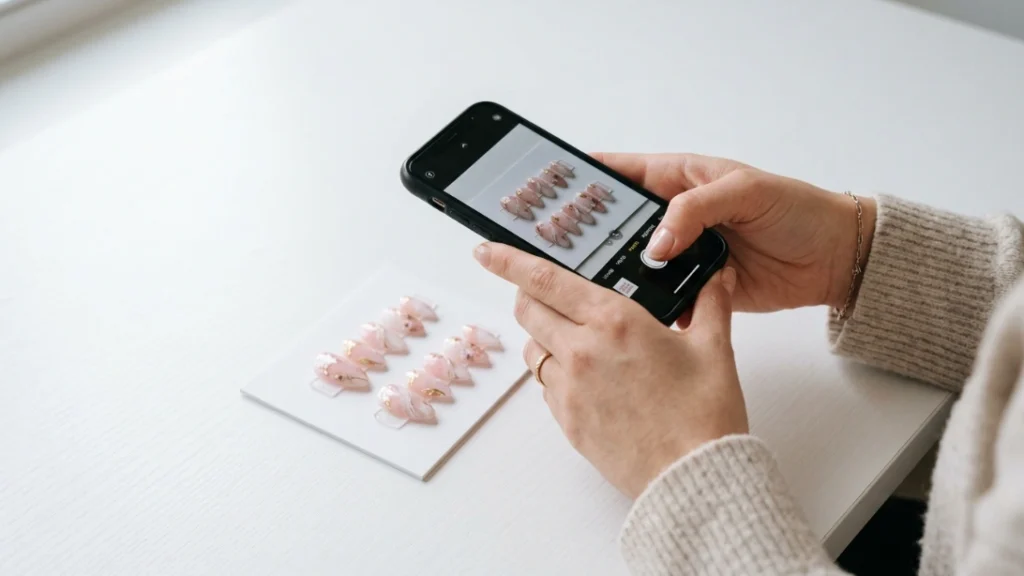
For any press on nail business, a press-on nail set is an entirely visual purchase decision, a customer can’t touch or try it before buying, which makes photography and listing quality genuinely as important as the design itself.
Clean, well-lit photos showing the full set laid out, plus a close-up detail shot, plus a photo showing the set actually worn on a hand, cover the three angles a buyer needs to make a confident decision. Listing titles should speak directly to the specific category and occasion, “almond shape coffin nails for back to school” rather than a vague “cute nail set.” Including sizing information clearly reduces the single most common source of a negative review in this product category, a set that simply didn’t fit.
Where to Actually Sell: Platforms Compared Honestly
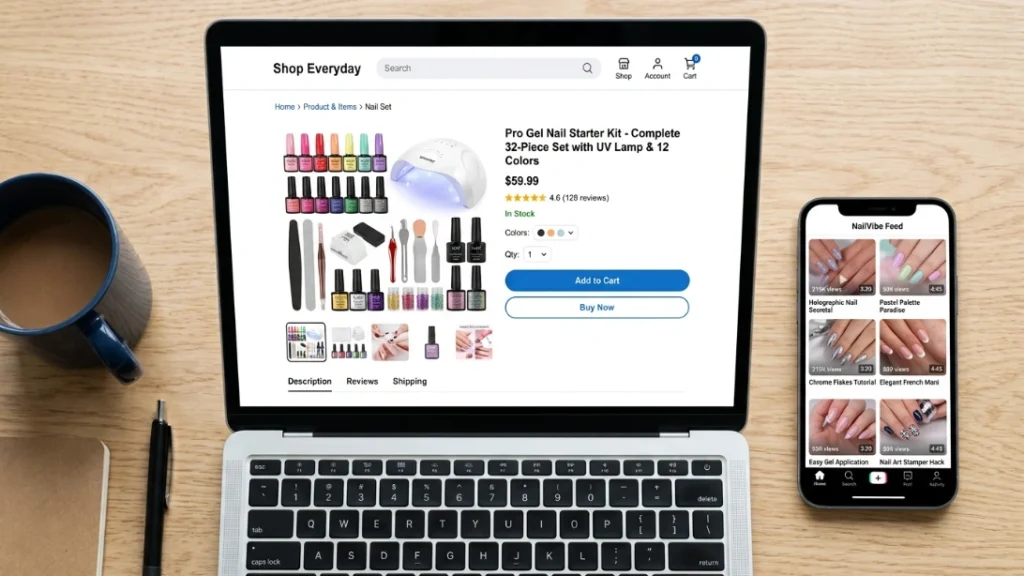
For a press on nail business just starting out, Etsy remains one of the most accessible starting points specifically because it puts your listings in front of buyers already searching with purchase intent. The tradeoff is Etsy’s listing and transaction fees, worth factoring directly into pricing.
A standalone website through a platform like Shopify removes marketplace fees and gives full control over branding, but it requires building your own traffic, since a new standalone site has no built-in buyer discovery the way a marketplace does. This tends to make more sense once a design catalog and customer base already exist somewhere else first.
Social platforms function less as a direct sales channel and more as the discovery engine that drives traffic to wherever your actual storefront lives. A process video showing a design coming together performs well specifically because press-on nails are an inherently visual, satisfying product to watch being made.
Pricing Honestly: What Actually Goes Into the Number
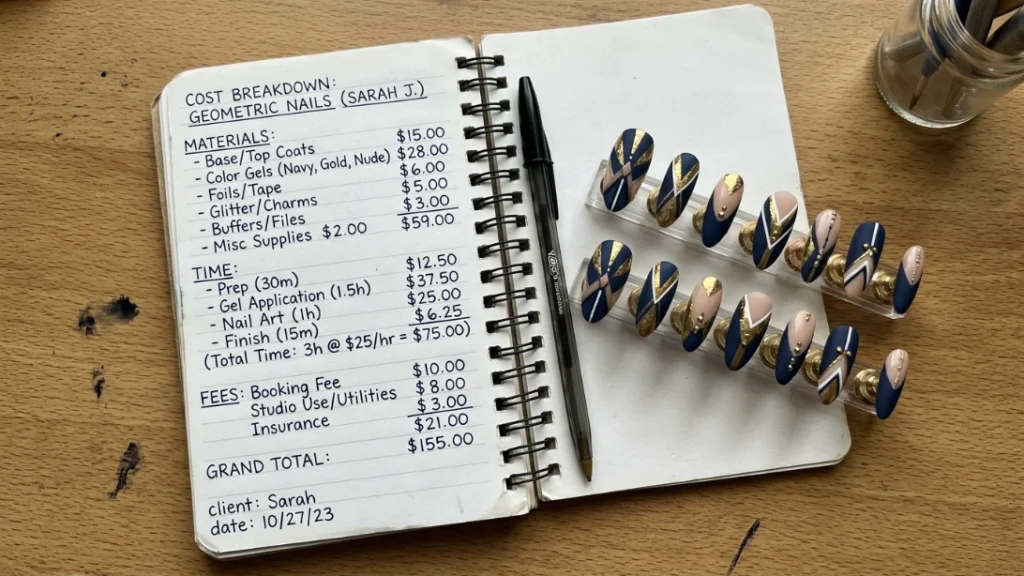
Pricing a press on nail business needs to account for materials, design time, and packaging, not just materials alone, which is the most common underpricing mistake in this specific niche. A set that took genuine design time, layered detail work, hand-placed charms, is worth meaningfully more than a simple single-color set.
Factor platform fees directly into your listed price rather than absorbing them silently, since a fee that quietly eats fifteen or twenty percent of a sale price adds up meaningfully across volume. Shipping materials, a protective box, tissue, a care card, are a real cost too, small individually but worth including in your actual calculation.
I am not a financial advisor and this is not financial advice. If you’re scaling this into a registered business with real revenue, particularly around sales tax collection across states, talk to a qualified professional about the specific requirements for your situation.
What This Genuinely Earns, Honestly
There’s no single verified income figure for a press on nail business worth presenting as typical here. No government labor data source tracks this specific microbusiness category, and the specific dollar projections found circulating in competitor content online are hypothetical math built on assumed sales volume, not measured, reported income, which means repeating them as fact would be presenting a guess as data.
What can be said honestly: income in this category scales directly with catalog breadth, consistency of new designs, and how effectively a seller builds a repeat customer base rather than relying entirely on one-time buyers.
Setting Up the Business Side Before Your First Sale
A few practical business steps protect you and make a press on nail business feel like a real operation rather than a hobby the moment real money starts changing hands. Deciding on a business name and checking it’s genuinely available, both as a shop name and a social media handle, avoids confusion later. Opening a separate bank account for business income and expenses makes tracking actual profit dramatically simpler.
Most states require some form of general business registration once you’re operating with real, ongoing intent to profit, distinct from occasionally selling a handmade item as a casual hobby. Confirming your specific state and local requirements directly protects you from an avoidable compliance issue down the line.
Packaging and Shipping: The Details That Build a Repeat Customer
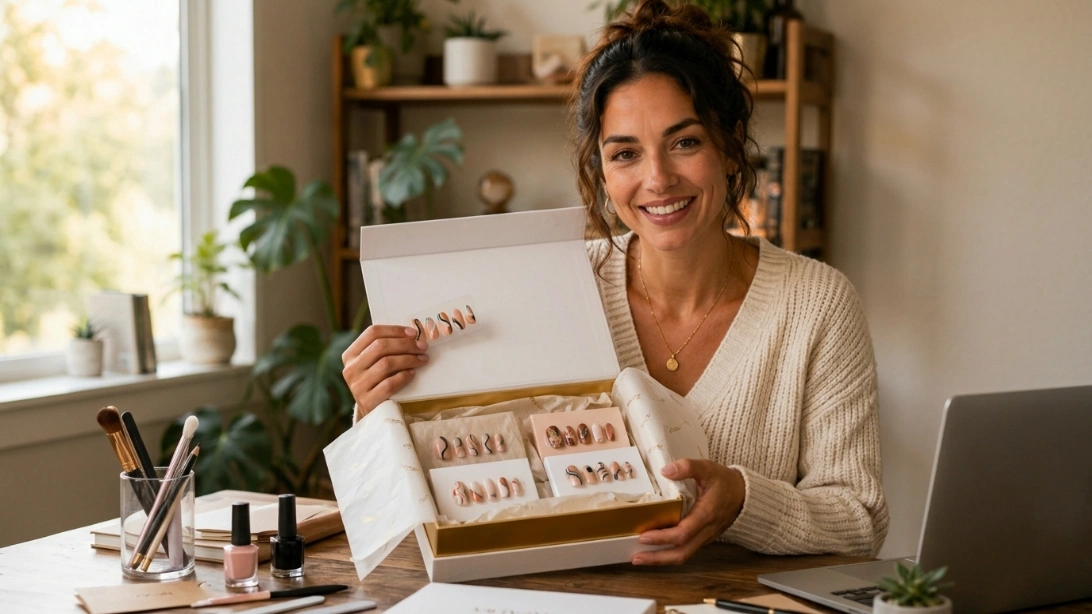
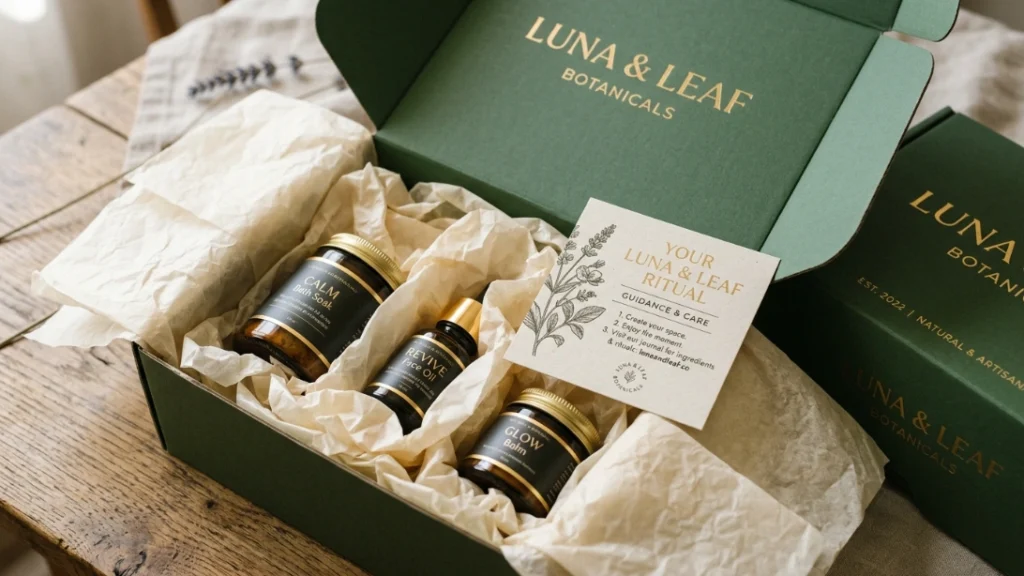
How a finished set arrives matters nearly as much as the design itself for turning a first-time buyer into a repeat one. A simple protective box, tissue paper, and a small printed care card with application and removal instructions signal genuine professionalism, and the care card specifically reduces a real, common source of frustration.
A small handwritten thank-you note or a discount code for a future order, tucked into the packaging, costs almost nothing but meaningfully increases the odds of a repeat purchase.
Handling Custom Orders Without Losing Your Margin
Custom orders, a specific color match, a name or initial added, a size adjustment, need their own pricing logic rather than being treated as a free add-on. Setting a clear, stated custom order premium, and being upfront about it in your listing, protects your time and prevents custom work from quietly becoming unprofitable.
Building a few pre-approved customization options, a choice of three accent colors, a small selection of add-on charms, rather than fully open-ended custom requests, keeps custom orders manageable at scale.
Staying Current: Why Trend Research Is an Ongoing Job
A press on nail business doesn’t run on a design catalog built once and left alone. Nail trends genuinely shift across seasons and even month to month within a single category, which means the research side of this business is an ongoing habit, not a one-time setup task.
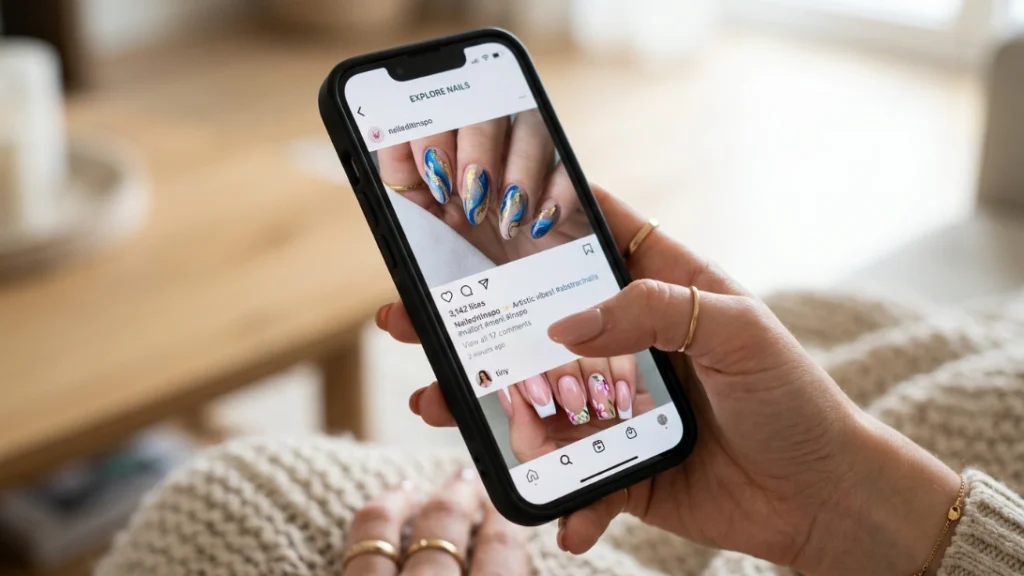
Watching which shapes, colors, and finishes are gaining search interest keeps a catalog from quietly going stale. Retiring underperforming designs from a catalog periodically, rather than letting every design ever made sit indefinitely, keeps a storefront feeling current and curated rather than cluttered.
Reviews and Reputation: The Long Game
Early reviews matter disproportionately for a new press on nail business, since a handful of genuine, detailed reviews, particularly ones mentioning fit, durability, and how a design looked in person compared to photos, do more to convert a hesitant new buyer than almost any other single factor.
Following up with buyers after a reasonable window, checking whether the set arrived well and fit properly, both catches a genuine fit or shipping problem before it becomes a public negative review, and signals a level of care that a purely transactional seller rarely bothers with.
Scaling Beyond Solo Production
Once demand genuinely outpaces what one person can hand-produce, a few realistic scaling paths exist without requiring a full manufacturing operation or major outside investment. Batch-producing your most consistently popular designs ahead of anticipated demand converts unpredictable, reactive work into planned production runs.
Bringing on help for the more repetitive parts of production, prepping tips, applying base coats, packaging finished orders, while keeping the actual creative design decisions in your own hands, is a reasonable middle step. Wholesale relationships, supplying a small local boutique or salon with a curated selection of your designs, represent a genuinely different growth path, trading a lower per-unit price for the stability and volume of a standing order relationship.
But I’m Not Actually Artistic Enough for This
That’s the specific doubt that stops more women from starting a press on nail business than pricing confusion or platform choice ever does, and it’s worth answering directly instead of glossing past it. The truth is that a strong, sellable catalog depends far more on consistency, clean photography, and picking the right categories than it does on advanced artistic skill. A well-executed simple design, a clean single color in almond shape with a glossy finish, photographed properly and listed with a specific, searchable title, will consistently outsell an ambitious, complicated design that’s poorly photographed or buried in a vague listing.
The skill that actually determines whether this becomes real income isn’t nail art talent, it’s the willingness to treat this as a genuine catalog business: ten categories built deliberately instead of three made on a whim, pricing that accounts for real time and materials instead of a guess, and photography that gives a design its best possible chance to be found and trusted by someone who’s never met you. A press on nail business rewards that kind of consistency far more reliably than it rewards raw creative talent alone, which is exactly why this is realistically buildable by far more women than the “I’m not artistic enough” doubt tends to allow them to believe.
People Also Ask
How many nail design categories should a shop offer?
Ten or more distinct, well-photographed categories tends to outperform a narrow catalog of two or three styles, since a broader catalog connects with a wider range of specific customer searches.
Do I need a license to start a press-on nail business?
In most states, no cosmetology license is required, since you’re producing a wearable product rather than performing a service on a client, though confirming your specific state’s requirements is worth checking directly.
Can you make good money selling press-on nails as a side business?
Income varies significantly and no verified, reliable data source tracks this specific microbusiness category directly, but sellers who build a broad, well-photographed catalog and maintain consistent production tend to see stronger, more consistent results.
What nail shape sells best for a press-on nail business?
Almond and coffin shapes are consistently among the most searched and requested, though offering both, along with a shorter, more natural option, expands your addressable customer base.
Is Etsy or a personal website better for selling press-on nails?
Etsy tends to work best for beginners since it provides existing buyer traffic without requiring you to build an audience first, while a personal website makes more sense once a catalog and customer base already exist.
How long does it take to build a profitable press-on nail catalog?
There’s no universal timeline, but most sellers describe the first few months as primarily a testing and refinement period rather than one focused on maximizing revenue immediately.
What’s the biggest pricing mistake new press-on nail sellers make?
Pricing every design identically regardless of actual design complexity, materials, or time invested, which quietly erodes profit on the most labor-intensive sets in the catalog.
Read More: Nobody Co-Signed This eBay Shop. That Was Kind Of The Point.