
Somewhere between scrolling past someone else’s success story and actually sitting down to try it, most women talk themselves out of a mom coloring book business before they’ve even opened a design tool. That hesitation is worth naming honestly before anything else: is this actually a good idea, or is it another oversaturated trend everyone’s chasing at the same time. The honest answer is both things can be true at once. The category is real and genuinely accessible, and it’s also crowded enough that a generic, undifferentiated coloring book won’t do much. What actually works is narrower, more specific, and built around real content, not luck.
This is the full walkthrough, not a vague overview. Whether a mom coloring book business is worth starting right now, the real categories that exist beyond basic coloring pages, calligraphy and handwriting practice books, baby activity books, drawing prompt books, how to actually use AI tools like ChatGPT and Claude to generate real content and ideas instead of guessing, how to design print-ready pages in Canva without any illustration background, which POD platforms handle printing and delivery so you never touch inventory, why starting on Etsy first and building a personal brand later is the smarter sequence, and what this can honestly earn.
A mom coloring book business works by combining AI-assisted content research, simple design tools like Canva, and print-on-demand platforms that handle printing and shipping, so you can create and sell coloring, activity, and handwriting practice books without ever holding physical inventory. Starting on Etsy first lets you test which books actually sell before investing time into a personal brand around your own website.
Is This Actually a Good Idea? The Honest Mindset Answer
Before any of the mechanics matter, the honest mindset question deserves a real answer instead of blind encouragement. This is a legitimately low-cost, low-risk way to start a creative income, since print-on-demand means you never pay to print a single book until someone buys it, which removes the biggest financial risk most physical product businesses carry. It’s also genuinely competitive, plenty of sellers are already in this space, which means a generic “coloring book for kids” with no specific angle will struggle to be found at all.
The women who actually make this work pick a specific, narrow niche, toddlers learning animal names, a specific handwriting curriculum gap, calligraphy practice for beginners, rather than trying to compete on the broadest possible category.
It’s also worth being honest about the time investment. This isn’t a same-week payoff business. Researching a niche, generating real content, designing clean pages, and publishing a first book realistically takes several weeks of focused effort before the first sale happens, and building any kind of consistent income from it takes months of publishing multiple books, not one. That’s not discouragement, it’s an accurate expectation, since the biggest reason women quit this kind of business isn’t that it doesn’t work, it’s that they expected results faster than the model actually delivers.
The Real Categories: Coloring, Activity, and Handwriting Books
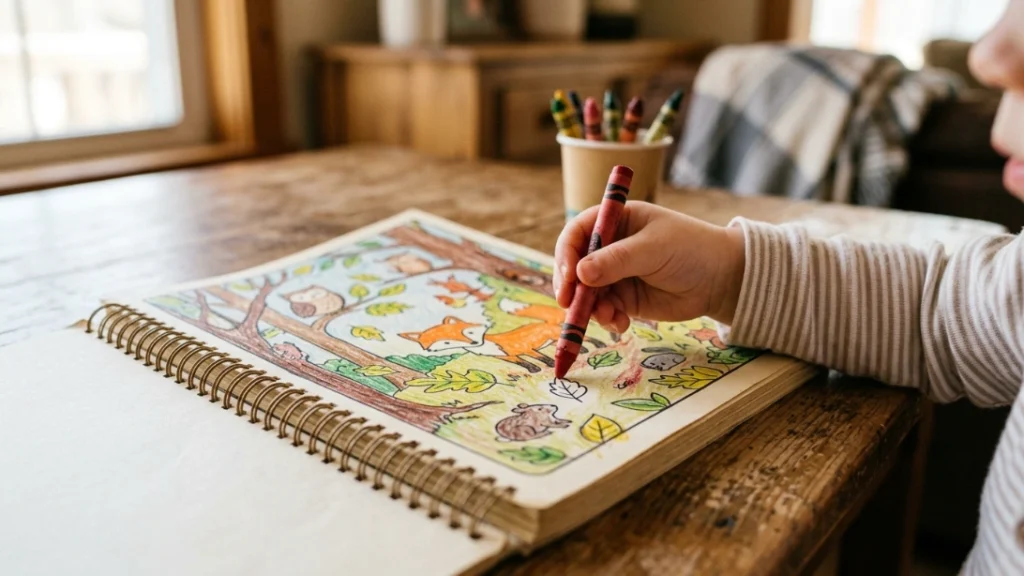
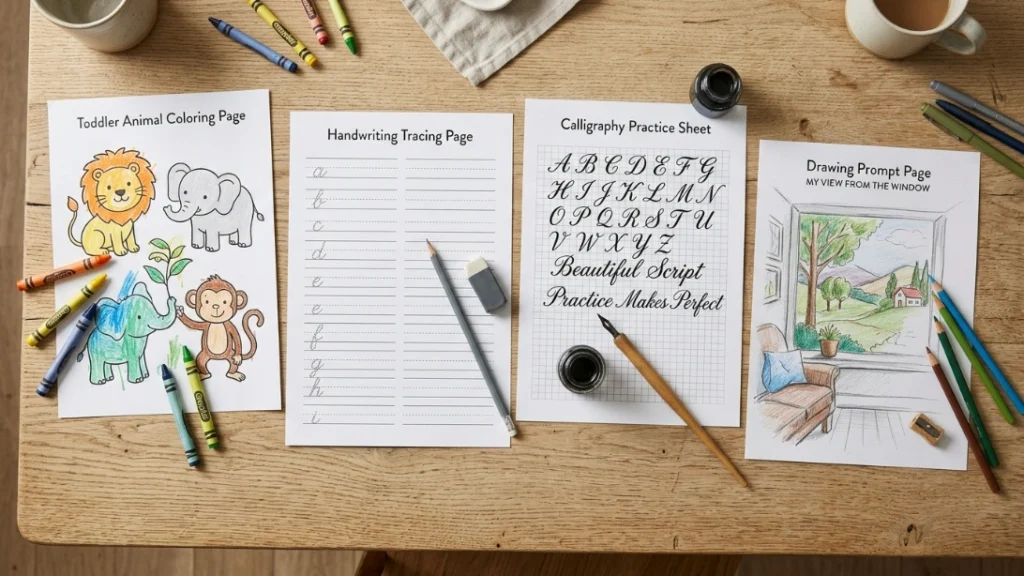
The real categories in this space go well beyond a single generic “coloring book.” Coloring books for babies and toddlers, thick simple shapes, high contrast, animals and everyday objects, are one of the most consistently searched categories, since parents are actively looking for age-appropriate options their child can actually use safely and independently. Coloring books for slightly older kids can layer in early letter and number recognition alongside the coloring itself, combining two purchase motivations into one product.
Handwriting and calligraphy practice books are a genuinely underused category compared to how much search demand exists for them. A tracing-based handwriting practice book for kids learning cursive, or a beginner calligraphy practice book for adults learning a specific lettering style, both solve a real, specific problem rather than just providing entertainment, which tends to make them easier to market with a clear, benefit-driven description rather than a vague “fun coloring book” pitch.
Drawing prompt books, a page with a partial image or a themed prompt inviting the child or adult to finish the drawing, are a step up in creative engagement from straightforward coloring, and they perform well as a “next product” for a customer who already bought a coloring book from your shop, since it’s a natural upsell within the same audience.
Beyond these four core categories, there’s a wider range of specific niches worth knowing about before picking a starting point. Montessori-style activity books, built around real-world skill sequences rather than entertainment alone, tapping and matching, practical life skills, tend to appeal to a specific, engaged parent audience willing to pay a premium for something that reads as genuinely educational rather than purely decorative. Seasonal and holiday-themed coloring books, built around a specific event rather than a year-round general theme, create natural, repeatable sales spikes tied to a calendar rather than competing for attention constantly against the entire year-round market.
Faith-based and cultural coloring or activity books, built for a specific community’s holidays, values, or language, are consistently underserved relative to how specific and loyal that audience tends to be once they find a seller who genuinely understands what they’re looking for. Special needs and sensory-friendly activity books, larger print, simpler shapes, calming themes designed for children with sensory processing differences, are a smaller but genuinely underserved niche with parents actively searching for exactly this kind of specificity and rarely finding it.
Using AI Tools to Generate Real Content, Not Just Guess
Generating real content ideas is where most beginners either waste weeks guessing or lean on AI tools like ChatGPT and Claude the right way. The correct use of these tools isn’t asking for finished artwork, current AI image generation still struggles with the clean, consistent line work coloring books actually need. The real value is using AI for research and structure: generating a list of age-appropriate themes within a niche, drafting the specific sequence of letters or words for a handwriting practice book in a logical learning order, or outlining a full 30-page book structure so you’re not starting from a blank page every time
A useful actual prompt pattern looks like this: asking the AI tool to list twenty specific, narrow niche ideas within a broader category, toddler coloring books specifically, rather than a single broad idea, then asking it to outline a full page-by-page structure for the strongest one, including which concepts build on each other in a sensible learning order. That structure becomes your actual content plan, which you then execute visually yourself or with simple design tools, not something the AI hands you finished.
Start with a broad category like toddler coloring books and request twenty specific niche ideas with brief notes on their uniqueness. From this list, choose an idea, such as farm animals with simple sound-word labels for toddlers. Then, build on that by asking for a detailed 24-page structure, including the order of animals, repetition strategies, and content outline, which can be directly used in design tools like Canva, avoiding the vagueness of figuring out the theme page by page.
Designing With Canva: No Illustration Background Required
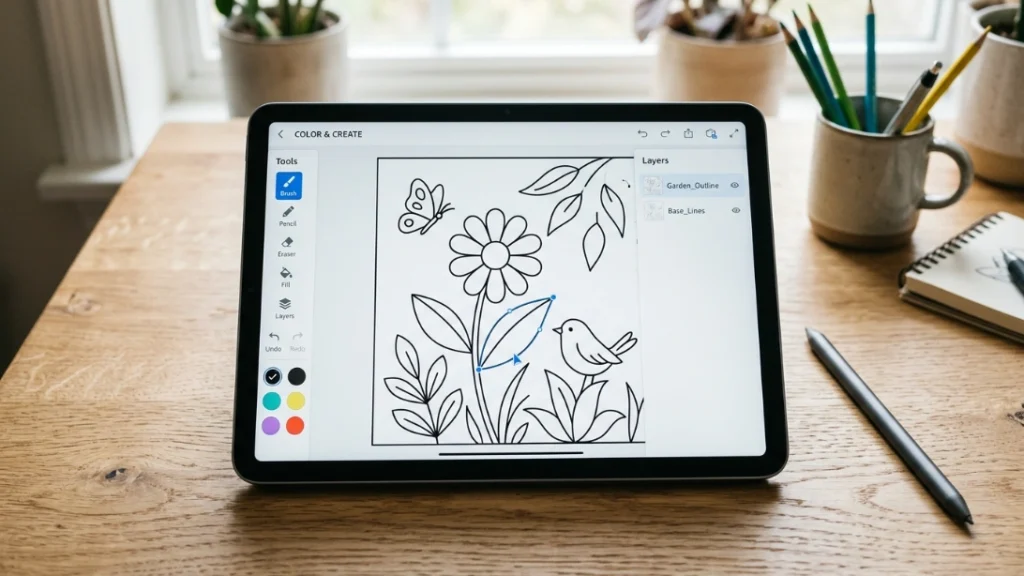
Designing the actual pages doesn’t require an illustration background if you approach it the right way. Canva has become the standard entry point for this because it includes searchable coloring-page-style elements, simple line art graphics that can be arranged, resized, and combined into original page layouts without drawing anything from scratch. Building a coloring or activity book in Canva means creating one consistent page template first, matching margins, a consistent trim size, consistent line weight, then duplicating that template and swapping in different elements page by page, which keeps the entire book looking cohesive rather than like a random collection of unrelated pages.
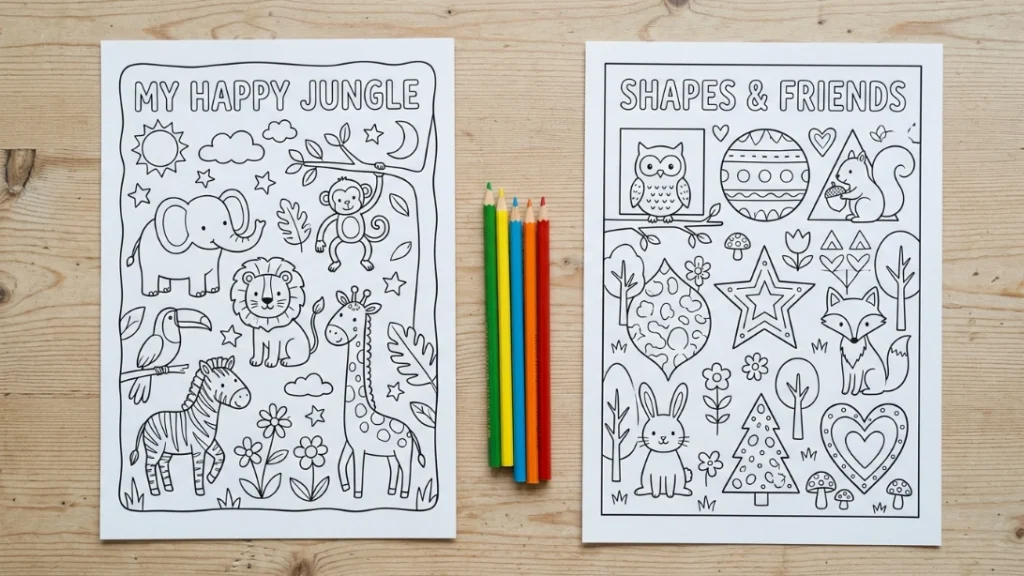
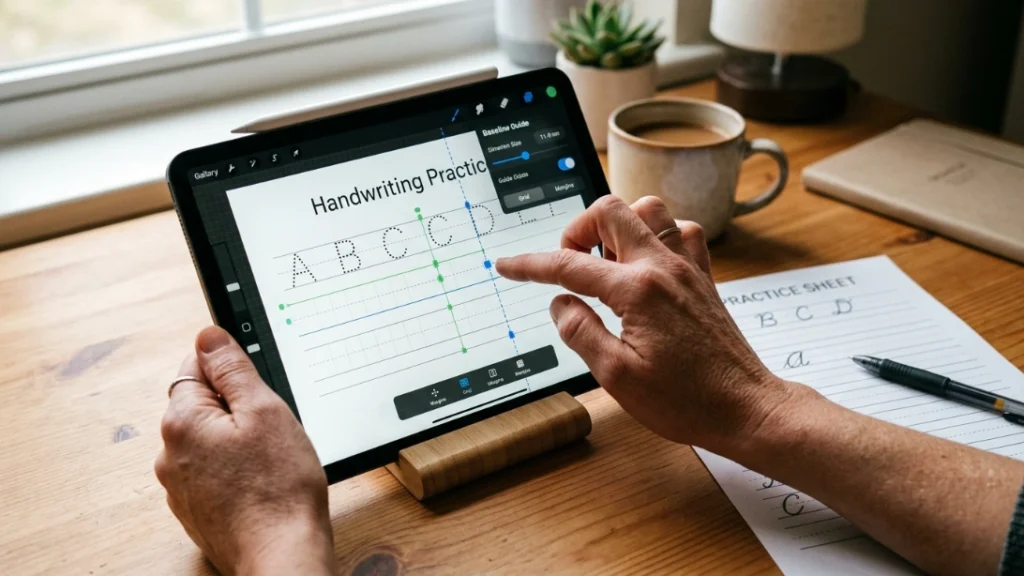
For handwriting and calligraphy books specifically, Canva’s grid and alignment tools matter more than the decorative elements, since consistent letter spacing and baseline alignment across every page is what actually makes a tracing or practice book usable rather than frustrating. A beautifully designed page that doesn’t align properly for a child’s hand to trace defeats the entire purpose of the product.
Trim size and page count decisions matter more than most beginners realize, and they’re worth deciding before you start designing rather than after. An 8.5 by 8.5 inch square format is one of the most common choices for children’s coloring and activity books, since it feels appropriately sized for small hands without being unwieldy, while a standard 8.5 by 11 inch format tends to suit handwriting and calligraphy practice books better, since it more closely matches the paper size people are already used to writing on.
Page count directly affects your printing cost through most POD platforms, so a shorter 20 to 24 page book keeps your production cost lower and is a reasonable size for a first test product, while a fuller 40-plus page book suits a proven niche you’re ready to invest more fully into.
Mom Coloring Book Business Basics: POD Platforms That Handle Printing and Delivery
Print-on-demand platforms are what let this entire business exist without ever holding inventory. These services print a physical book only after a customer orders it, ship it directly to the buyer, and pay you a royalty on the difference between the sale price and the printing cost, meaning there’s no upfront cost to producing a book and no unsold inventory sitting in a closet. This is the mechanism that makes a mom coloring book business realistically startable with almost no capital, the only real cost is your own time.
The tradeoff with pure POD publishing platforms is that they typically function as their own marketplace with their own search and discovery system, competing directly against every other seller on that same platform. This is exactly why starting with a marketplace like Etsy alongside or instead of a closed POD-only platform tends to work better for beginners specifically.
Start on Etsy First, Build Your Personal Brand Later
Etsy solves a different problem than a POD-only platform does: it gives you an existing audience actively searching with buying intent, without requiring you to build traffic from scratch. Listing digital coloring pages as instant downloads, or physical books fulfilled through a connected POD service, lets you test which specific niche and design style actually sells before investing serious time into a fully built personal brand and standalone website.
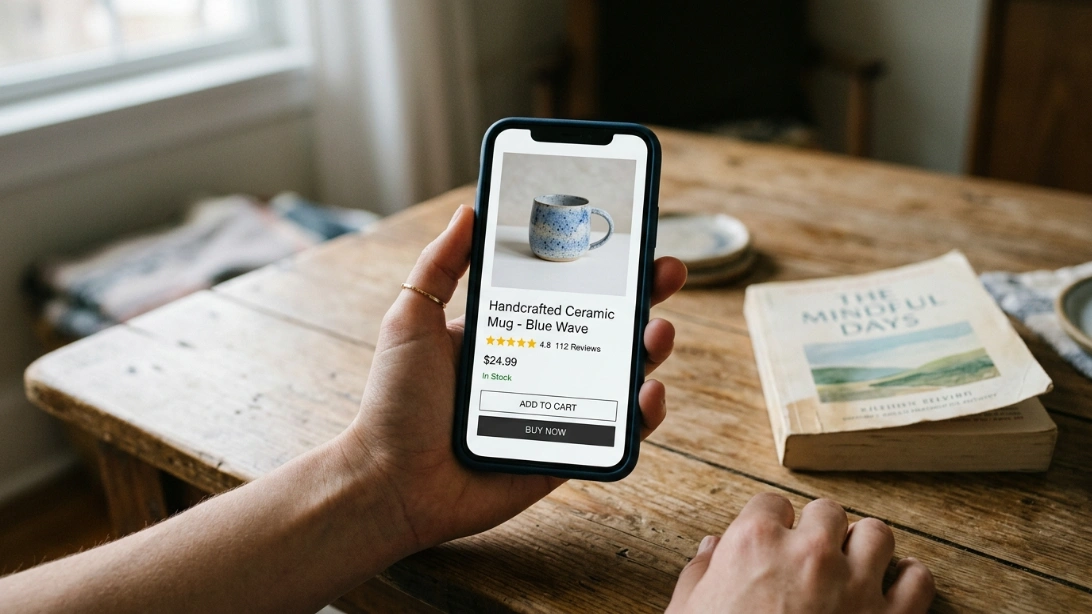
Starting on Etsy first and building a personal brand later isn’t a compromise, it’s the correct sequence for almost every seller in this category. Etsy tells you, through actual sales and favorites, which niche and style resonates before you’ve invested in a logo, a branded website, or a marketing plan built around guesswork. Once a specific book or series consistently sells, that’s real evidence to build a personal brand around, rather than guessing what a personal brand should represent before you have any data at all.
The transition typically looks like this: once a specific book or theme proves itself on Etsy through consistent sales, expand that same successful concept into a small connected series rather than jumping to a completely different niche, then build a simple personal website specifically to house that proven series, using it to capture repeat customers directly rather than paying Etsy’s marketplace fees on every single sale indefinitely. The personal brand comes after the proof, not before it.

I am not a financial advisor and this is not financial advice. If you’re planning to register this as a formal business, particularly around sales tax collection across states or forming an LLC, talk to a qualified professional about the requirements in your specific situation.
Pricing: Digital Downloads Versus Physical POD Books
Pricing digital downloads differently from physical POD books is worth understanding from the start, since they solve different customer needs. A digital, printable coloring book sold as an instant download has effectively no marginal cost per sale beyond the platform’s transaction fee, which means it can be priced lower to encourage volume while still carrying a strong margin. A physical book fulfilled through a connected POD service carries a real per-unit printing cost that gets subtracted from the sale price before your royalty is calculated, so pricing needs to account for that printing cost plus a genuine profit margin, not just what feels competitive against other listings.
Many successful shops in this space offer both versions of the same book, the lower-priced digital download for a budget-conscious buyer and the physical printed version for someone specifically wanting something to hold and use directly, which captures two different buyer intentions from the exact same content investment.
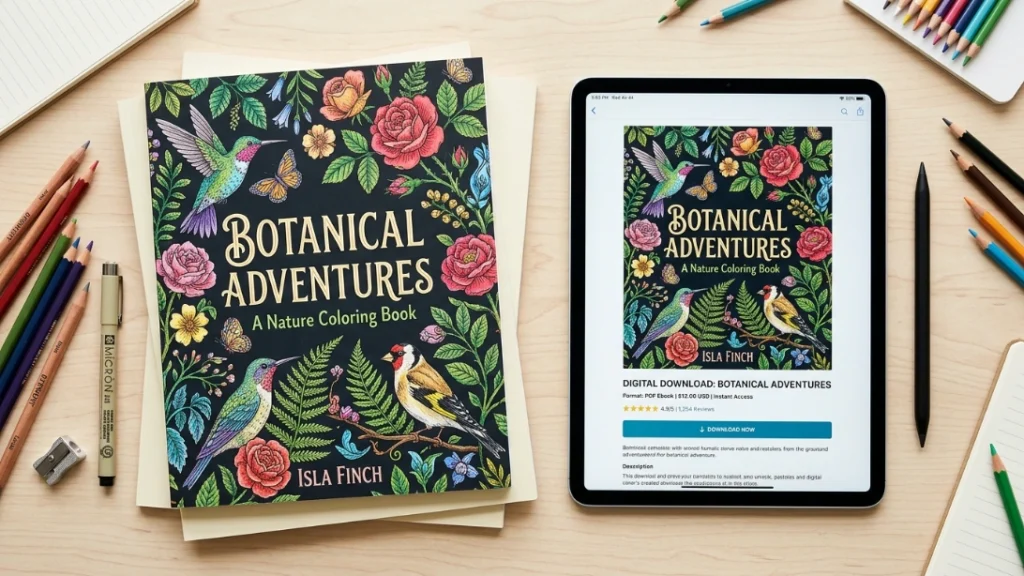
Good listing photos matter as much in this category as the book content itself, since a buyer can’t flip through the pages before purchasing the way they could in a store. A simple, well-lit photo of the physical book alongside a few sample interior pages shown at a readable size, plus a photo showing the book actually being used, a child’s hand mid-coloring, or a pencil resting on a completed tracing page, does far more to convert a browsing shopper than a plain cover image alone.
This is also where a genuine, specific niche pays off again in the listing itself: a title and description built around “farm animal sound words for toddlers just starting to talk” gives a searching parent an immediate, specific reason to click, in a way a generic “cute animal coloring book” title never will.
The Honest Numbers on What This Can Actually Earn
There’s no single verified income figure specific to this niche worth presenting as typical, since results vary enormously based on niche selection, number of books published, and how consistently new content gets added over time.
What can be said honestly, grounded in real labor data rather than a borrowed number, is this: the Bureau of Labor Statistics reports the median annual wage for writers and authors, a broader category that includes self-published creators, was $72,270 in May 2024, notably above the median wage of $49,500 across all occupations nationally, and many writers and authors are self-employed, meaning this kind of independent, content-driven income is a well-documented and viable path, even though that broader wage figure isn’t specific to coloring book publishing alone.
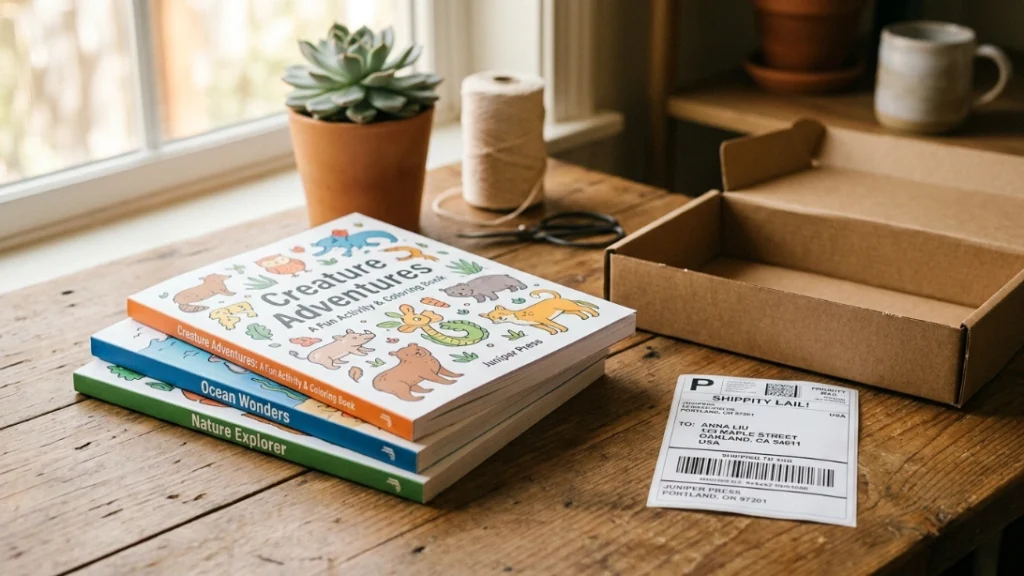
What genuinely drives income in this specific niche is publishing volume and niche specificity, not any single bestselling book. Sellers who treat this as a catalog business, consistently publishing new, narrowly targeted books over months, consistently outperform sellers who publish one book and wait, since a larger catalog means more chances to rank in search on Etsy or a POD platform, and more opportunity for repeat customers to find a second and third book from the same shop.
The Real Learning Curve, and How Long It Actually Takes
The real learning curve here is shorter than most people expect for the design side, and longer than most people expect for the research and positioning side. Learning Canva’s basic layout and template tools well enough to produce a clean, consistent book typically takes a few focused practice sessions, not weeks, since the tool is genuinely built for non-designers. What actually takes longer to learn is picking a niche specific enough to stand out, since the instinct for most beginners is to start too broad, “coloring books for kids,” rather than something searchable and specific, “coloring books for toddlers learning farm animal names.”
Using AI tools well is also a real skill that improves with practice rather than something you either know or don’t. The first few content outlines generated through ChatGPT or Claude are rarely as tight or as well-sequenced as the fifth or sixth attempt, once you’ve learned which specific prompts produce a genuinely usable page-by-page structure versus a generic list that needs heavy editing.
Copyright: The Fastest Way This Goes Wrong
Copyright is worth addressing directly, since it’s one of the fastest ways a mom coloring book business can run into real trouble. Using searchable graphic elements inside Canva for commercial print products requires checking that specific license terms allow commercial resale, since not every element in every design tool is automatically cleared for a product you intend to sell repeatedly.
Avoid any recognizable licensed character, franchise, or branded design entirely, no matter how popular that theme might seem for search traffic, since using copyrighted characters without a license isn’t a gray area, it’s a direct legal risk that can get a listing removed or a shop suspended entirely. Original, generic themes, animals, shapes, everyday objects, seasonal imagery, real handwriting curriculum concepts, avoid this risk completely while still tapping into genuinely strong search demand.
Where to Start This Week
A short, realistic launch checklist pulls all of this together into an actual sequence rather than a list of separate ideas to juggle at once. Start by picking one broad category, coloring books, handwriting practice, or activity books, based on which feels most approachable to you personally. Use an AI tool to generate several narrow niche ideas within that category, then pick the one with the clearest, most specific audience.

Ask the same tool to outline a full page-by-page structure for that chosen niche. Build one consistent page template in Canva first, confirming your trim size and margins before designing a single additional page, then duplicate that template across your full page count, swapping in niche-specific elements as you go. Choose a print-on-demand platform or connect one through Etsy, decide whether you’re launching as a digital download, a physical POD book, or both, and write a specific, benefit-driven listing built around the actual niche you researched, not a generic description. Publish, then treat the first month as a genuine test rather than a verdict on the entire business.
A handful of common mistakes are worth naming directly, since they’re the same ones that quietly derail most beginners in this space. Starting too broad is the most frequent one, a generic “coloring book for kids” competes against thousands of nearly identical listings with no way for a searching parent to know why yours is the right one.
Skipping the content structure step and designing page by page without a plan is another, it tends to produce a book that feels disjointed rather than like a genuinely thought-through learning sequence, especially for handwriting and calligraphy books where the order pages appear in actually matters pedagogically. And publishing a single book, then waiting weeks to see results before publishing a second one, slows momentum unnecessarily, since a small, growing catalog of related books almost always outperforms one isolated title.
None of these mistakes are difficult to avoid once they’re named clearly, which is exactly the value of treating a mom coloring book business as a real, structured process rather than a single lucky idea. The sellers who build something sustainable in this space are rarely the most artistically talented ones. They’re the ones who picked something specific, researched it properly before designing a single page, and kept publishing consistently instead of stopping after the first book.
Give this the same patience you’d give any real skill worth building. The first book from a genuinely successful mom coloring book business rarely looks like the tenth one, the templates get cleaner, the niche research gets sharper, and the whole process that felt slow and uncertain at first eventually becomes a repeatable system you can run again and again, one specific, well-researched niche at a time.
That patience is really the whole mindset answer from the opening question. This isn’t a bad idea, and it isn’t a guaranteed one either, it’s a real, buildable creative business with a genuinely low barrier to entry, and it rewards the specific, consistent sellers over the ones chasing a single lucky viral book.
Real momentum in this space compounds the same way it does in any content business: a second book benefits from a template already built, a third book benefits from niche research skills already sharpened, and a fifth book often takes a fraction of the time the first one did, which is exactly why consistency matters more here than any single perfect launch.
Treat your first thirty days as pure research and setup, not a sales target, and judge success at that stage by whether you’ve published one genuinely well-researched book, not by revenue. That’s the honest starting point, and it’s a genuinely realistic, buildable one to start from today.
People Also Ask
Is a mom coloring book business actually profitable in 2026?
It can be, though results depend heavily on niche specificity and publishing consistency rather than any single book. Sellers who publish narrowly targeted, well-researched books consistently over time tend to outperform sellers who publish one broad, generic book and stop.
Do I need to know how to draw to start a coloring book business?
No, most sellers use Canva’s built-in searchable graphic elements to build pages rather than drawing original illustrations, which makes this accessible without any illustration background, though a genuine eye for consistent layout and spacing still matters.
How do I actually use ChatGPT or Claude to help create a coloring book?
The most effective use is for research and structure, generating narrow niche ideas and outlining a logical page-by-page sequence, rather than expecting the AI tool to generate finished, print-ready artwork, since current AI image generation isn’t reliably consistent enough for that yet.
What’s the difference between selling on Etsy versus a print-on-demand platform directly?
Etsy gives you access to an existing audience actively searching with buying intent, which helps beginners validate a niche faster, while a standalone POD platform requires building your own traffic. Most successful sellers start on Etsy to prove a concept before building a personal brand and website around it.
Should I start with coloring books or handwriting and calligraphy books?
Coloring books tend to be the more approachable starting category for design, while handwriting and calligraphy books solve a more specific problem and can be easier to market, so either can work as a first product depending on which niche you can research and design most confidently.
Can I sell the same coloring book as both a digital download and a physical print-on-demand book?
Yes, and many successful sellers do exactly this, offering a lower-priced digital download for budget-conscious buyers alongside a physical POD version for buyers who specifically want a printed book, using the same underlying content for both formats.
Do I need a business license to sell coloring books through Etsy or a print-on-demand platform?
Requirements vary by state and by how much you sell, so this is worth confirming directly with your state’s business licensing office once sales become consistent rather than assuming a single national rule applies to everyone.
What size should my first coloring book be?
An 8.5 by 8.5 inch square format works well for children’s coloring books, while a standard 8.5 by 11 inch format tends to suit handwriting and calligraphy practice books better, and a shorter 20 to 24 page count keeps your first test book’s printing cost manageable.