

Spending Leak: The Honest 57% Habit
Spending leak research recently put a real number on something I had felt for years without ever naming it. Fifty seven percent of women have impulsively bought clothes or shoes, according to consumer spending data from late 2025. I read that twice, sitting on the couch with my phone, half relieved that I was not unusual and half uneasy, because I genuinely had no idea what my own version of that number cost me in a year.
That second feeling, the not knowing, is what sent me to my bank statements on a quiet Saturday morning. What I found there was not just one spending leak. It was three, sitting quietly on top of each other, none of them dramatic on their own.
The Reality Check
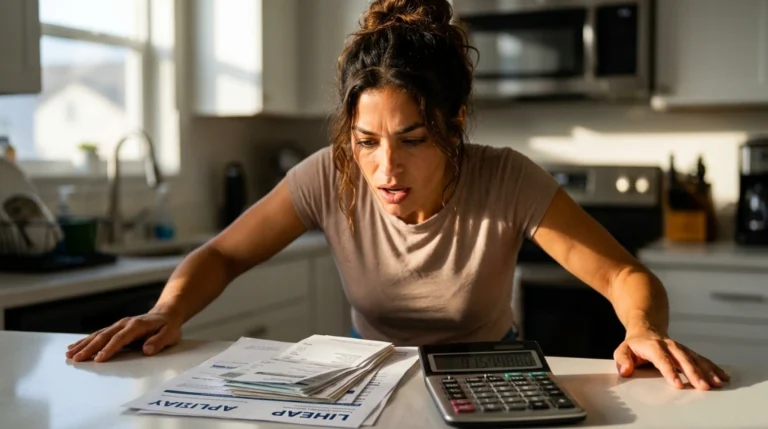
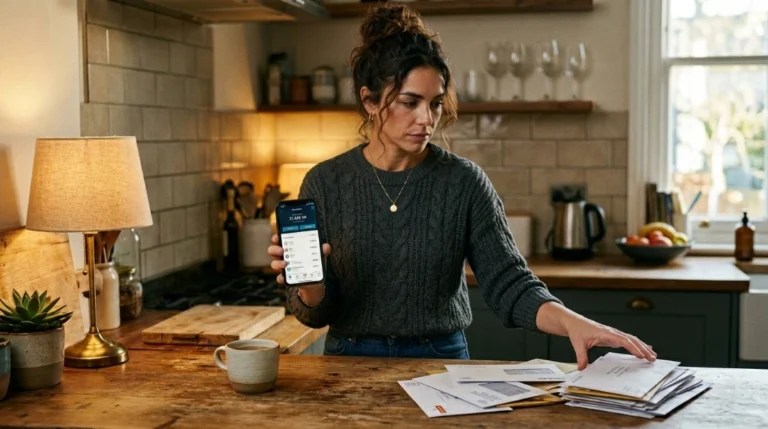
I sat at my kitchen table with a large cup of coffee and printed out ninety days of transactions, the same way I have done before, except this time I went through it with a highlighter instead of just scrolling on my phone. Scrolling makes everything blend together. Paper does not let you look away as easily.
The first thing I found was eleven separate clothing and shoe purchases, none of them planned, totaling just over three hundred dollars in three months. Eighteen dollars here, thirty there, each one happening on a different platform during a different week, which is exactly why none of them had ever registered as a pattern before.
The second thing I found was a fourteen dollar a month charge for a photo editing app. I had signed up for a free trial six months earlier to fix one picture for my daughter’s school project, and the trial had quietly become a permanent charge I never noticed again. Eighty four dollars, spent on something I had used exactly once.
The third thing was smaller and almost funny once I saw it. A five dollar daily coffee habit that, on closer look, almost always came with a muffin I had not planned to buy either. One hundred and fifty dollars a month, hiding inside something that felt like it barely counted.
The Shift
The standard advice here is to just stop shopping when you feel stressed, or cut out your coffee entirely, and both of those tips sound reasonable while helping almost nobody. They do not explain why the spending happens, so they ask for willpower in a moment when willpower is exactly what is missing.
What actually changed things for me was realizing that none of these three leaks were really about the items themselves. The clothing purchases were about the ten seconds of relief from clicking buy after a long day. The forgotten subscription was about a free trial I never set a reminder for. The coffee and muffin were about being tired at nine in the morning and wanting five minutes that felt easy.
Once I saw it that way, the question stopped being how do I have more discipline and became something much more specific for each leak. What is the actual moment this happens, and what tiny piece of friction would interrupt it without making my life harder.
How to Run Your Own Spending Leak Audit in One Weekend
Here is the exact process, broken into the same three categories I found in my own statements, and none of it requires more than one weekend.
Print, do not scroll. Pull ninety days of transactions onto paper and go through them with a highlighter. This single change is the reason I caught things I had scrolled past a dozen times before. A spending leak hides much better on a screen than it does on paper.
Sort everything into three piles. Unplanned purchases, like the clothing and shoes. Forgotten recurring charges, like the photo app. And small daily habits that quietly include an extra item, like the coffee and muffin. Most spending leaks fall into one of these three categories, and each one has a different fix.
The One Change for Each Type of Leak
For unplanned purchases, the fix is friction at the moment of temptation. I moved my phone charger out of the bedroom, so the nine to eleven at night window, when almost all of my impulse buys happened, no longer came with easy access to a checkout screen.
For forgotten subscriptions, the fix is a single calendar reminder set the moment any free trial starts, three days before it converts, not the day of. For the daily habit leak, the fix was making coffee at home four days a week, which removed the muffin from the equation simply by removing the trip.
The Hard Numbers
Here is what each spending leak actually cost over a year, once I added them up honestly.
| Type of Leak | Monthly Cost | Annual Cost |
|---|---|---|
| Unplanned clothing and shoes | $100 | $1,200 |
| Forgotten subscription | $14 | $168 |
| Daily coffee and muffin | $150 | $1,800 |
| Total | $264 | $3,168 |
After making the three small changes above, my actual spending dropped to about seventy five dollars a month across all three categories, a reduction of roughly seventy percent without a single dramatic decision.
According to Capital One Shopping’s research on impulse buying habits, clothing remains the single most common category for impulse purchases among women, and women are significantly more likely than men to make these purchases overall. That research lined up exactly with what I found in my own statements, which made it much easier to stop treating any of this as a personal failing and start treating it as a pattern with an actual schedule.
Honest Life After This
Three thousand dollars a year did not transform my finances overnight, and I am not going to pretend it did. What changed was quieter than that.
I stopped having that specific evening guilt, the kind that shows up the next morning when a delivery notification appears for something you do not fully remember choosing. I also stopped that small flinch every time my banking app sent a notification, because every charge on it now is something I actually recognize.
This connects to something I wrote about before, when I looked at why our brains are wired to make spending feel less real than it actually is. Each of these three leaks is a small, ordinary version of that same pattern, and once you can see the schedule behind each one, none of them feel like a mystery anymore.
Straight Talk Closing
You are not the only one. Fifty seven percent is not a small number, and if any part of this sounded familiar, you are not careless or bad with money. You are just human, on a Saturday, with a printer and a highlighter.
Spend one weekend printing your statements and sorting everything into those three piles, the same way I did. You might be surprised by how clearly your own spending leak shows its shape once it is finally on paper in front of you.
Read More:
Luxury Subscriptions: 5 Honest Ways I Saved
Money and Self Worth: 5 Secret Steps to Lasting Peace




2 Comments