My neighbor thought I was joking when I told her my grocery bill dropped by $200 last month.
I was not joking. And I did not do anything complicated.
I wrote a few letters. I downloaded two apps. I stopped assuming the best deals only existed on my phone screen and started paying attention to what was arriving in my actual mailbox.
What Nobody Tells You About Coupons in 2026
Everyone assumes physical coupons are dead.
They are not.
Here is what is actually true. While the world moved to digital everything, manufacturers quietly kept sending high-value paper coupons to the small percentage of customers who knew how to ask for them. Because most people stopped asking, the ones who did ask started getting more.
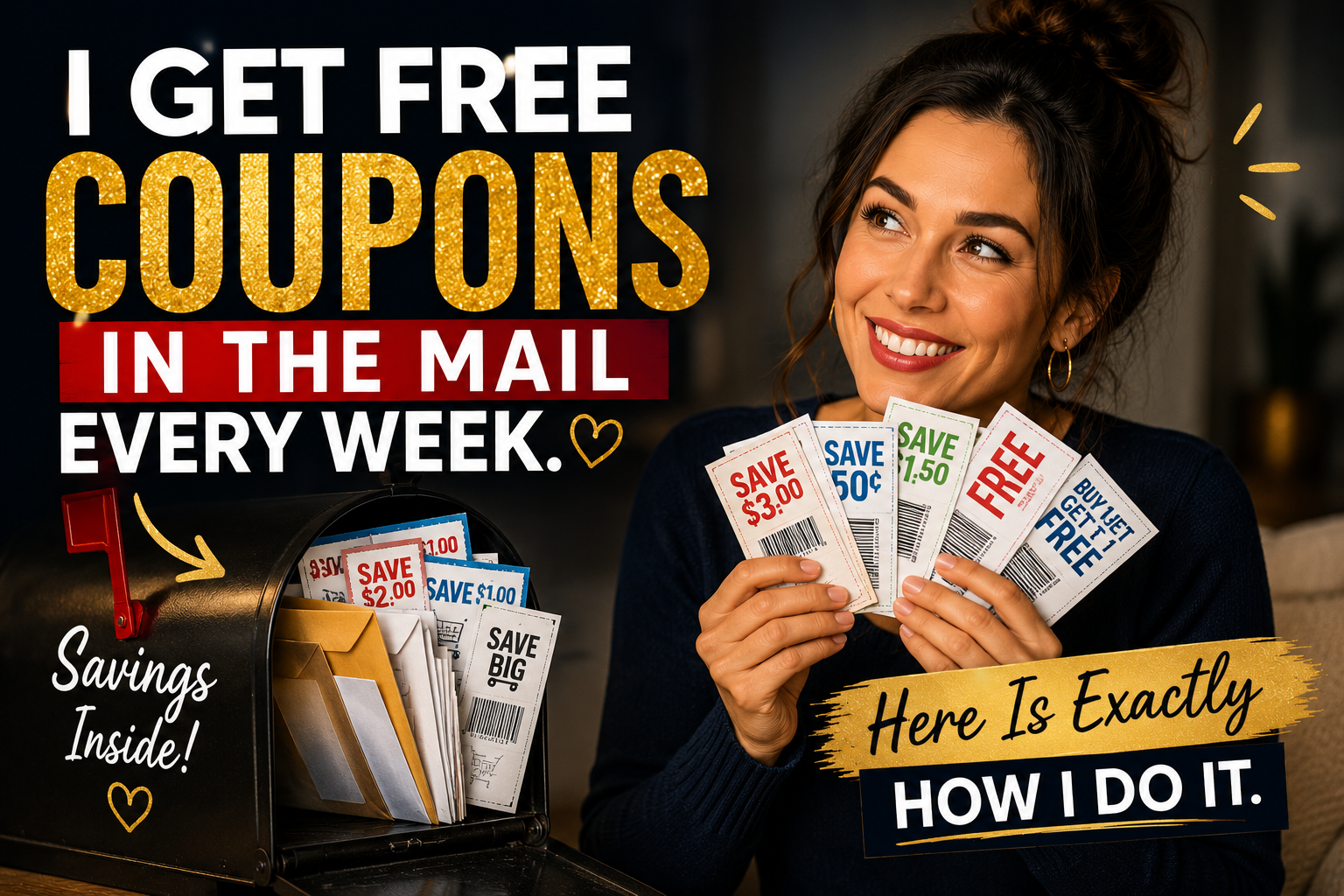
A digital coupon might save you fifty cents. A manufacturer coupon sent directly from a brand’s headquarters is frequently worth $1.00, $2.00, $3.00, or sometimes an entire free product.
The difference is not small. On a monthly grocery budget that difference is real money. Hundreds of dollars a year that stays in your pocket instead of going to a store that was never going to give it back.
The reason more women do not know this is simple. Nobody teaches it. It is not complicated. It is just overlooked.
Why I Started Taking This Seriously
It was a Thursday evening in February.
I was standing in the cereal aisle holding a box of Cheerios that cost $6.49 and genuinely calculating whether my family needed cereal this week or whether we could survive on toast.
That is a calculation no one should have to make. And I was making it weekly.
A woman in my local Facebook group posted her grocery haul that same week. $340 worth of groceries for $67. She was not using any secret trick or illegal system. She was stacking coupons she had requested directly from manufacturers with store sales and cashback apps.
I spent that Thursday evening sending five letters to five companies whose products sat in my kitchen every single day.
Three of them responded within two weeks. One sent a booklet with eight coupons. One sent a $3.00 off voucher. One sent two full-size product samples and a coupon for 50% off my next purchase.
That was the moment I understood that the system had always been there. I just had not been using it.
Getting free coupons in the mail every week is not a lost art. It is a simple, consistent system built on three things: writing direct compliment letters to manufacturers, joining brand loyalty programs that send physical mail, and stacking those coupons with cashback apps at checkout. Most women who try this see their first coupons arrive within two to three weeks of sending their first five letters.
The Compliment Letter. Your Most Powerful Tool.
The single most effective way to get coupons mailed directly to your home is to contact manufacturers yourself.
This sounds too simple. It works anyway.
Companies want loyal customers. They want to hear from real people who use their products. When you reach out with a genuine note about a product you actually use and enjoy, most brands respond with coupons. Some respond with samples. Some respond with both.
Here is the exact script that works. Copy it. Change the details. Send it today.
Dear [Company Name], I recently purchased your [specific product name and flavor] at [store name]. My family genuinely loves it, particularly [one specific detail about the product]. I would be so grateful if you could send any available coupons for future purchases. Thank you for making something we reach for every week. Warmly, [Your Name and Full Mailing Address]
Three things make this work. Keep it under five sentences. Be specific about the product. Always include your full physical mailing address. If they have to ask for your address you will likely never hear back.
The brands most consistently known to respond with high-value coupons include General Mills, Procter and Gamble, Kellogg’s, SC Johnson, Kraft, and Campbell’s. General Mills typically responds within two to three weeks. Kellogg’s often includes samples alongside their coupons. Procter and Gamble has been known to send entire coupon booklets.
One strategy that doubles your results. Procter and Gamble owns both Tide and Pampers. But those products operate through completely separate brand divisions. Send a specific letter to Tide and a separate specific letter to Pampers. Two letters to two divisions of the same parent company can generate twice the response compared to one generic letter to the corporation.
The Brands Nobody Talks About. The Ones That Respond Best.
Most couponing advice focuses on the same ten brands. Here is the fuller picture.
For your pantry write to Annie’s Homegrown, Barilla, Chobani, Dole, Frito-Lay, and Blue Bunny. For household products contact Arm and Hammer, Clorox, Dawn, Cascade, and Cottonelle. For personal care reach out to Aveeno, Burt’s Bees, Dove, Neutrogena, and Colgate.
Then there is a category most people completely miss.
Specialty and allergen-free brands.
Companies like Enjoy Life Foods, Udi’s Gluten Free, Blue Diamond, So Delicious, and Amy’s Kitchen serve a highly specific customer base. Because their audience is niche and loyal they send higher-value coupons to keep those customers coming back. If your family eats any specialty diet products these companies are goldmines that most couponers ignore entirely.
New product launches are another overlooked opportunity. When Beyond Meat or Oatly releases something new they want people to try it. A simple note about your first purchase experience often results in significant coupons to bring you back as a repeat customer. Watch for new items on shelves and contact the brand within the first few weeks of launch.
Brand Ambassador Programs. The Consistent Monthly Pipeline.
Beyond one-off letters there are formal programs that send physical coupons and samples on a monthly basis.
Pillsbury Kitchens sends consistent monthly coupon packets to members. Huggies Parent Council is essential for any mom spending money on diapers. Nestle Baby and Enfamil Family Beginnings provide high-value baby and formula coupons regularly. Pampers Rewards and Similac Strong Moms are worth joining immediately if you have young children.
When signing up for any of these programs always select physical mail as your preferred contact method. Fill out every optional field including children’s ages and birth dates. The more specific your profile the more targeted and valuable the offers you receive.
The Savings Stack. This Is Where It Gets Interesting.
Getting coupons in the mail is step one. Using them strategically is where the real savings happen.
The goal is never to pay the regular price for anything. The goal is to hit what seasoned couponers call the rock bottom price. That means waiting until an item goes on sale, then combining every available savings layer on top of that sale price.
The formula works like this.
Take a $5.00 laundry detergent. It goes on sale for $4.00. You apply a $1.00 store coupon from your pharmacy rewards program. You apply a $1.00 manufacturer coupon from the letter you sent last month. You upload your receipt to a cashback app afterward for another $1.00 credit.
Your final cost on a $5.00 item is $1.00. That is an 80% reduction. On a single item.
Now apply that logic to your entire weekly grocery shop.
The apps that make the cashback layer work are Ibotta, Fetch Rewards, Checkout 51, Shopkick, and Rakuten. Ibotta sometimes offers $5.00 off or full free product cashback on specific items. Fetch lets you scan any receipt to earn points toward gift cards. Rakuten provides cashback on online purchases and frequently offers new member bonuses.
The critical thing to understand about rebate apps is that you handle the savings privately after the transaction. You shop normally at the register. You pay whatever the total is after your coupons. Then you upload your receipt at home and the cashback comes to you separately. No awkward moments at checkout. No stack of papers to hand over. Just quiet savings that accumulate every week.
If you want to build the broader framework around these savings, our guide on how to create a personal finance strategy that actually works shows how to fit coupon savings into a complete monthly money plan.
The Organisation System That Keeps It Simple
The reason most women try couponing and quit within two weeks is not lack of motivation. It is lack of a system.
Without a system it becomes a second job. With a system it takes less than an hour a week.
Here is the system that works.
Create a dedicated email address specifically for brand outreach and loyalty programs. Something like yourlastnamesavings at gmail. This keeps your main inbox clean while centralising every coupon-related communication in one place.
Keep a simple note on your phone listing which companies you have contacted and when. Most brands will ignore duplicate requests sent too close together. The three month rule works well. Every three months go through your list and reach out to a fresh batch of five to ten companies. This creates a consistent flow of new coupons arriving throughout the year rather than a flood followed by nothing.
When coupons arrive, sort them immediately. Not later. Immediately. A small accordion folder with category tabs takes two minutes to set up and saves you from the pile of papers on the counter that eventually gets thrown away unused.
Before you go to any store scan your loyalty app and any rebate apps for offers on items you already planned to buy. Not the other way around. The mistake most new couponers make is buying things they do not need because they have a coupon. Only apply coupons to products your family actually uses.
The Number That Puts This in Perspective
Here is the calculation that changed how I think about the time this takes.
If you spend one hour per week on outreach and organisation and save $60 on your grocery bill that month, you have effectively earned $60 per hour. Tax free. While wearing your pajamas.
That is a better hourly rate than most side hustles. And unlike a side hustle no one is telling you when to show up.
According to the Federal Reserve’s household survey, grocery and household expenses represent one of the largest variable cost categories for US families — which is exactly why coupon savings compound so meaningfully over time.
Where to Start. Today. Not Next Week.
Open your kitchen cupboard right now. Pick five brands you buy every single month without fail. Go to each brand’s website. Find the Contact Us page. Send the script above with your specific product details and your full mailing address.
Five letters. Twenty minutes. Done.
Then download Ibotta and Fetch. Scan your next grocery receipt into both apps immediately after your next shop.
That is the whole starting point. Not a system overhaul. Not a new way of living. Five letters and two apps.
The coupons start arriving in two to three weeks. The savings start stacking from your very next shop.
Your mailbox has been sitting empty. Time to put it to work.
People Also Ask
How do I get free coupons sent to my house?
The most reliable method is writing a short compliment letter directly to the manufacturer of a product you already buy and use regularly. Include your full mailing address and a specific detail about the product. Most major brands including General Mills, Kellogg’s, and Procter and Gamble respond within two to three weeks with high-value manufacturer coupons that are worth significantly more than standard digital coupons.
Do companies still send coupons in the mail in 2026?
Yes. While digital coupons dominate mainstream awareness, manufacturer mail coupons never stopped. Brands continue sending physical coupons to customers who contact them directly because the response rate among customers who write in is extremely high. The value per coupon is often higher than digital equivalents precisely because fewer people are requesting them.
What is the best way to stack coupons to maximize savings?
The most effective approach combines three layers. Start with a manufacturer coupon received in the mail. Apply it on top of a store sale price rather than the regular price. Then upload your receipt to a cashback app like Fetch or Ibotta for an additional rebate after the transaction. Each layer
independently saves money but stacking all three on a single item can reduce the cost by 70 to 90 percent compared to the regular shelf price.
How long does it take to get coupons in the mail after writing to a brand?
Most brands that respond do so within two to three weeks of receiving your letter. Some brands like Kellogg’s and General Mills are known for faster responses. Writing to five brands at once rather than one at a time produces a more consistent flow of arrivals since responses tend to come in clusters
rather than a steady daily trickle.