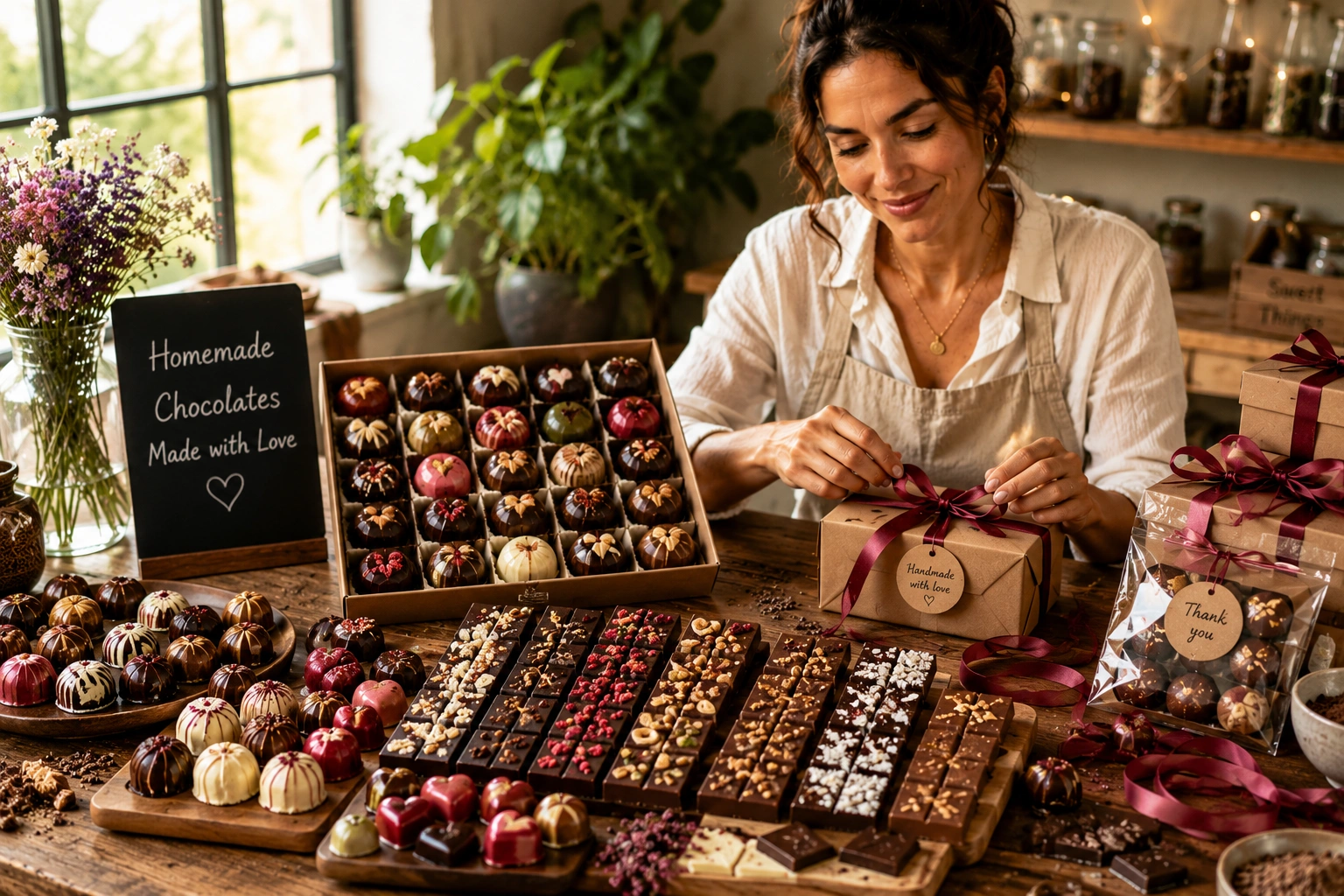
Somewhere in the last few years, homemade chocolate went from a kitchen hobby to one of the most consistently viral product categories on Instagram and TikTok. Heart-shaped bonbons filled with dried fruit, marbled glaze bars in colors nobody expected to see on chocolate, hand-piped lettering that turns a bar into a message, none of it requires a commercial kitchen or years of pastry school. A homemade chocolate gift business is one of the few product-based side incomes where the barrier to entry is a mold, real chocolate, and a genuine willingness to practice a few specific techniques until they look effortless.
This isn’t a vague “start a chocolate business” overview. It’s the actual mechanics: how tempering and colored glaze work, how to layer a filling so it looks clean when unmolded, the four real skill tiers this niche actually breaks down into, how to match a mold and color palette to a specific occasion instead of guessing, what packaging genuinely sells on Instagram, whether it’s even legal to sell from your kitchen in your state, and how to actually get orders through Instagram, TikTok Shop, and eBay once the chocolate itself is right.
A homemade chocolate gift business works by combining real technique, occasion-specific design, and a genuine sales presence across visual platforms. You start with tempered chocolate and a mold, layer in fillings and colored cocoa butter glaze for visual impact, match your designs to specific gifting occasions like birthdays and holidays, package them to photograph well, confirm your state’s cottage food law allows chocolate sales, and sell through Instagram, TikTok Shop, or eBay rather than relying on a single channel.
Why Homemade Chocolate Gifting Is a Real Business Right Now
Chocolate has always been a gift, but the way it’s being gifted has changed. A plain box of drugstore chocolates says nothing specific. A hand-molded bar with someone’s actual message piped onto it, wrapped for a specific event, says something a mass-produced box never could. That shift, from generic gift to personalized object, is exactly why this category performs the way it does on visual platforms: it’s inherently photogenic, inherently personal, and inherently shareable.
The demand isn’t limited to one season either, which matters for anyone building this into consistent income rather than a once-a-year Valentine’s project. Birthdays, anniversaries, Mother’s Day, Father’s Day, Teacher Appreciation, Halloween, Thanksgiving, Christmas, New Year’s, and Valentine’s Day all generate real, distinct search and gifting demand throughout the calendar year. A seller who only makes hearts for February is leaving eleven months of demand on the table.
What makes a homemade chocolate gift business genuinely different from most home-business ideas is that the product itself is the marketing. A well-photographed chocolate bar or bonbon box doesn’t need much explanation, it sells itself the moment someone scrolls past it, which is precisely why Instagram and TikTok have become the primary discovery engines for sellers in this space rather than a traditional website.
The Real Technique: Tempering, Molds, and the Colored Glaze Effect
The visual effect that makes this niche viral, the marbled colors, the glossy shine, the clean release from the mold, comes down to two specific techniques most beginner tutorials skip entirely: proper tempering and colored cocoa butter work.
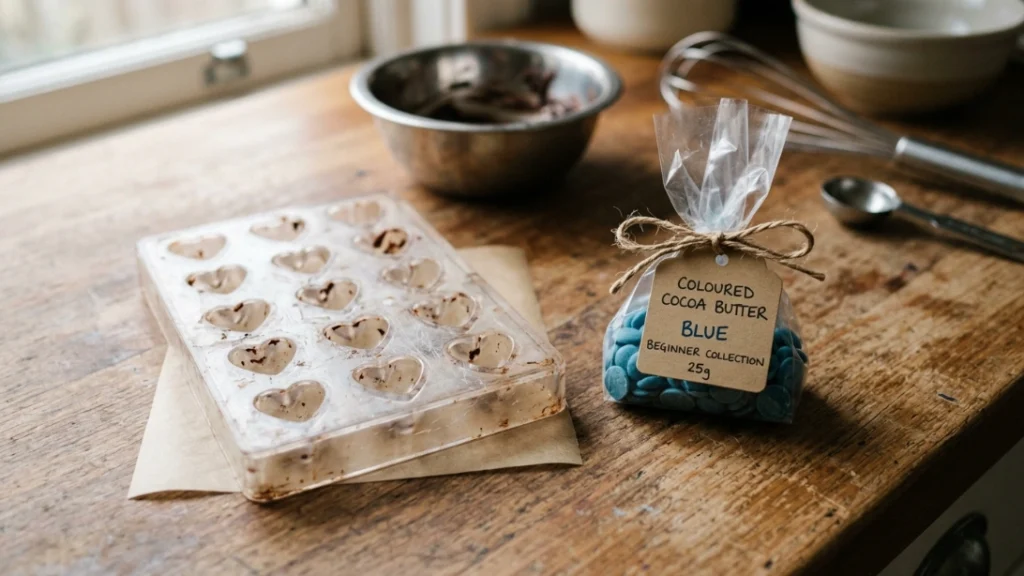
Tempering is the process of heating and cooling chocolate through specific temperature stages so the cocoa butter crystallizes correctly. Untempered chocolate sets dull, streaky, and soft, it melts at room temperature and doesn’t release cleanly from a mold. Properly tempered chocolate sets with a glossy shine, a clean snap, and releases from a polycarbonate mold with almost no effort.
Colored cocoa butter is what actually creates the marbled, painted effect you see on the most striking pieces, not food coloring mixed into the chocolate itself, which doesn’t work well since most food coloring is water-based and cocoa butter is fat-based. The real method uses oil-soluble, fat-based coloring mixed directly into melted cocoa butter, brushed, dabbed, or flicked into the mold cavity first and allowed to set for a minute before the tempered chocolate is poured on top. This is what produces the marbled “shibori” effect where multiple colors blend into organic patterns.
Polycarbonate molds outperform silicone for this level of finish. Silicone is flexible and beginner-friendly, but polycarbonate holds a tighter shape, produces a glossier surface, and contracts slightly as the chocolate cools, which makes unmolding far cleaner. Heart, diamond, triangle, and geometric shapes are all widely available in polycarbonate, the mold type behind most of the sharply defined, high-gloss pieces that perform best on Instagram.
Layering the filling is what separates a clean bonbon from a lumpy one. Pour a thin layer of tempered chocolate into the mold cavity first, chill briefly until the shell sets, add the dried fruit or nut filling on top, then pour a second layer of chocolate over the filling to seal it completely before chilling again until fully set. Skipping the shell-first step and just stirring dried fruit into melted chocolate before pouring produces a bark, a legitimate and easier product, but not the clean, defined piece most gifting customers picture when they order a “chocolate box.”
Four Skill Tiers: From Simple Topping Bars to Custom Sculpted Homemade Chocolate Gift Business Pieces
This niche isn’t one skill level, it’s four, and knowing which tier you’re starting at, and which one you’re building toward, keeps expectations realistic instead of frustrating.
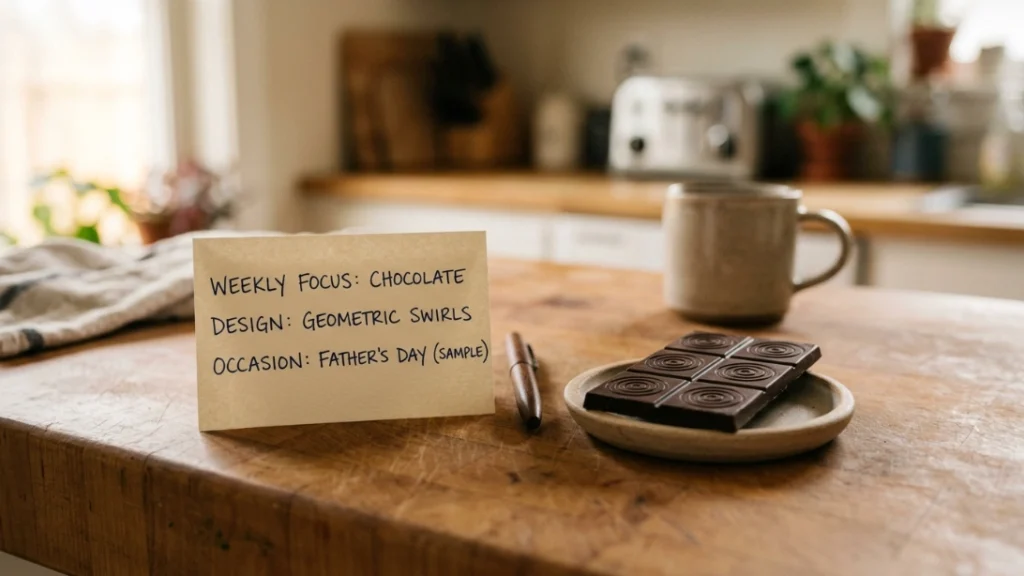
Tier one: simple topping bars. Melt chocolate, pour into a basic rectangular candy-bar mold, press toppings on top before it sets, chill, unmold, wrap. No tempering knowledge required, no colored cocoa butter. This tier includes message-driven bars, a pun or phrase wrapped around the bar’s kraft paper sleeve, paired with a themed topping. The correct starting tier for a first sellable product within a week.
Tier two: bark-style mixed bars. Slightly more advanced visually, layering nuts, seeds, dried fruit, and sometimes superfood ingredients like quinoa or chia directly into a thin poured layer for a rustic, textured look. Flavor combinations here are a real differentiator, a berry and seed mix, a matcha and crunch version, a rose and pistachio white chocolate variation each read as a distinct product line.
Tier three: true molded and glazed bonbons. Tempering and colored cocoa butter become necessary rather than optional. Polycarbonate molds in heart, diamond, and geometric shapes, a genuine glossy shine, marbled or solid glaze colors matched to an occasion palette, and the layered shell-filling-seal method. This tier commands meaningfully higher prices because the visible skill difference is obvious even to a customer with no chocolate-making knowledge at all.
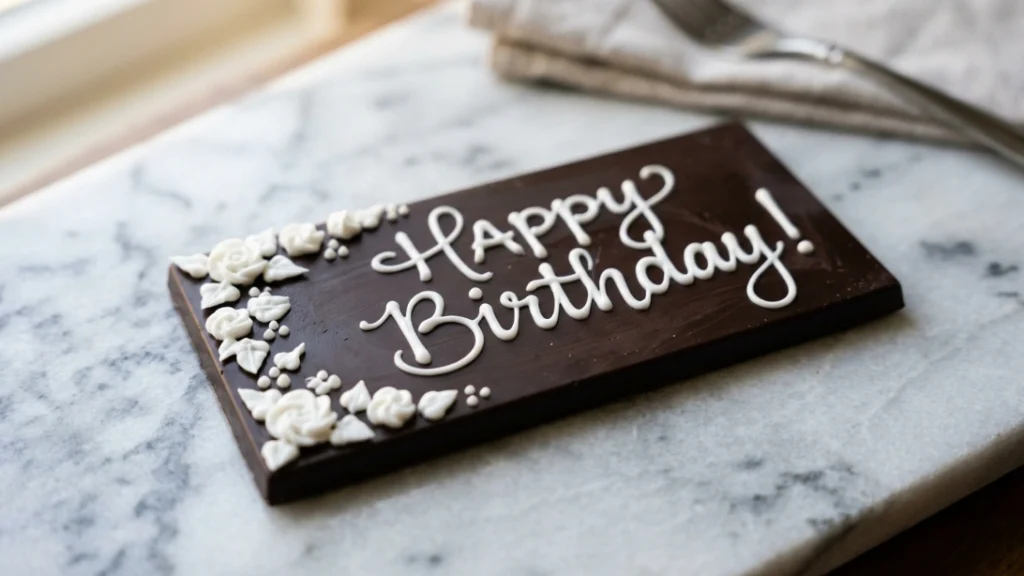
Tier four: custom lettering and sculpted decoration. The most advanced tier, hand-piped chocolate or royal icing lettering directly onto a bar’s surface, plus three-dimensional decorative elements, chocolate flowers, leaves, small figures, made separately and adhered to the finished piece. A bar reading a birthday message surrounded by piped flowers, or a heart-shaped assortment box with a molded “LOVE” lettering centerpiece, belongs here. It justifies the highest per-piece price and generates the most organic shares.
Matching Molds, Fillings, and Colors to the Occasion
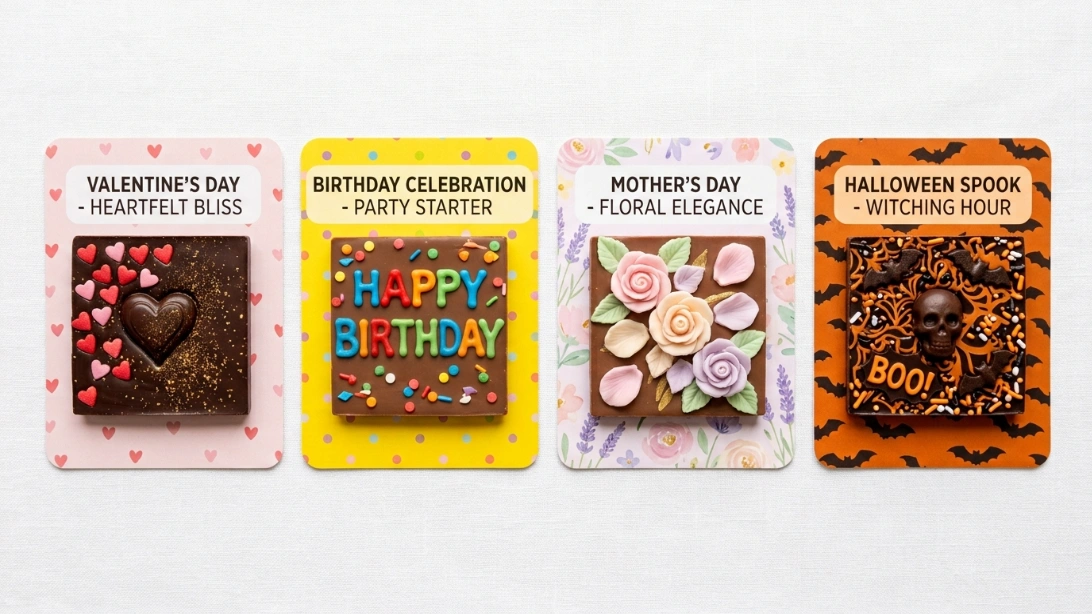
Generic advice says “make chocolate for holidays.” A real system, the kind every serious homemade chocolate gift business needs, ties a specific mold, filling, and color palette to each occasion so a customer knows immediately what they’re looking at and who it’s for.
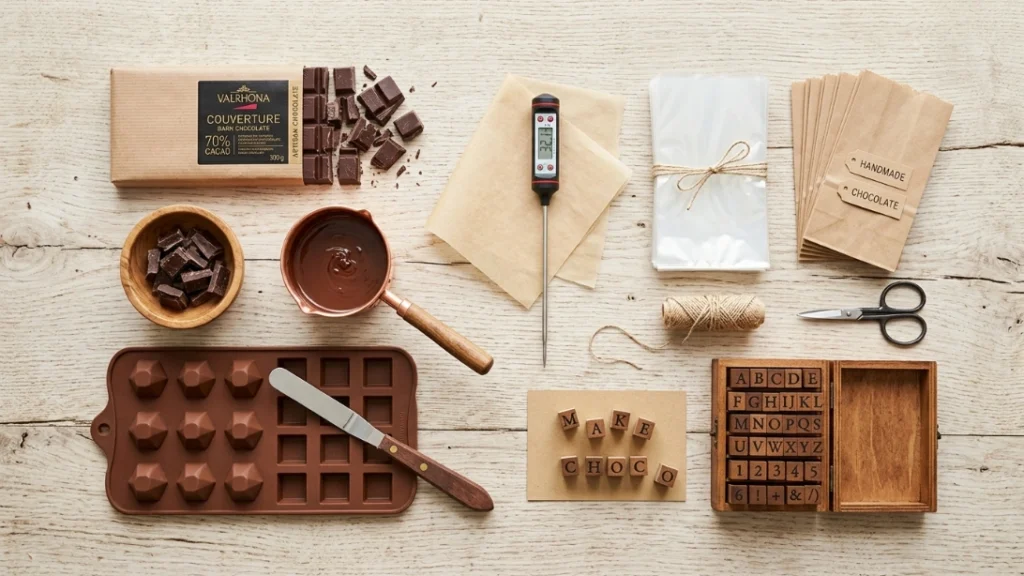
Valentine’s Day and anniversaries lean into heart-shaped polycarbonate molds, deep reds, soft pinks, and rose gold glaze tones, and fillings like freeze-dried strawberry, raspberry, or pistachio. A molded “LOVE” lettering centerpiece surrounded by smaller heart bonbons in a divided gift box reads as a complete, considered gift rather than a single bar.
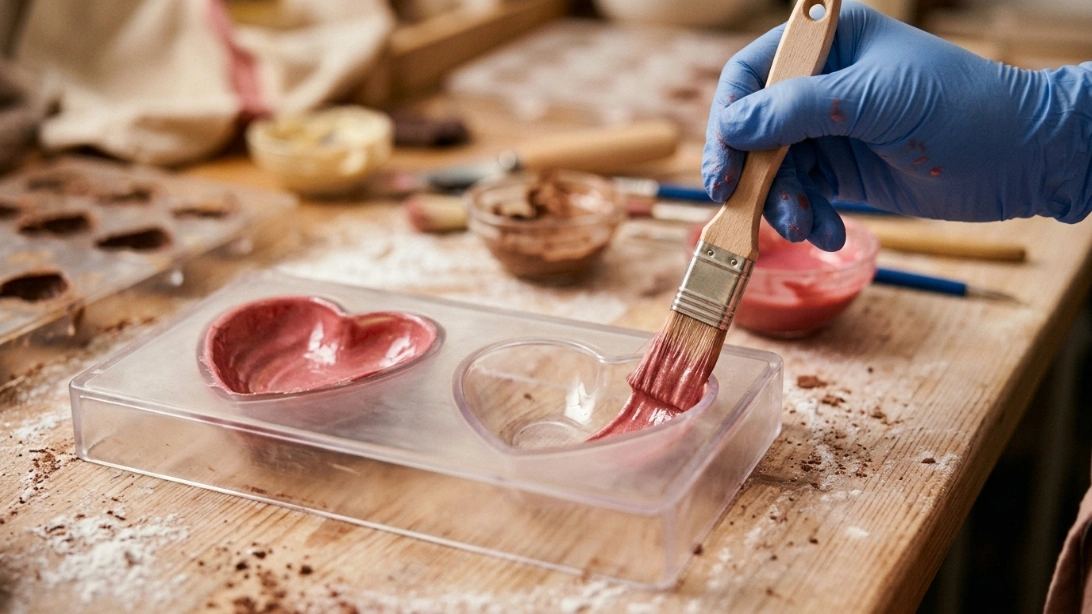
Birthdays support far more color range than any other occasion, a strong entry point for practicing colored glaze work. A tier-four birthday piece with piped lettering in white or gold against a dark chocolate base, paired with a matching set of smaller bonbons, performs especially well as a shareable Instagram gift reveal.
Mother’s Day and Father’s Day call for a more restrained palette, soft florals and pastel tones for Mother’s Day, deeper neutrals like caramel and muted gold for Father’s Day. Piped floral appliqué work fits Mother’s Day naturally, while Father’s Day tends to perform better with a clean, minimal design.
Teacher Appreciation works well as a smaller, budget-friendly tier-one or tier-two product, since this is typically a bulk or classroom-wide purchase rather than a single premium gift.
Halloween supports darker, playful design work, pumpkin, bat, and skull-shaped molds, orange and black colored cocoa butter, and mix-in candy pieces.
Thanksgiving leans toward warm, autumnal tones, caramel, burnt orange, deep gold, paired with pecan, dried cranberry, or cinnamon-spiced fillings, and reads well as a hostess gift in a small wrapped set.
Christmas and New Year’s support the widest design range of the calendar: peppermint bark in classic red and white, gold-leaf-finished pieces, and fully sculpted holiday scenes, a molded pine tree, string-light details piped in white, a gold-painted deer figure, for tier-four premium pieces intended as a standout gift.
Packaging and Presentation: The Wrap That Actually Sells
The chocolate gets someone to stop scrolling. The packaging is what convinces them to actually order.
Cellophane first, always. Every finished piece should go into a clear cellophane bag before any outer wrap, both for food safety and because it lets the chocolate itself show through.
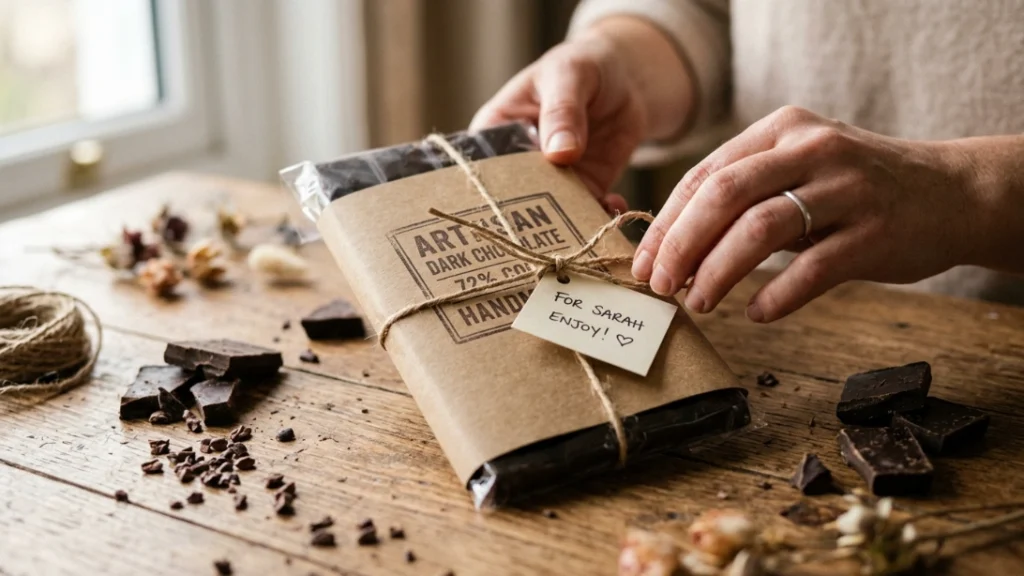
A stamped kraft paper sleeve is the most cost-effective way to add a message. Cut strips of brown craft paper, use a simple letter roller stamp and ink pad to spell out a short phrase, and wrap it around the cellophane-wrapped bar. Small paper cutout details, hearts, leaves, a folded 3D flower, glued onto the sleeve add a handmade touch that photographs well.
Divided gift boxes elevate a multi-piece order into a complete gift. A small white box with an internal divider, one section for a message bar, another for an assortment of bonbons, reads as a considered gift set rather than several loose chocolates thrown together.
Ribbon and a printed gift tag close the presentation for premium and holiday orders. A simple twine tie with a small printed tag naming the occasion turns a wrapped bar into something that looks professional and finished, ready to hand over without additional wrapping needed.
Is It Legal? Cottage Food Law and What to Check Before You Sell
This is the part almost no competitor guide covers accurately, and it genuinely matters before any sales happen.
Most U.S. states allow home-based food sellers to operate under cottage food laws, which permit certain low-risk foods to be made and sold from a home kitchen without a commercial license. Chocolate is often included, but not universally, and the specific rules vary meaningfully by state. New York’s cottage food registration specifically excludes tempering or melting chocolate for molding or dipping, meaning the exact technique this article is built around isn’t covered under that state’s basic home processor exemption.
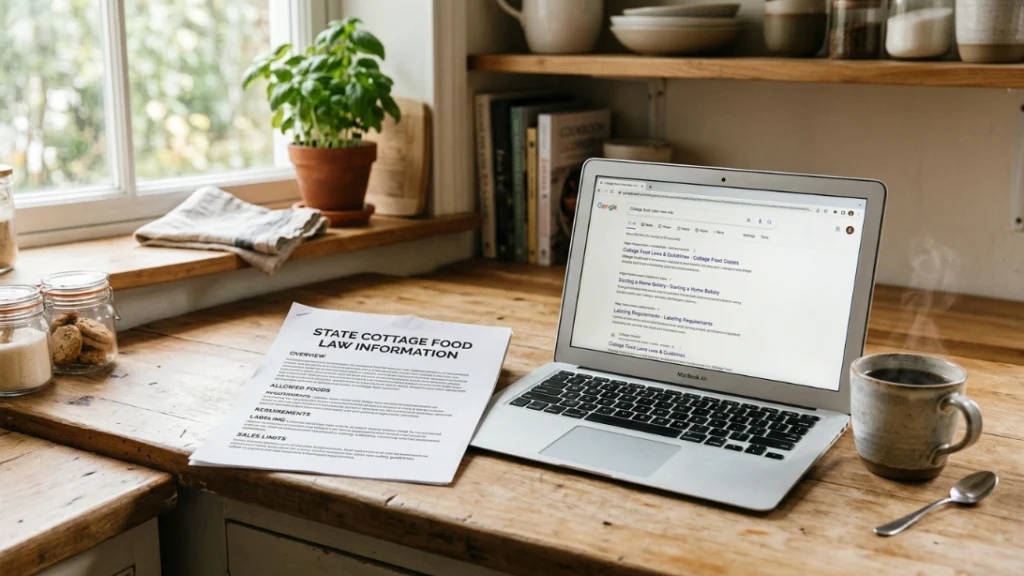
New Jersey and North Dakota prohibit chocolate under cottage food law entirely. Separately, the U.S. Small Business Administration notes many states require registering a business name even for a sole proprietor, which matters once cottage food compliance is confirmed. Most other states permit it but restrict cream-filled pieces, since cream fillings typically require temperature control that a basic cottage food registration doesn’t cover, and require specific labeling identifying the product as made in an uninspected home kitchen.
I am not a financial advisor and this is not financial advice. Before launching a homemade chocolate gift business and selling anything for money, confirm your specific state’s cottage food law directly with your state’s department of agriculture or health, since the rules genuinely differ enough between states that assuming your neighbor’s state rules apply to you could put your entire business at risk before it starts.
Selling Online: Instagram, TikTok Shop, and eBay
The chocolate and the packaging get a product ready. These three channels are where it actually turns into orders.
Instagram is the discovery and relationship engine for almost every homemade chocolate gift business. A consistent feed of finished pieces, plus Reels showing the actual process, pouring colored cocoa butter into a mold, unmolding a finished bonbon, piping lettering onto a bar, builds the kind of trust that gets someone to message you directly for a custom order. Most sellers take orders directly through Instagram DMs, especially for custom or personalized pieces, a pattern that works the same way it does for independent Etsy sellers starting with no upfront capital.
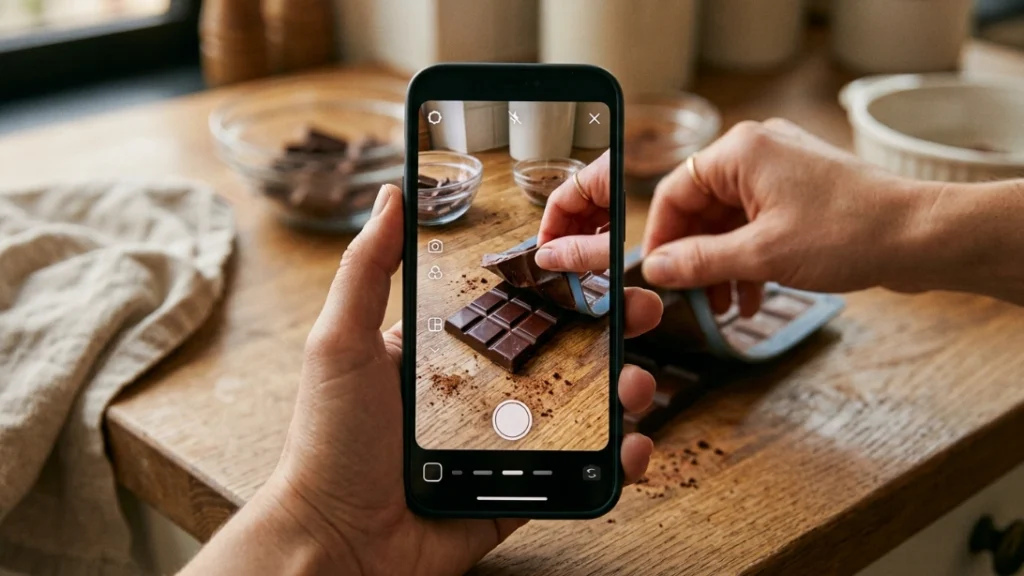
TikTok Shop combines viral discovery with an actual in-app storefront, which matters because a process video showing the marbled glaze technique or a satisfying unmolding shot performs well on the platform, and TikTok Shop lets that video link directly to a purchasable listing instead of sending an interested viewer elsewhere.
eBay is a smaller piece of this niche but still a real one, particularly for sellers offering seasonal, ready-to-ship assortments rather than fully custom pieces. Shipping perishable chocolate reliably, insulated packaging, ice packs in warm months, and honest expectations about shipping timelines during summer heat, matters more here than on a platform where local pickup is common.
Some links you use to promote or sell through these platforms may be affiliate or referral links depending on how you set up your seller accounts. Some links in this article may be affiliate links. I only recommend things I have genuinely researched thoroughly.
Building a Personal Brand Around Gifting Chocolate
The chocolate itself is replicable, plenty of sellers know the same techniques, and that’s true of nearly every homemade chocolate gift business. What actually builds repeat customers and referrals is a recognizable brand around the product.
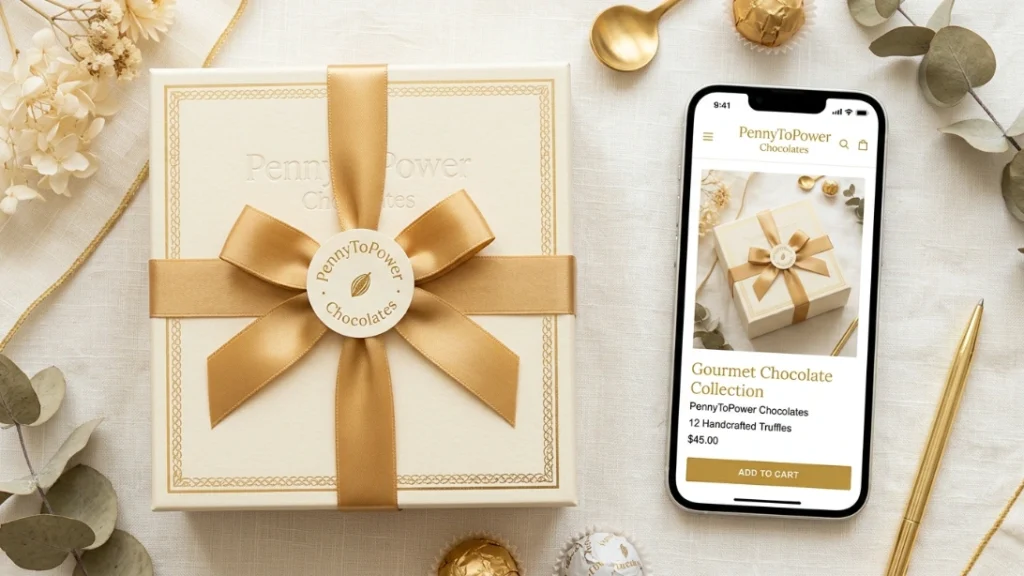
Pick a name and use it everywhere, consistently, on your packaging, your Instagram bio, your TikTok Shop listing, and any tags or stickers on your boxes. As an illustrative example, a seller might brand her packaging and online listings under a name like “PennyToPower Chocolates,” with that same name appearing on a small sticker sealing the ribbon, in the corner of every product photo, and as the shop name across every platform she sells on. Consistency across every touchpoint is what makes a customer remember your name.
A simple, repeatable visual signature does more than a logo alone. A consistent box color, a specific ribbon shade, or a small stamped detail that appears on every wrap builds recognition before a customer consciously registers a business name.
Let your actual process be part of the brand, not just the finished product. A behind-the-scenes look at pouring colored cocoa butter, piping a custom message, or packing an order for delivery builds trust a static product photo alone doesn’t, and helps justify tier-three and tier-four pricing.
The Honest Numbers on Pricing and Profit
There’s no single verified income figure for a homemade chocolate gift business worth citing here, home chocolate sellers vary too widely in scale, region, and skill tier to responsibly attach one number to all of them. What can be said honestly is this: pricing should scale with the skill tier of the piece, not stay flat across your whole product line. A tier-one topping bar should be priced accordingly lower than a tier-three glazed bonbon box or a tier-four custom-lettered piece, where the visible skill, time, and materials involved are meaningfully higher.
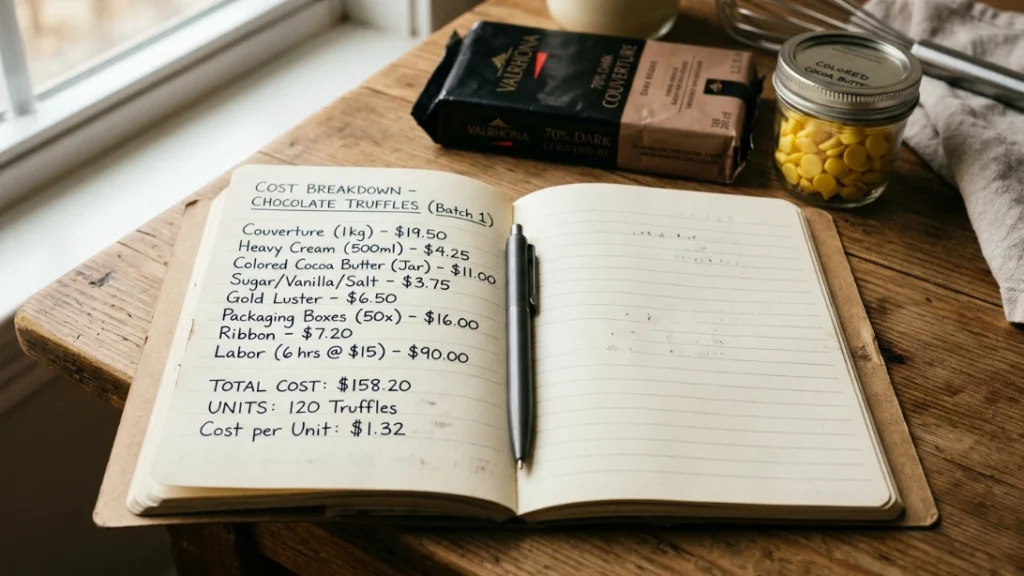
Ingredient and packaging costs are the most predictable part of this business to calculate for yourself: real couverture chocolate, colored cocoa butter, polycarbonate molds, cellophane, and packaging materials all have clear, checkable prices from whatever supplier you use, and building your price around your actual cost plus the time a piece genuinely takes will always be more reliable than borrowing a generic number from an unrelated source.
What You Actually Need to Get Started
Real couverture chocolate is worth the extra cost over cheaper candy melts, since true chocolate is what tempers properly and produces the glossy finish this niche depends on visually. A basic candy thermometer takes the guesswork out of tempering rather than relying on feel alone.
A small set of silicone molds is the right starting investment, inexpensive, forgiving, and enough to produce a sellable tier-one or tier-two product while skills develop. Polycarbonate molds are worth adding once tempering feels consistent. A double boiler, or a microwave-safe bowl for careful interval melting, covers the melting step without specialized equipment. Cellophane bags, kraft paper, a letter stamp set, and a small stock of ribbon and gift tags round out the packaging side, reusable across dozens of orders.
For tier three and four, colored cocoa butter in a small starter set of two or three colors, plus a food-grade paintbrush, is the next real investment, followed by piping bags and small decorating tips once hand-lettering becomes part of the product line. None of this needs to be purchased at once. Real chocolate, one simple mold, and basic packaging is enough to test whether this niche is genuinely enjoyable before investing further.
Where to Start This Week
Don’t try to launch every part of your homemade chocolate gift business, all four skill tiers, three sales channels, and a fully built brand identity, in the same week. Start with tier one, a simple topping bar in a basic mold, and get one occasion’s design genuinely right before expanding. Confirm your state’s cottage food law allows chocolate sales before you take a single paid order, that’s a five-minute check that protects everything you build afterward.
Post your first finished pieces on Instagram even before you’ve made a sale, since the process content itself starts building the audience that will eventually buy. Once you have a handful of real orders and photos you’re proud of, add a TikTok Shop listing and decide whether eBay makes sense for your specific product mix.
A quick reference worth keeping nearby once orders start coming in regularly: Valentine’s and anniversaries lean heart-shaped and rose-toned, birthdays lean bright and lettered, Mother’s Day leans floral and pastel, Father’s Day leans neutral and clean, Teacher Appreciation leans small and budget-friendly, Halloween leans dark and playful, Thanksgiving leans warm and autumnal, and Christmas through New Year’s leans into the widest range of the entire calendar. Keeping this pairing consistent across repeat customers is part of what makes a shop feel intentional rather than random from order to order.
Give yourself permission to treat the first month as practice rather than performance, since the sellers whose work eventually looks effortless almost always started with a batch that looked nothing like the finished pieces they now post.
People Also Ask
Is it legal to sell homemade chocolate from your kitchen?
In most U.S. states, yes, under cottage food laws, though the specific rules vary significantly. Some states, including New York, restrict or exclude tempered chocolate specifically, and a small number of states prohibit chocolate under cottage food law entirely, so confirming your own state’s rules before selling is essential for anyone starting a homemade chocolate gift business.
What equipment do I need to start a homemade chocolate gift business?
At minimum, real couverture chocolate, a way to temper it accurately, and molds, silicone for beginners or polycarbonate for a glossier, more professional finish. Colored cocoa butter and basic piping tools become necessary once you move into the more advanced skill tiers.
How do you get the marbled color effect on molded chocolate?
The marbled or painted effect comes from colored cocoa butter, an oil-soluble, fat-based coloring, brushed or flicked into the mold cavity before the tempered chocolate is poured, not from food coloring mixed directly into the chocolate.
Where is the best place to sell homemade chocolate gifts online?
Instagram and TikTok Shop tend to perform best for this niche since the product is highly visual and benefits from process content, while eBay works well for ready-made seasonal assortments. Most sellers use a combination of platforms rather than relying on just one.
How much should I charge for homemade chocolate gifts?
Pricing should reflect the skill tier of the piece rather than staying flat across an entire product line. Simple topping bars should be priced lower than fully molded, glazed, or custom-lettered pieces.
Can a homemade chocolate gift business realistically work without any prior baking background?
Yes, tempering and mold work are learnable through practice and don’t require formal culinary training, though it takes several practice batches before results consistently look professional rather than merely edible.