Most teen closets in 2026 are stuffed with clothes that looked great for about six weeks. A smaller number of closets, the ones that somehow look effortlessly put together every single day, are built around a completely different idea: quiet luxury style, the kind of dressing that favors fit, fabric, and simple lines over logos and trend cycles. I’m Maya Collins, and I write about money for PennyToPower.com, for a teen audience and the parents helping fund their wardrobes. This isn’t really a fashion topic. It’s a math topic wearing a fashion costume.
Quiet luxury style is often written about as if it requires a designer budget, and that’s simply not true. What it actually requires is fewer purchases, made more carefully, on a shorter list of items. That shift alone changes how far a limited clothing budget stretches for a teenager who’s dressing herself, not her parents’ idea of her.
Quiet luxury style for a teen budget means buying fewer, better-made basics in neutral colors instead of trendy, low-cost pieces that wear out fast. The real method is simple: spend more on the five or six items worn constantly (blazer, jeans, shoes, coat, bag), and spend less everywhere else.
Why “Just Buy Cheap And Replace It” Doesn’t Actually Save Her Money
The advice to buy cheap clothes and replace them often sounds practical on a tight budget. It isn’t, and here’s the actual mechanism behind why.
A cheap trendy piece is usually built from thinner fabric, held together with weaker seams, and cut for one specific silhouette that ages out of style within a season. It looks fine in photos on day one. By week six, the hem is loose, the color has faded in the wash, and it no longer fits the trend it was bought for anyway. So it gets replaced. And replaced again. That’s the quiet cost most closets never add up.
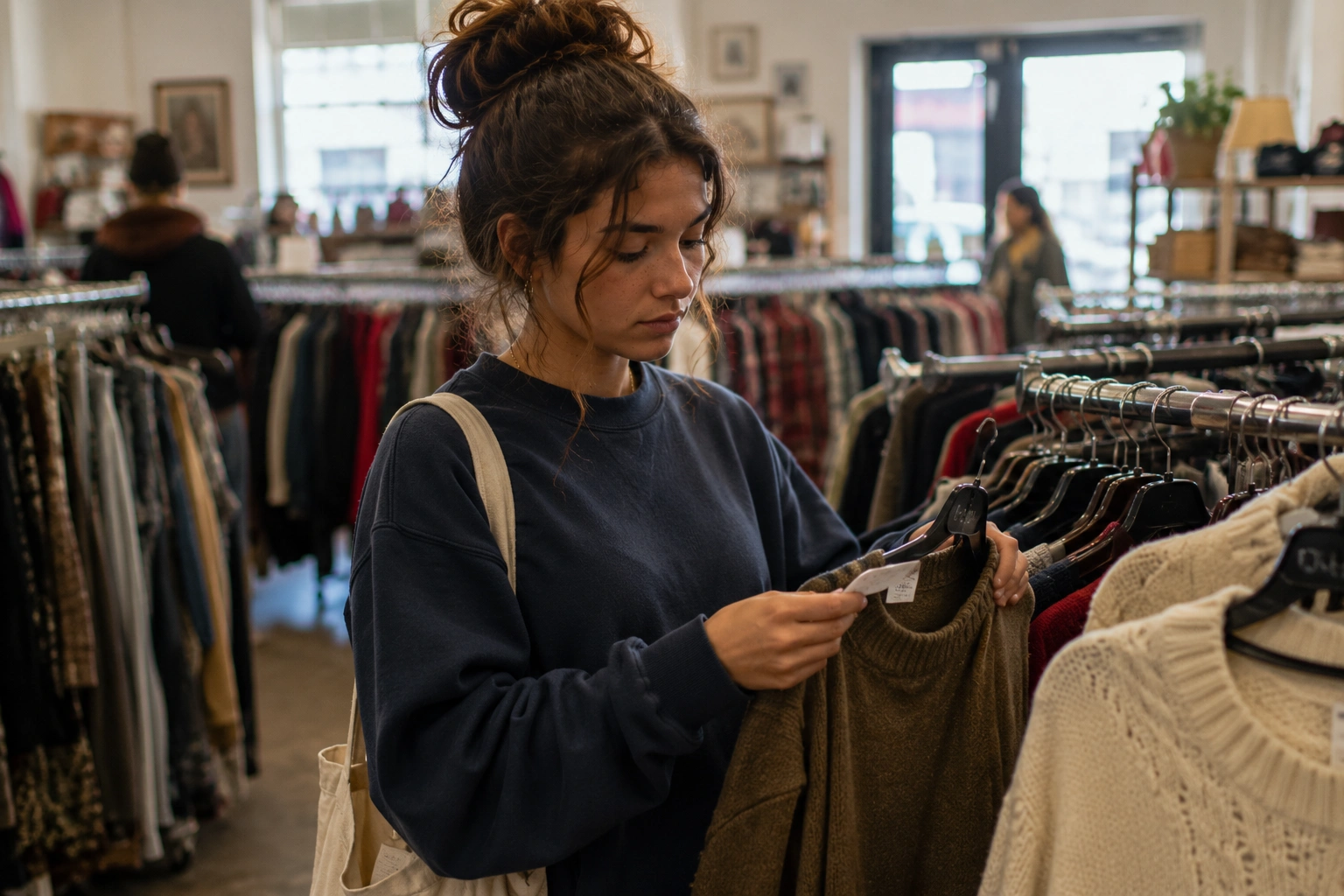
A quiet luxury style approach flips the order of operations. Instead of buying whatever’s trending and replacing it fast, the goal is to identify the handful of items she reaches for constantly, in any season, regardless of what’s currently popular, and put the real money there. Everything else gets bought cheap on purpose, because it’s genuinely disposable.
The Real Method: Where To Spend And Where To Skip
This isn’t about buying less. It’s about buying differently, with a clear line between what deserves investment and what doesn’t.
Buy Fewer, Better Basics
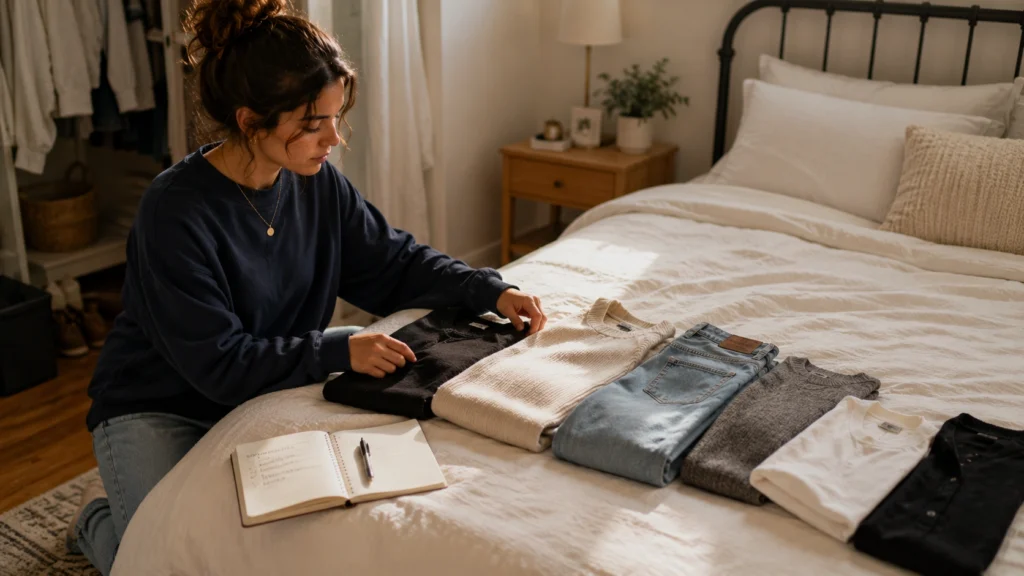
Start with five categories: one structured jacket or blazer, one pair of well-fitted jeans or trousers, one pair of shoes that work with almost everything, one coat, and one bag. These are the pieces worn two or three times a week, in every season, for years. If your employer match logic applies anywhere in a teenager’s life, it applies here: money spent on the things used constantly is money that keeps paying you back.
Save On Everything That Isn’t Worn Weekly
Trend pieces, statement colors, anything tied to a specific moment (a themed dance, a one-season color trend) should be bought as cheaply as possible, on purpose. There’s no reason to spend real money on something with a built-in expiration date.
The Cost-Per-Wear Math, Laid Out Plainly
Here’s the calculation that makes this whole approach make sense, using round hypothetical numbers rather than any single real price.
| Item | Price | Times Worn (2 years) | Cost Per Wear |
|---|---|---|---|
| Trendy $25 top, fast fashion | $25 | 4 | $6.25 |
| Well-made $70 blazer, neutral | $70 | 60 | $1.17 |
| Trendy $40 statement shoes | $40 | 6 | $6.67 |
| Well-made $90 leather-look flats | $90 | 80 | $1.13 |
The cheaper item is not actually the cheaper choice once cost per wear enters the picture. It’s not about the sticker price. It’s about how many times that price gets divided.
I am not a financial advisor and this is not financial advice. For your specific situation, especially if you’re working with a genuinely tight budget, talk through the numbers with a parent or guardian before making any bigger purchase.
What Quiet Luxury Style Actually Looks Like In A School Wardrobe
In practice, quiet luxury style for a teen budget rarely means spending more overall. It means spending unevenly, on purpose.
A school week built this way might repeat the same neutral blazer over three different outfits, paired with a rotating cast of cheap graphic tees, one solid pair of jeans, and shoes that go with literally everything in the closet. Nobody at school clocks the repetition, because the styling changes even when the core pieces don’t. That’s the actual mechanic behind quiet luxury style: a small, high-quality foundation, restyled constantly, rather than a huge closet of one-outfit pieces.
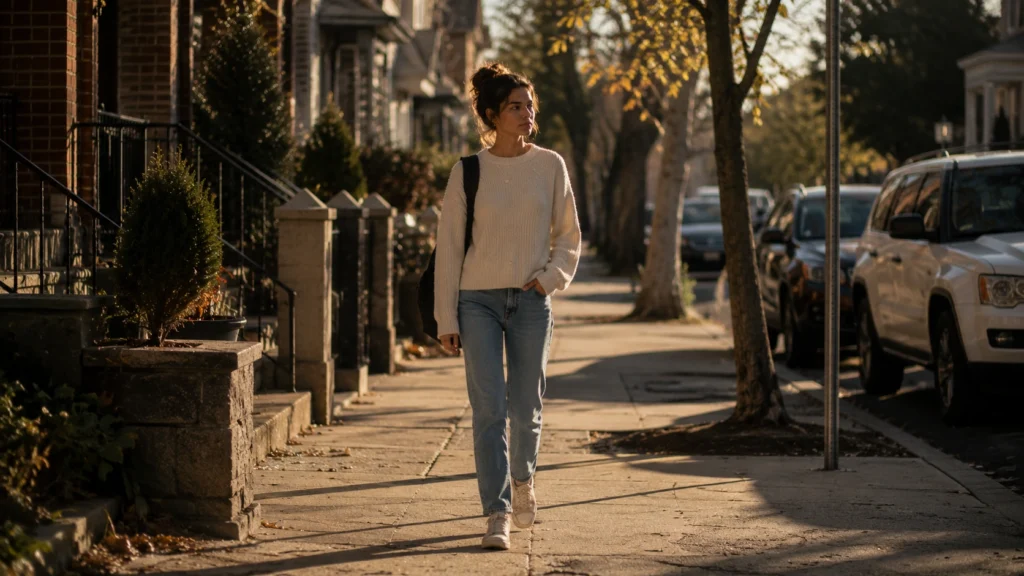
Color matters here too. Neutrals (camel, cream, navy, black, soft grey) mix and match endlessly. A closet built mostly in trend colors forces every new purchase to match a narrower set of existing pieces, which quietly drives up how much gets bought overall.
What Actually Changes Once The Closet Gets Smaller
The shift isn’t dramatic. It’s steady. Fewer pieces get pulled out of rotation because they’ve fallen apart. Fewer mornings get spent staring at a full closet with “nothing to wear.” And the monthly clothing budget, once it’s not constantly replacing worn-out trend pieces, has room to actually save toward the next investment piece instead of patching the last one.

This is closer to an old money aesthetic on a budget than most people expect: not more money spent, just less of it wasted on things built to fall apart.
One Piece At A Time Is Still Progress
Nobody needs to build a full quiet luxury style wardrobe in one shopping trip, and trying to usually backfires into overspending. The realistic version is one solid piece every month or two, funded partly by not replacing cheap trend items as often.
A year from now, a wardrobe built this way looks nothing like it does today, not because everything changed at once, but because five or six genuinely good pieces quietly did most of the work the whole time. That’s the actual, honest version of quiet luxury style for a teen budget: patient, uneven, and very much worth the wait.
People Also Ask
What is quiet luxury style, exactly?
Quiet luxury style is a way of dressing built around fit, fabric quality, and simple neutral pieces instead of logos or trend cycles. It favors a small number of well-made basics worn constantly over a large closet of cheap, trend-driven pieces that wear out within a season.
How many pieces does a quiet luxury capsule wardrobe actually need?
A workable starting point is five core pieces: a structured jacket, well-fitted jeans or trousers, one versatile pair of shoes, a coat, and a bag. Everything else can stay cheap and trend-driven, since it isn’t carrying the same daily weight.
Is quiet luxury style more expensive than fast fashion overall?
Not necessarily. The upfront price on core pieces is usually higher, but the cost-per-wear is often lower because those pieces last for years instead of weeks. Quiet luxury style for a teen budget works by spending unevenly, not by spending more.
What’s the easiest place to start on a tight budget?
Start with whichever single piece gets worn the most right now, often a jacket or a pair of shoes, and replace just that one item with a better-made version. There’s no need to overhaul the whole closet at once.