
Most glow-up content online assumes a budget self-care routine starts with a haul. A $200 skincare order, a ring light, five different serums lined up on a shelf like trophies. That assumption is wrong, and it is costing a lot of teen girls their confidence before they even get started.
This is written for teen girls and young women who want real self-care habits in 2026 without needing a part-time job to afford them. It covers skincare, hair care, mental health, and hobbies, the four categories that actually shape how someone feels day to day. None of it requires a credit card that isn’t yours.
A budget self-care routine is a set of skincare, hair, mental health, and hobby habits that cost very little but are practiced consistently. The core version needs a gentle cleanser, a daily moisturizer, SPF, a basic hair care routine, one free stress-relief habit, and one low-cost hobby, none of which require expensive products to work.
The Glow-Up Myth Worth Retiring
Here is the belief that keeps showing up in comment sections and group chats: that self-care only counts if it’s expensive enough to post. A $60 sheet mask set. A $40 hair tool. A wellness app with a monthly fee. Somewhere along the way, “taking care of yourself” got tangled up with “buying enough stuff to prove it.”
It’s a convenient myth if you’re selling something. It’s a frustrating one if you’re sixteen and your allowance doesn’t stretch that far. The research on skin health has not actually changed to require ten steps. Dermatology guidance for teen skin has stayed fairly consistent for years: a gentle cleanser, daily moisturizer, and SPF cover most of what matters for most skin types. Everything past that is optional, not essential, no matter how convincing the packaging looks.
The same pattern shows up in hair care, mental health content, and hobby culture. More expensive does not reliably mean more effective. It often just means more marketing budget behind the product.
A Budget Self-Care Routine, Broken Down by What Actually Matters
A real budget self-care routine holds up when you break it into parts and ask what each one is actually doing for you. Not what it looks like on a shelf. What it does.
Skincare Without the Haul
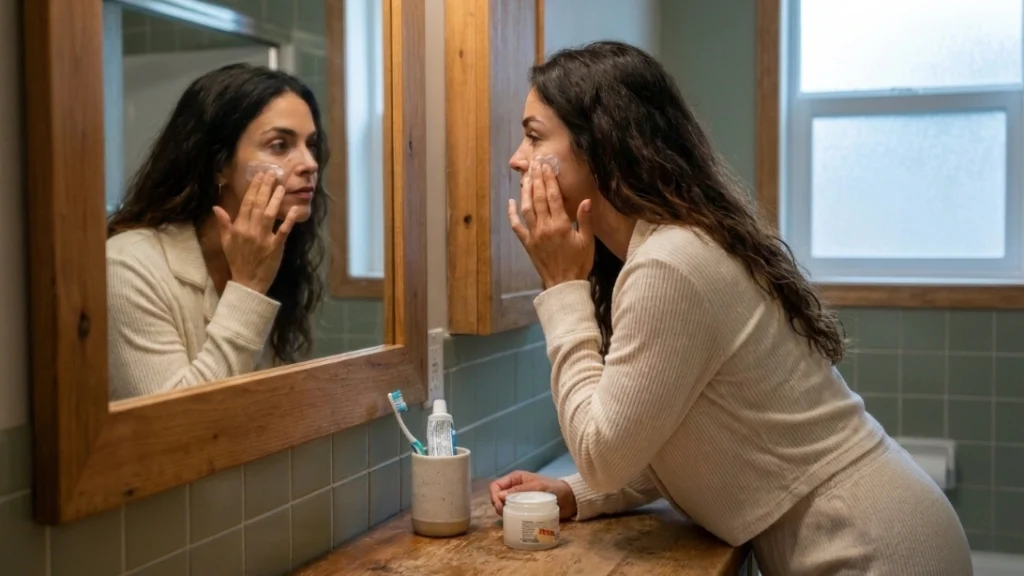
The three non-negotiables are a gentle cleanser, a daily moisturizer, and SPF. That’s it. Everything else, from toners to exfoliating acids to specialty serums, is optional and often unnecessary for teen skin, which tends to be more reactive to over-treatment than under-treatment.
Drugstore versions of all three typically fall in a low single-digit to low double-digit price range per item, general estimate, and last for months with normal use. A cleanser doesn’t need a $30 price tag to remove dirt and oil. It needs the right ingredients for your skin type and consistent use, which matters more than almost anything else in skincare.
If acne is a real, ongoing concern rather than the occasional breakout, that’s worth a conversation with a doctor or dermatologist rather than a new product every few weeks. That’s not a budget failure. That’s just what actually helps.
Hair Care That Doesn’t Need a Salon
Hair care is mostly technique, not product spend. How you wash it, how often, and how you dry and protect it overnight will do more for its health than a $45 leave-in treatment ever will.
A few low-cost habits that move the needle: washing less frequently if your hair type allows it, using a wide-tooth comb instead of a brush on wet hair to reduce breakage, air-drying when you have the time instead of heat-styling daily, and sleeping with hair loosely tied or on a smoother fabric to cut down on overnight friction. None of that costs more than a few dollars, and most of it costs nothing at all.
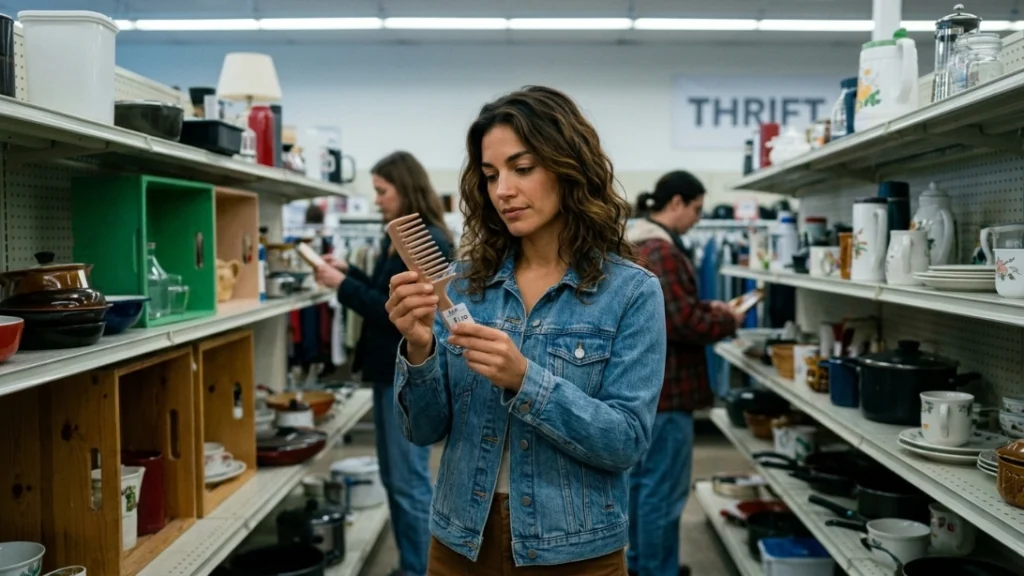
Thrift stores and discount retailers are genuinely useful here. Combs, clips, scrunchies, and basic hair accessories show up secondhand for a fraction of retail price, often in better condition than the price tag suggests. A budget self-care routine leans on resourcefulness like this far more than it leans on brand names.
If your hair and skin routine still feels overwhelming to manage on a tight budget, the honest at-home manicure method walks through the same low-cost, high-consistency approach for nails, which follows the same underlying logic.
Mental Health Habits That Cost Nothing
This is the part of a budget self-care routine that gets skipped most often, usually because it doesn’t photograph well. There’s no product to show off, no before-and-after, just quieter habits that add up over weeks rather than overnight.

A short daily walk, even ten minutes, is one of the most consistently supported low-cost habits for mood regulation. It costs nothing and requires no equipment beyond shoes you already own. Consistent sleep timing, going to bed and waking around the same time even on weekends, does more for mood stability than most people expect from something so unglamorous.
Journaling helps for a specific reason: it gets a feeling out of your head and onto a page where you can actually look at it, instead of letting it loop. It doesn’t need to be pretty or consistent every single day to work. A few honest sentences on a hard day counts.
Time away from screens, even in small blocks, matters too. Not as a punishment, but because near-constant comparison to curated versions of other people’s lives is genuinely hard on self-esteem, and stepping away from it on purpose is one of the few mental health habits that costs absolutely nothing.
None of this replaces real support when something feels bigger than a bad week. If things feel heavier than these habits can hold, a school counselor, doctor, or trusted adult is worth talking to, and that’s not a failure of self-care either. It’s part of it.
Money stress and self-worth get tangled together more than people admit, even before you’re the one paying bills. The real link between money and self-worth covers that connection in more depth, for whenever you’re ready for it.
Free and Almost-Free Hobbies Worth Trying
A hobby only needs to meet two conditions to count as real self-care: it has to be mostly free, and it has to have nothing to do with being good at it. Not productive. Not postable. Just something that pulls your attention somewhere calmer for a while.
Sketching or doodling needs a notebook and a pencil, both of which cost less than a fast food meal and last for months. Reading is free with a library card in most towns and cities, and secondhand bookstores often sell paperbacks for a dollar or two. Walking, running, or just sitting outside costs nothing and does double duty as a mental health habit. Journaling, already mentioned above, doubles as a creative hobby for a lot of people once it stops feeling like an assignment.
Thrifting itself can become a hobby rather than just a shopping trip, especially once you start looking for specific pieces instead of buying whatever’s cheap. It teaches patience and an eye for what actually suits you, which is a skill that pays off well beyond your teenage years.

For anyone who wants a hobby that quietly doubles as a style skill worth having for life, building a teen budget that still feels like you is a useful next read once the basics here feel settled.
The Hard Numbers on What This Actually Costs
Here’s what a genuinely budget-conscious version of this looks like in real numbers. These are general price estimates based on typical drugstore and retail pricing, not specific cited statistics, since exact costs vary by brand, location, and sales.
| Category | Typical “Influencer” Version | Realistic Budget Version |
|---|---|---|
| Skincare (monthly) | $60 to $150+ for a multi-step routine | $10 to $20 for cleanser, moisturizer, SPF |
| Hair care (monthly) | $40 to $80 for specialty products and tools | $0 to $10, mostly technique-based |
| Mental health habits | $10 to $30/month for wellness apps | $0, walking, journaling, sleep routine |
| Hobbies (monthly) | $30 to $100+ for classes or kits | $0 to $15, library card, secondhand supplies |
Added up, the “budget version” column runs somewhere around $10 to $45 a month for a full routine covering all four categories, compared to $140 to $360+ for the version that gets marketed the hardest. The gap isn’t about who cares more about themselves. It’s about who has more money to spend proving it.
I am not a financial advisor and this is not financial advice. For your specific situation, especially anything involving ongoing skin concerns or how you’re managing money day to day, talk to a qualified professional or trusted adult.
The Habits Worth Keeping Longest
Not every habit in a routine like this earns its place equally. A few stand out as worth prioritizing if time or energy is limited on a given week.
Consistency beats intensity almost every time. A basic three-step skincare routine done every single day will outperform an elaborate ten-step routine done twice a month. The same goes for a short daily walk over an occasional long one, and a few honest journal lines over a rare, perfect entry.
Small, low-cost splurges still have a place here too, when they’re chosen on purpose instead of out of comparison. Small splurges that actually make a difference covers how to pick those intentionally, without letting them take over the whole routine.
Where This Actually Starts
Start with one category, not all four at once. Pick whichever one feels most overdue, skincare, hair, mental health, or hobbies, and build a simple version of it for two weeks before adding anything else. A budget self-care routine that actually sticks is built slowly, on purpose, not assembled overnight from a wishlist.
Nothing about doing this well requires spending more than you have. It requires showing up for the same small habits often enough that they stop feeling like a project and start feeling like just what you do.
People Also Ask
A few things come up again and again whenever this topic gets discussed.
How much does a budget self-care routine actually cost per month?
A full budget self-care routine covering skincare, hair, mental health, and hobbies typically runs somewhere between $10 and $45 a month, general estimate, depending on what you already own and how often you restock basics like cleanser or moisturizer.
What’s the cheapest way to start a skincare routine as a teen?
Start with a gentle cleanser, a basic moisturizer, and SPF, all available at drugstore prices. That three-step version covers most of what teen skin needs, and it’s the same foundation more expensive routines are built on anyway.
Do free hobbies really help with stress the same way expensive ones do?
Yes. What matters for stress relief is consistent engagement in something you enjoy, not the price attached to it. A sketchbook and a library card can do just as much for your mood as a paid class, often more, since there’s less pressure attached.
How do I build a self-care routine if I don’t have my own money yet?
Start with the free categories first: sleep timing, short walks, journaling, and library access. Once a small budget is available, add one low-cost skincare or hair item at a time rather than trying to build the whole routine at once.
One Thing Before You Go
A budget self-care routine was never about proving anything to anyone watching. It’s about the version of you who shows up for herself on an ordinary Tuesday, not just the days worth posting. That version doesn’t need a haul. She needs a cleanser that works, ten minutes outside, and permission to stop comparing her routine to someone else’s marketing budget.
Give it two weeks before deciding whether it’s working. That’s usually long enough to feel the difference a real budget self-care routine makes, even the quiet, unphotographed parts of it.