

A home perfume business cost is one of the least honestly answered questions on the internet right now. Search it and you will find guides confidently naming a single number, five hundred dollars, eight thousand dollars, twenty five thousand dollars, as if there is one true answer waiting to be discovered. There is not. What actually determines a home perfume business cost is which business you are picturing, and most guides never say that part out loud.
You do not need twenty five thousand dollars to test whether you can make and sell a fragrance you are proud of. You also should not believe anyone who tells you it costs almost nothing and pays for itself in a month. Both claims are floating around, sourced to nothing, and this guide exists to walk through what is actually knowable about a home perfume business cost, what genuinely is not knowable yet, and what the guides selling the dream tend to leave out entirely.
This matters more than it might seem, because the number someone believes before they start shapes whether they start at all. Believe the twenty five thousand dollar version and a genuinely reachable small project feels impossible before it begins. Believe the almost-free version and the real cost to start a home perfume business, insurance, safe storage, legitimate registration, gets skipped entirely, which creates a different kind of expensive problem later. Neither extreme serves you. The accurate picture sits in the middle, and it depends on decisions only you can make.
A home perfume business cost varies enormously because “perfume business” describes several genuinely different businesses, a small-batch home blending operation, a brand using a contract manufacturer, and a physical retail boutique, each with entirely different economics. No single number honestly applies to all three, and any guide giving you one flat figure is oversimplifying a real decision you need to make first.
What Guides Selling You a Perfume Business Actually Claim It Costs
Here is what a quick search for a home perfume business cost actually turns up, side by side. One guide focused on indie fragrance founders puts an ultra-lean launch at a few hundred dollars for a beginner blending kit alone. Another estimates a realistic small-brand range in the low thousands. A different site, aimed at people who want everything handled for them, quotes ten to twenty five thousand dollars. A guide about opening a physical perfume retail store puts the number at fifty to two hundred fifty thousand dollars, sometimes higher.
That spread is not a rounding error. It is four different businesses wearing the same headline. The retail store figure includes rent, leasehold improvements, and stocking a shelf with other companies’ inventory, none of which applies to someone blending fragrance oils at a kitchen table and shipping orders through Etsy. A home perfume business cost sits nowhere near a boutique’s cost structure, and treating the two as comparable is exactly how someone ends up scared off a genuinely reachable project by a number that was never describing their situation in the first place.
None of these competitor figures are independently verified against a primary source, which means none of them appear here as fact. What is worth taking from them is the pattern itself, the range depends entirely on scale and business model, and any guide skipping that distinction is not being fully honest with you.
It is also worth noticing who is publishing these numbers. Several of the sites quoting the higher figures sell manufacturing, packaging, or turnkey brand-building services themselves, which does not make their number wrong automatically, but it does mean the estimate is coming from a business with a reason to describe a bigger project as the standard one. A genuinely independent, low-figure estimate is harder to find precisely because there is less to sell around it.
Why the Real Home Perfume Business Cost Depends on Which Business You’re Picturing
Picture two people. One wants to blend a signature scent, sell thirty to fifty bottles to friends, local craft fairs, and a small Etsy shop, and see if there is real demand before spending more. The other wants a fully developed brand line, professional bottle molds, a contract manufacturer, and shelf space in boutiques within the first year. Both are legitimately called “starting a perfume business.” A home perfume business cost for the first person is a fraction of the second, and conflating them is where most of the internet’s confusing numbers come from.
The honest starting question is not “what does a perfume business cost.” It is “which of these am I actually building this year.” Answering that first turns an impossible search into a solvable one.
There is a third, middle option worth naming too, since most guides jump straight from “kitchen table hobby” to “full brand” without acknowledging the space between. A small home operation that sells consistently through a handful of channels, without ever renting a storefront or hiring a contract manufacturer, can still grow into real, meaningful income over a year or two. The cost to start a home perfume business at that middle scale looks nothing like either extreme in the guides above, and it is the version most people asking this question are actually picturing.

The Real Categories Behind Any Home Perfume Business Cost
Whatever scale you land on, a home perfume business cost breaks into the same handful of categories every time. What changes is how much you spend in each one, not which categories exist.
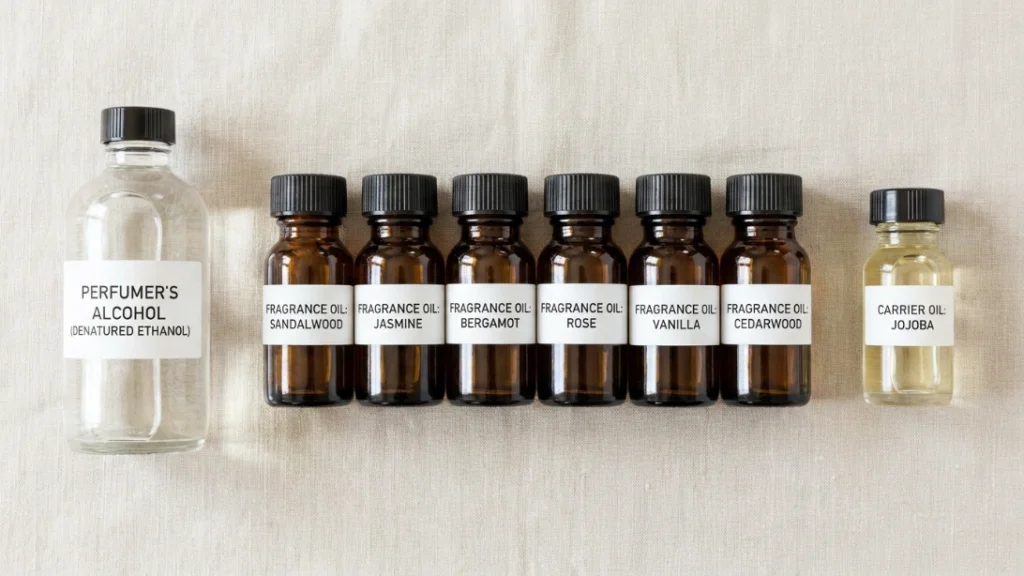
Raw materials. Fragrance oils or essential oils form the actual scent, alongside perfumer’s alcohol, which is a high-purity ethanol made specifically for fragrance work and is not the same product as rubbing alcohol from a drugstore. If you plan to offer roll-on oils rather than sprays, a carrier oil like fractionated coconut oil or jojoba oil is added to the mix. Fixatives help a scent last longer on skin. This category scales directly with how many fragrances you develop and how large a batch you test at once.
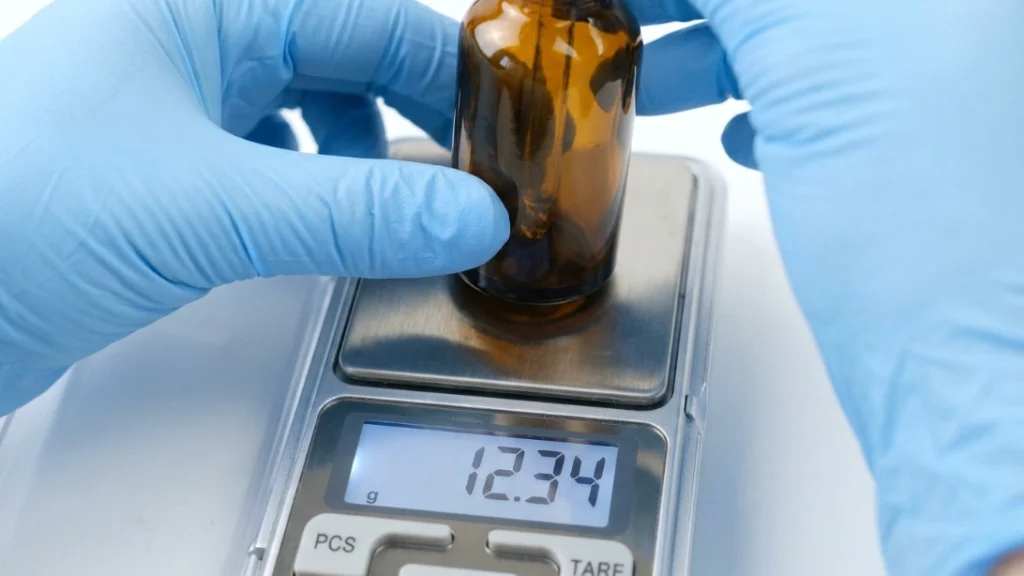
Equipment. A precision digital scale accurate to hundredths of a gram matters more here than almost anywhere else, because fragrance formulation is measured in small, exact amounts, not eyeballed. Glass beakers, mixing rods, pipettes for transferring tiny quantities, small funnels, and amber glass bottles for storing and aging blends away from light round out a starter kit. None of this requires commercial-grade equipment to begin testing formulas.
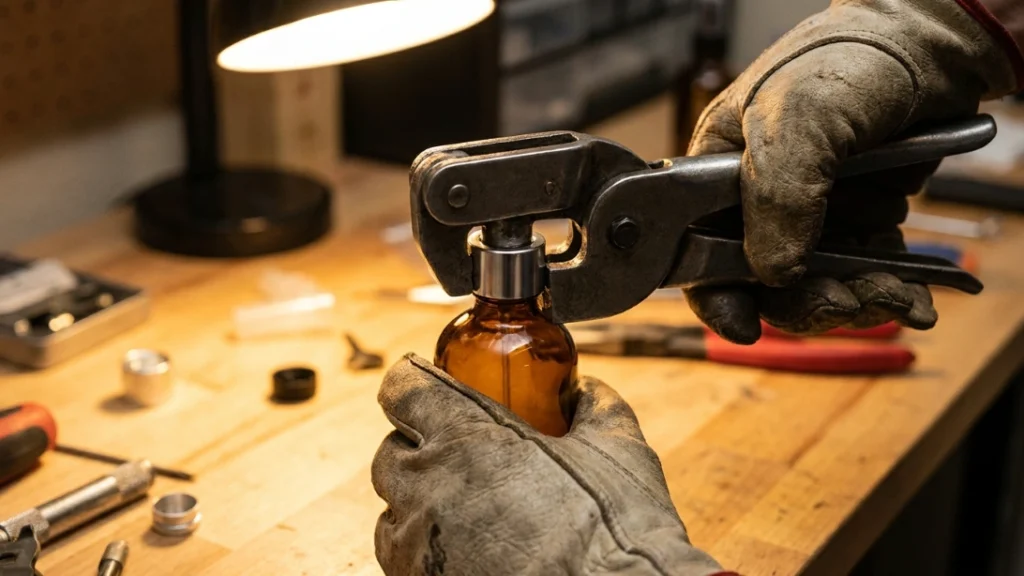
Packaging and branding. Glass bottles, whether spray atomizers or roll-on vials, are usually the single biggest line item in this category of a home perfume business cost, along with waterproof labels and any outer boxing. If you plan to seal your own metal spray pump collars onto bottles, a hand crimper tool is a one-time purchase that pays for itself quickly compared to paying someone else to do it per bottle.
Business and legal setup. This is the category most home perfume business cost estimates online skip past fastest, and it deserves more attention than a bullet point. It includes registering your business, understanding your state’s rules around home-based businesses that store flammable materials like perfumer’s alcohol, and building in a real answer for product liability before your first sale rather than after a problem.
Sourcing matters here too, not just as a cost line but as a quality and safety decision. Suppliers who specialize in fragrance and cosmetic raw materials, rather than general craft suppliers, typically provide safety data sheets and concentration guidance that matter for a product going on skin. Working with a supplier who cannot answer basic questions about ingredient concentration limits is a red flag worth taking seriously, regardless of price.

What Nobody Mentions: Insurance, Regulation, and the Cost of Doing This Legally
Every guide loves the fragrance-blending part. Almost none of them spend real time on the part that actually protects you, and it belongs in any honest home perfume business cost conversation.
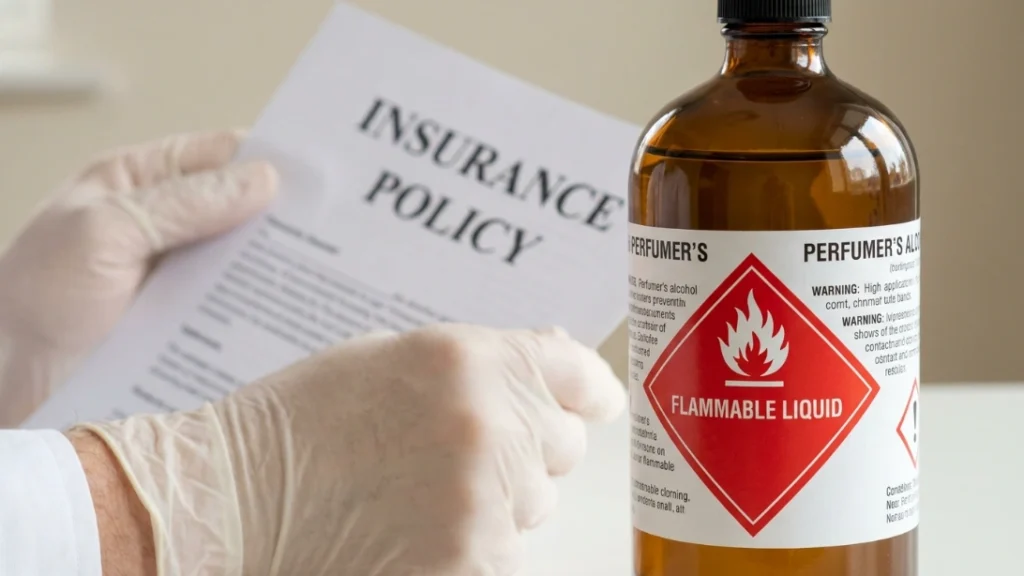
Perfumer’s alcohol is flammable, which means your city’s zoning rules for home-based businesses storing chemicals genuinely matter and vary by location. This is not a step to skip because it feels bureaucratic, and it is a real part of the true home perfume business cost even though it never shows up in a marketing headline. A product applied directly to skin also carries real liability exposure if someone has a reaction, which is why product liability insurance belongs in your planning from day one rather than added later once you already have customers.
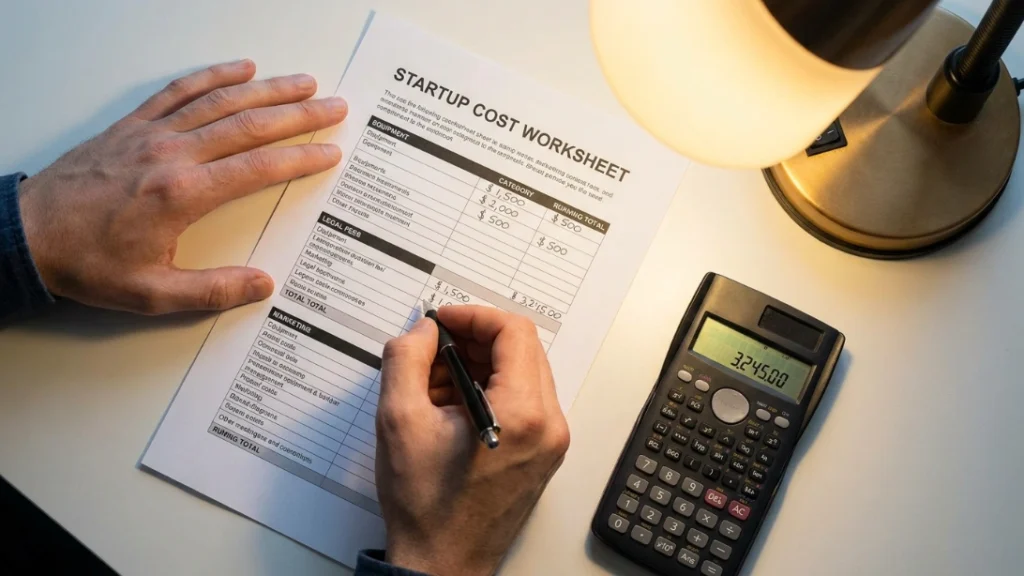
According to the U.S. Small Business Administration, new businesses should plan for both one-time startup expenses and several months of ongoing operating costs before expecting to break even, and the SBA provides a free downloadable worksheet built specifically for mapping that out category by category. That single planning habit, listing every real expense before spending a dollar rather than working from someone else’s headline number, does more for an accurate home perfume business cost than any figure a blog post can hand you.
Six months of operating costs sounds like a long runway for a small side project, and for many people testing a first batch it genuinely will not take that long to know if there is demand. The SBA’s framework is not a rule that applies identically to every business size, it is a habit worth borrowing, listing categories honestly rather than guessing at a single total. A home-batch operation selling through one or two channels can reasonably shrink that planning window, as long as the shrinking is a deliberate choice and not a skipped step.
I am not a financial advisor and this is not financial advice. Business registration, insurance needs, and local regulations for handling flammable materials at home vary by state and city, so this is a genuine case for talking with a small-business attorney or your state’s business licensing office before you spend money on inventory.
What Selling on Amazon, Etsy, eBay, or Your Own Site Actually Costs
Where you sell is its own line item in a home perfume business cost, and it is one almost every beginner guide treats as an afterthought instead of a real decision with real fees attached.
Etsy, Amazon, and eBay each charge some combination of a listing fee, a transaction or referral fee taken as a percentage of each sale, and a separate payment processing fee. These percentages are set by each platform, change periodically, and vary by product category, so rather than repeating a specific number here that could already be out of date by the time you read this, the honest move is to check each platform’s current seller fee page directly before you price a single bottle. That five-minute check belongs in your home perfume business cost planning as firmly as the price of glass bottles does.
Your own website removes marketplace fees but replaces them with different costs, a platform subscription, payment processor fees on every transaction, and the marketing work of bringing your own traffic instead of relying on a marketplace’s existing shoppers.
Neither path is automatically cheaper. A new brand with no existing audience often earns back the marketplace fee through the built-in foot traffic a platform like Etsy already has, at least for the first several months of testing demand.
Packaging for shipped orders is a real cost across every one of these channels and easy to underbudget. A protective mailer or box, cushioning material so a glass bottle survives transit, and a simple branded touch like tissue paper or a thank-you card all add up per order, not just once. Building that per-order cost into your pricing from the very first sale, rather than discovering it after a few months of shipping, keeps a home perfume business cost from quietly eating into margin nobody planned around.
Should You Actually Do This? A Few Honest Questions First
A realistic home perfume business cost is reachable for a small first batch. Whether it is worth reaching for is a separate question, and it deserves an honest answer instead of a motivational one.
What this is not is a guaranteed income stream, and no honest home perfume business cost breakdown pretends otherwise. Nobody can responsibly tell you what you will earn, because that depends entirely on your pricing, your local market, how many hours you can put into it around everything else in your life, and whether the specific scent you make finds real demand. Anyone promising a specific dollar figure without knowing any of that is selling you a story, not a business plan.

Who this genuinely does not work well for: someone hoping for fast, guaranteed income to cover an urgent bill this month. Product-based businesses, fragrance included, take real time to build a customer base, and treating this as a slow, testable project rather than a quick fix is the difference between a sustainable home perfume business cost and a discouraging one.
If you already run or are considering another product-based side income, our side hustle hourly rate calculator is worth running your numbers through once you have real sales data, since it accounts for the actual hours a handmade product business takes, not just the profit per bottle.

Naming Your Fragrances and Your Brand
One part of a home perfume business cost genuinely costs nothing and gets skipped anyway: naming. A fragrance name and a brand name both need to be checked against your state’s business name registry and available domain names before you fall in love with either one, which takes an afternoon and avoids a rebuild later.
Fragrance names matter more than they might seem to on a spreadsheet. A name that describes a feeling or a memory tends to outperform a name that just describes the scent notes, because people remember how something made them feel longer than they remember a list of ingredients. This costs nothing to get right and costs real money in relabeling if you get it wrong after your first batch sells.
The brand name and the individual fragrance names can do different jobs. The brand name needs to hold up across a whole future product line, which argues for something a little more open-ended than a single scent description.
The fragrance name gets to be more specific and evocative, since it only has to represent one blend. Treating these as two separate naming decisions, rather than trying to solve both with one clever phrase, tends to produce stronger results and avoids a rebrand cost later that a genuinely careful home perfume business cost plan should try to avoid entirely.

People Also Ask
A few questions about a home perfume business cost come up often enough to answer directly.
Can I legally make and sell perfume from my home kitchen?
In most areas, yes, with real conditions attached. Local zoning rules for storing flammable materials like perfumer’s alcohol vary by city, and a seller’s permit is typically required. Checking your specific local rules before your first sale is not optional paperwork, it is part of the actual home perfume business cost.
Do I need a chemistry background to blend fragrances?
No, though a working understanding of top, middle, and base fragrance notes makes the learning curve faster. Many independent perfumers start by studying blending fundamentals and testing extensively before ever selling a bottle.
What is the cheapest way to test if this is worth pursuing?
A single fragrance, one bottle size, stock packaging, and a small test batch of thirty to fifty units lets you gauge real demand before committing to a larger home perfume business cost. Expanding fragrances and packaging options can wait until the first batch proves there is interest. This is also the cheapest way to learn the actual cost to start a home perfume business at your specific scale, rather than trusting a stranger’s estimate online.
Is perfumer’s alcohol the same as what I already have at home?
No. Rubbing alcohol and regular drinking alcohol are not formulated for fragrance work and will affect scent quality and skin safety. Perfumer’s alcohol is a specific, high-purity product meant for this exact use, and buying the correct one is a small but non-negotiable piece of a real home perfume business cost.
How is this different from the soap or candle businesses covered elsewhere on this site?
The core process differs meaningfully, fragrance work involves flammable alcohol, skin-contact liability, and far more precise measurement than melting wax or soap base, which changes both the safety planning and the real home perfume business cost involved.
The Question That Actually Matters More Than the Number
Somewhere in this you were probably hoping for one clean number to write down. Here is the more useful truth. A home perfume business cost is not fixed, it is a decision you make, one category at a time, about how big a first step you are actually ready to take.
Start with the smallest version that lets you test a real fragrance on real customers, track every expense honestly against the SBA’s own framework, and decide from actual numbers whether to go bigger. That approach beats chasing a single figure from a blog post that was never describing your specific situation to begin with. The real cost to start a home perfume business is whatever your own honest worksheet says it is, not whatever number ranked highest in a search this week.