
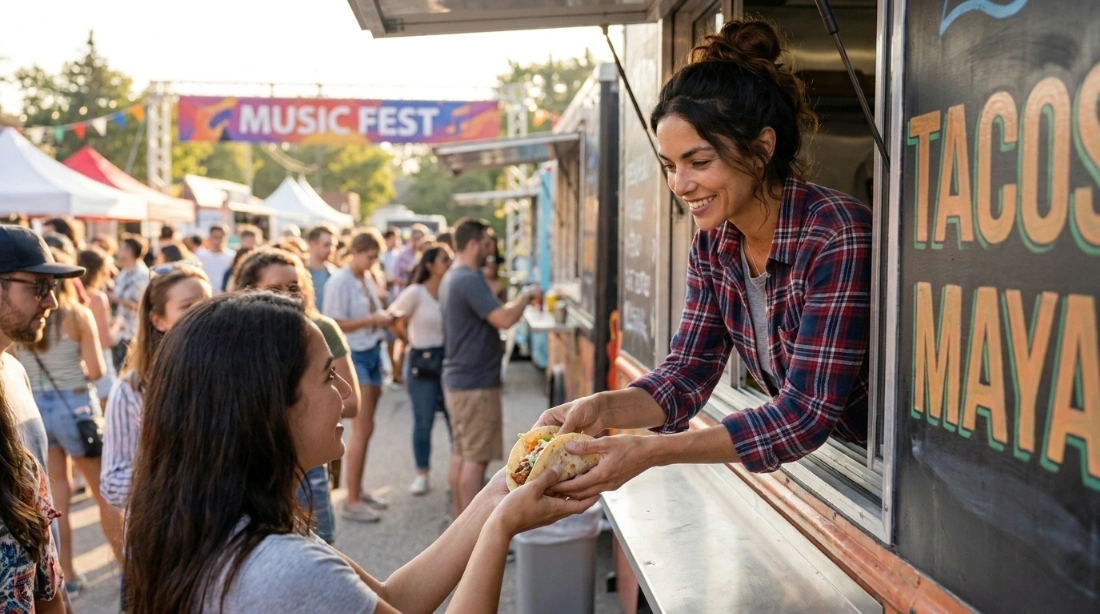
Starting a food truck for women is not the same as starting any other food business. The costs are different. The physical demands are different. And the specific friction points — being taken seriously by suppliers, navigating permit offices where nobody expects to see you as the owner, setting up a 500-pound piece of commercial equipment alone on a Tuesday morning — are different enough that most generic guides skip them entirely. This one doesn’t.
There is no permission required to do this. No culinary degree. No restaurant management history. No storefront lease, no landlord, no five-year plan signed in triplicate. What you need is the right truck, a menu people will come back for, a clear plan for where you’ll actually be selling, and a real understanding of what this business costs before a single dollar changes hands. That last part is where most first-time owners run into the first wall, and it’s where this guide starts.
This is written for women in 2026 who are seriously considering a food truck for women as their next income move, not as a hobby, not as a weekend distraction, but as a real business they intend to run and grow. I’m Maya Collins, writing at PennyToPower.com. The information here comes from sourced data, not from a single clean number invented to make the math look simpler than it is.
Starting a food truck for women in 2026 requires a vehicle, a certified commercial kitchen inside it, and multiple city and state permits before you serve a single customer. Startup costs typically run $50,000 to $175,000 depending on whether you buy used or build from scratch. A focused two-to-three-item menu, tested locations, and honest cost-per-dish tracking are the three habits that separate trucks that last from trucks that don’t.
Before You Buy a Single Thing
The biggest mistake made in this industry is buying the truck before understanding the market. What’s true in 2026: according to IBISWorld’s July 2025 industry report, there are now 92,257 food truck businesses operating in the United States. That’s not a small or niche market. It grew at a compound annual rate of 23.7% from 2020 to 2025. The U.S. food truck industry reached approximately $2.8 billion in market size in 2025, according to IBISWorld. So the opportunity is real. The competition is also real, and real competition means your concept, location, and execution need to be specific, not generic.
Before you look at a single used truck listing, answer four questions in writing. What specific menu concept do you have that people in your city can’t already find on every corner? Which three locations in your actual city have consistent foot traffic at the hour you’d realistically be serving? What’s your realistic personal runway — how many months can you cover your personal expenses without drawing income from the truck while it ramps up? And who is your second set of hands for the heavy days? A full-service day means lifting equipment, managing a hot kitchen for hours at a stretch, and breaking down at the end of it. That’s not a reason to stop. It’s a reason to plan.

What the Real Numbers Say About Starting a Food Truck for Women
No article that hands you one clean startup number is being straight with you. The honest range for a food truck for women in 2026, based on industry cost data:
| Cost Category | Low End | High End | Notes |
|---|---|---|---|
| Used truck with existing kitchen | $40,000 | $80,000 | Inspect engine AND kitchen separately |
| New custom build | $90,000 | $175,000 | 12-16 week lead time typical |
| Kitchen retrofit (bare shell) | $10,000 | $40,000 | Plus inspection timeline |
| Commissary kitchen rental | $500/month | $2,000/month | Required in most cities |
| Permits and licenses (first year) | $500 | $5,000 | Varies sharply by city |
| Insurance (general liability + commercial auto) | $2,000/year | $5,000/year | Required by most event organizers |
| Initial inventory and packaging | $1,000 | $3,000 | First 2-4 weeks of supply |
| POS system | $500 | $2,000 | Contactless payment is now expected |
| Working capital (first 60-90 days) | $5,000 | $15,000 | Most overlooked line item |
Source ranges drawn from multiple 2025-2026 industry cost data sets, including StartupCostHub’s food truck cost analysis (updated April 2026) and VendorLoop’s 2026 financing guide.
The number most first-time owners underestimate is not the truck. It’s the working capital buffer, the cash that keeps you operational while revenue is still building in those first two to three months. The truck that passes health inspection and then runs out of cash before it builds a regular customer base is the truck nobody talks about because there’s nothing interesting to say about it except that it failed for a reason that was entirely preventable.
On the profit side: food trucks average a 6.8% profit margin, according to IBISWorld’s 2024 data, compared to 1-3% for traditional restaurants. That structural advantage comes from not carrying a long-term lease, not running a full dining room staff, and keeping operations lean. Maintaining that advantage requires keeping the menu tight, tracking costs per dish religiously, and not spending the first year trying to match a full restaurant’s variety from inside a 200-square-foot kitchen.
For financing, the SBA’s 7(a) loan program and microloan program (up to $50,000 for microloans, per SBA.gov) are the most commonly used paths for first-time food truck owners who can’t self-fund entirely. The truck itself typically serves as partial collateral. Have a written business plan before approaching any lender. A plan showing your menu concept, target locations, and a realistic 12-month financial model gets taken seriously. A verbal pitch does not.
I am not a financial advisor and this is not financial advice. For your specific tax structure, loan eligibility, and insurance requirements, talk to a qualified professional.
The Permits Nobody Explains Clearly
This is the section people skim and then regret. The specific permit names and fees change by city and state, but the categories are consistent enough that you can use this list to know what to ask for everywhere.
A business license gives you legal right to operate in a given city or county. A health department permit (sometimes called a mobile food facility permit) confirms your truck passes sanitation and food safety inspections. A mobile vendor permit specifies where you’re legally allowed to park and sell. A fire or propane permit covers open flame equipment, grills, and fryers, and typically comes with an annual inspection. A seller’s permit lets you legally collect and remit sales tax. An EIN from the IRS lets you open a business bank account and run payroll if you hire anyone. A commissary agreement proves you’re storing and prepping food at an approved commercial kitchen. In most cities, this last one is not optional.
The SBA’s license and permit directory at sba.gov routes you to your specific state and local agencies rather than guessing at a national standard that doesn’t exist. Start there.
Two things about permits worth saying plainly. First, none of these exist to slow you down out of spite. A health inspector checking refrigeration temperature is protecting the customers you’re trying to turn into regulars. The permit process is the foundation of the trust your business depends on. Second, most permits renew annually. A business license or health permit that lapses mid-summer, right before a festival booking you already paid for, can shut a food truck for women down at the worst possible moment. The day each permit arrives, set a calendar reminder for the renewal date. Don’t trust memory eight months into a busy season.
Insurance is not technically a permit but belongs in this section. General liability coverage protects you if a customer claims illness or injury near the truck. Commercial auto insurance, separate from your personal car policy, covers the vehicle during business use. Most commissary kitchens and nearly all festival organizers require proof of both before they’ll let a food truck for women operate on-site. Treat it as a non-negotiable startup cost, not something added once you’re profitable.

Choosing the Right Truck and Kitchen Setup
For a first food truck, a used truck that has already been through a health department build-out inspection is almost always the smarter starting point. Someone else has already solved the plumbing, the ventilation hood placement, and the electrical load calculations. And those solutions passed inspection once. Going the shell-and-convert route means building a certified commercial kitchen inside a moving vehicle from scratch, with a certified installer handling propane lines, exhaust hood, water tanks, and electrical systems. That’s not a weekend project. Health departments will not certify a kitchen where the fire suppression system was guessed at rather than engineered.
The kitchen components almost every food truck for women needs:
A commercial-grade cooking surface matched to the actual menu (griddle, fryer, or range), a three-compartment sink for washing, rinsing, and sanitizing, a separate hand-washing sink, adequate refrigeration for daily volume, a fire suppression system above any open flame or fryer, and a generator or shore-power hookup sized to run everything simultaneously without tripping.
Ventilation is the piece first-time owners underestimate most consistently. An undersized exhaust hood turns a workable kitchen into a hundred-degree box by the second hour of service. That affects both staff performance and food safety temperature margins.
Vehicle type matters more than it seems before you’re in it every day. A step van offers the most headroom and interior space, which makes a multi-item menu physically possible but makes parking in tight urban spots genuinely hard. A converted cargo van is easier to drive and park, suits a simpler menu well, but headroom becomes an issue fast as the menu grows. A towable trailer skips vehicle maintenance complexity entirely but requires a separate tow vehicle every time you move, adding a second significant cost and logistics layer.
Whatever type you choose: get a mechanic you trust to inspect the vehicle before buying, completely separate from the health department’s kitchen inspection. A truck that passes its health inspection with perfect marks can still have a transmission failing at 180,000 miles. A breakdown on the way to a booked festival loses both the booth fee and the day’s revenue, on a day when you needed both.
Brand, Wrap, and the First Impression That Sells Food
A food truck for women that looks professional before it serves a single meal is already ahead of most of its competition. The exterior wrap is doing the work of a storefront window, a sign, and a first impression simultaneously, from thirty feet away, in a lot full of other options. Most first-time owners underinvest in it. That’s a mistake.
A full vinyl wrap is the single highest-return visual investment you’ll make. The only design rule that matters from a distance: your name must be readable at thirty feet in a moving car, and there must be one clear visual cue for what type of food you sell. Resist putting the full menu on the exterior. A truck with too much text reads as amateur. One clean logo and one strong image reads as established, even on your first day.
Carry that same visual identity through to the interior menu board, packaging, napkins, and any sidewalk signage. A customer who sees the same colors and fonts on the wrap, the menu board, and the takeout container in their hands builds trust in the business faster than one who encounters three unrelated visual choices in a single order. Plan the palette once at the start. It costs almost nothing to be consistent, and inconsistency costs you in ways that are hard to measure but easy to feel in repeat customer rates.
Rotating small seasonal touches, a chalkboard border that changes for a holiday weekend, string lights that shift for fall, gives regulars a reason to notice you’re still paying attention without requiring a full rewrap. It photographs well for the posts your customers will make without being asked, which is the most cost-effective marketing a food truck for women will ever do.
Menu, Pricing, and the Math That Actually Works
Every first-time owner starting a food truck as a woman makes the same menu mistake: trying to serve a full restaurant’s variety from a kitchen the size of a walk-in closet. A tight menu, two or three signature dishes executed extremely well, with one or two simple sides, will outperform a sprawling menu in almost every measurable way. It’s faster during a lunch rush. It’s cheaper to source without waste. And it lets customers decide quickly, which matters when the average customer has eight minutes before they need to be back at a desk.
Build around dishes that can be partially prepped in advance and finished quickly at the window. Anything requiring a full cook from scratch during service creates a line bottleneck the moment more than three people are waiting. Think about what travels well, holds temperature and texture on the walk from window to a table or car, and photographs well, because the posts your regulars take without being asked are worth more than any advertising budget you could realistically set in year one.
Develop reliable supplier relationships early rather than shopping for the lowest price every week. A supplier who knows your volume and schedule will flag you when a key ingredient’s price or availability shifts before you’re caught off guard mid-week. One rotating special per month alongside your two or three permanent items gives regulars something new without disrupting prep workflow or inventory ordering.
On pricing: the price has to cover ingredients, labor, fuel and generator costs, commissary rent, permit renewals, and packaging, and still leave a margin worth the hours. Undercharging out of nervousness is one of the fastest ways a genuinely good food truck fails quietly in its first year. Industry data indicates typical food truck menu items run $10-$15 per item, with successful trucks generally targeting daily revenue of $500-$1,500 to reach profitability, according to industry cost analysis data.
Calculate exactly what each dish costs in ingredients alone, then build from that number once everything else the dish touches is accounted for. Watch what similar trucks in your actual market charge, not trucks three states away in a completely different cost-of-living zone.
Track actual cost per dish in writing and update it whenever a supplier’s price shifts. A five percent creep in ingredient costs across a busy summer can quietly erase a margin that felt comfortable, and the only way to catch it early is checking the real numbers rather than assuming things still feel fine.

Where to Park It and Which Events Actually Pay Off
Where you park matters as much as what’s on the menu. A brilliant menu in the wrong spot will underperform a decent menu in the right one, every time. Office parks are reliable during weekday lunch hours and essentially dead on weekends. Breweries and taprooms often seek a food truck partner precisely because they don’t serve food, and that relationship can become a standing weekly booking if the match works. Residential neighborhoods tend to produce their best numbers in the evening. Scout any potential location at the exact hour you’d be serving, not just at a convenient time to check the street. Foot traffic patterns shift dramatically by hour.
Most cities have buffer-zone rules keeping a food truck for women a minimum distance from existing restaurants and schools. Check the specific mobile vendor permit requirements before falling in love with a spot.
Festivals and events run on a different economic model than daily street parking. You’re typically paying a flat booth fee or a percentage of projected sales upfront to the event organizer, which means the entire day’s volume has to justify that cost in a single shift rather than across a week. A well-chosen festival can generate more revenue in one afternoon than a slow week of street parking. A poorly attended one can leave you covering the fee out of pocket. Ask organizers for attendance numbers from previous years before committing to any event. Start with smaller, lower-cost local events to understand your actual service volume capacity before booking a major festival weekend.
Once you’ve tested a handful of locations and events, build them into a predictable weekly schedule. A consistent Tuesday-at-the-brewery, Thursday-at-the-office-park routine lets regular customers plan around you. That predictability compounds over time into a loyal customer base, which is worth more to long-term revenue than chasing a marginally better spot every single morning.
Private catering and corporate lunch bookings are worth actively pursuing once daily operations are running smoothly. These typically pay a flat guarantee regardless of how many people show up, removing the daily-volume uncertainty of street parking entirely for that booking, and they almost always come through word of mouth built on consistent daily service.
The One Decision That Determines Year Two
There is no honest success rate to give you for a food truck for women, and any article citing one specific percentage without naming exactly where it came from is guessing. What the pattern of real trucks shows consistently: the ones that reach year two share a small number of traits. A menu tight enough to execute well under real service pressure. A location strategy based on tested data, not assumptions. Pricing that covers the true full cost of running the business. And an owner who treats permits, maintenance, and bookkeeping with the same seriousness she puts into the menu she loves.
The physical reality deserves honest attention. A full service day means standing, lifting, and working in a hot, tight space for hours, often in conditions that don’t cooperate. Cash flow swings with the seasons in most markets, with slower winter months offset by stronger spring and summer revenue, so monthly budgeting needs to account for that rhythm rather than assuming every month resembles the busiest one. Building even a small support network, another owner to call when the generator fails mid-service, a reliable second person for festival weekends, makes the harder weeks manageable rather than overwhelming.
Who this genuinely isn’t for: if you’re hoping for a passive income stream or expecting to delegate the physical work from day one, this business model will disappoint you. It demands showing up, in person, in often difficult conditions, doing physical work consistently. If that reality doesn’t at least a little bit excite you, a different kind of business might be a better use of your energy and capital.
The food trucks still running in year three are almost never the ones that tried to do everything on day one. They’re the ones that got one location right before chasing five. Got one menu section perfect before adding a second. Starting a food truck for women and having it succeed long-term is about doing the boring parts as well as the parts you’re excited about, because the boring parts are what keep the exciting parts alive.
People Also Ask
What does it actually cost to start a food truck for women in 2026?
Starting a food truck for women in 2026 typically runs between $50,000 and $175,000 depending on whether you buy a used truck with an existing kitchen or build from a bare shell. A used truck with a working commercial kitchen generally falls in the $40,000 to $80,000 range. Budget separately for commissary kitchen rental ($500 to $2,000 per month), permits and licenses ($500 to $5,000 in year one depending on your city), insurance ($2,000 to $5,000 per year), and a working capital reserve covering at least 60 to 90 days of operating costs.
Do I need a commercial driver’s license to drive a food truck?
It depends on the vehicle’s gross vehicle weight rating. Most food trucks used by independent operators fall below the 26,001-pound threshold that triggers CDL requirements in most states, but you should confirm the specific weight class of any truck you’re considering and check your state’s DMV requirements before buying. This is not something to assume.
What permits do I need to start a food truck for women?
Most cities require at minimum: a business license, a health department permit (sometimes called a mobile food facility permit), a mobile vendor permit specifying where you can legally park and sell, a fire or propane permit if you use open flame equipment, a seller’s permit for sales tax collection, and a commissary agreement proving you use a licensed commercial kitchen for food storage and prep. Requirements vary significantly by city and state. The SBA’s license and permit directory at sba.gov is the most reliable starting point for finding your specific local requirements.
How do I find locations to park a food truck for women?
Start with office parks for weekday lunch hours, breweries and taprooms that don’t serve food, and evening residential neighborhoods. Scout any potential location at the exact time of day you’d actually be serving, not at an arbitrary time to check the street. Foot traffic shifts dramatically by hour. Check your city’s mobile vendor permit for buffer-zone rules that restrict how close a food truck can operate to existing restaurants or schools. Build a predictable weekly schedule once you’ve tested a few locations, since regulars plan around consistency.
Is a food truck a good business for a woman with no restaurant experience?
It can be, because the startup costs are lower than a traditional restaurant lease and the feedback loop between your menu and your customer is much faster. The honest caveat: no restaurant experience means learning health code requirements from scratch, and the pace of a real service rush is different from cooking at home even at high volume. Many successful food truck owners came from home cooking backgrounds. What matters more than a formal background is willingness to learn the licensing requirements in detail and to practice the full menu at realistic service volume before the first official service day.