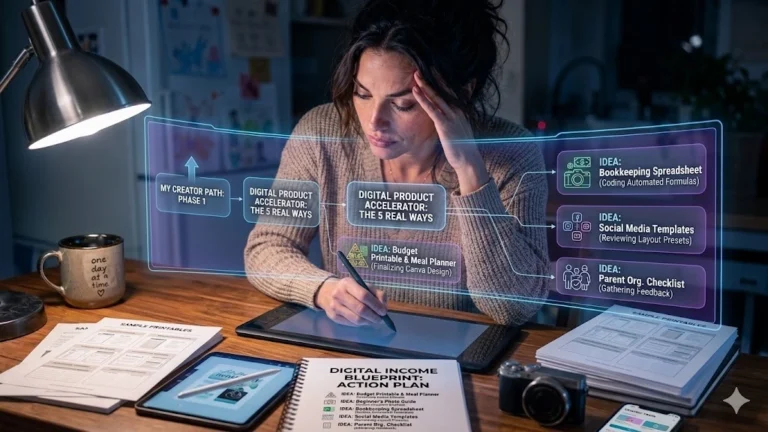
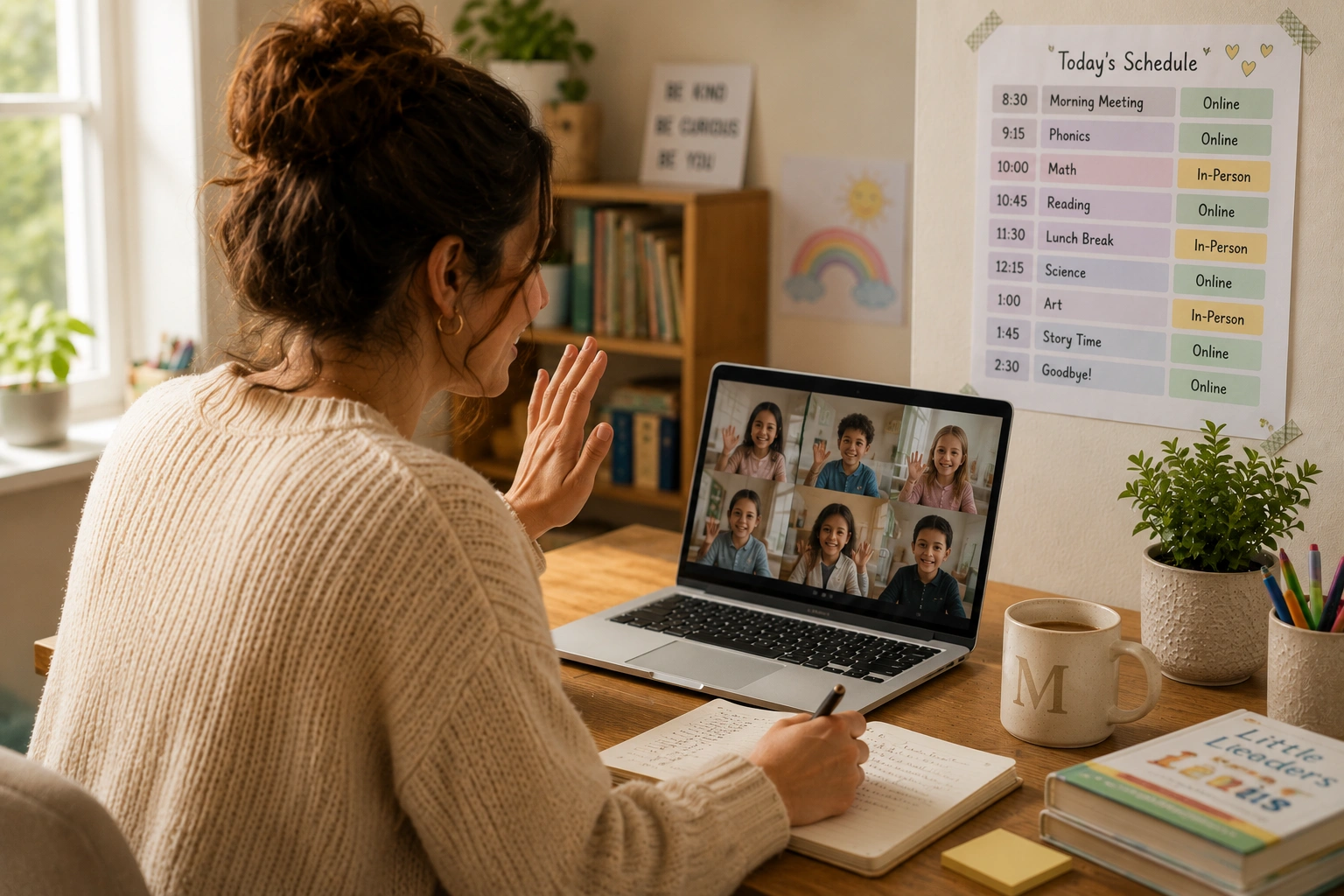
Every woman who has ever explained a concept clearly enough that someone else finally understood it has already done the hardest part of teaching. Make money teaching online, or in person, and the rest comes down to something almost entirely structural: which platform you start on, how you price your time, whether you eventually build something of your own instead of renting space on someone else’s app, and whether you can prove your results to a stranger who has never met you.
Make money teaching online is less about credentials than most women assume, and more about treating teaching like the real, buildable business it already is for thousands of women doing exactly this right now, whether that teaching happens through a screen or across a kitchen table.
This isn’t a pitch for a single platform or a single path. It’s a full walkthrough: where to start, how to actually maximize what you earn once you’re teaching, how to eventually build your own teaching website instead of depending on one marketplace, how quizzes and performance evaluation turn casual students into long-term ones, and how a portfolio becomes the single biggest lever for raising your rates and growing your student base, no matter which format you teach in.
Make money teaching online, or in person, works best as a system, not a single decision. Start on a platform or through local outreach to prove demand, price with intention, build a simple way to track progress, and eventually create your own booking system that works whether a student sits at your kitchen table or joins by video.
Why Teaching Is One of the Strongest Income Skills a Woman Can Build Right Now
Teaching scales in a way a lot of other income ideas don’t. A woman who tutors math, teaches a language, coaches a craft skill, or walks beginners through software isn’t selling her time in a fixed, one-to-one way forever. She’s building repeatable material, a reputation, and eventually a system that can serve more students than she could ever teach one-on-one in the same number of hours.
It’s also one of the few income paths where the barrier to entry is knowledge, not capital. You don’t need inventory, a storefront, or thousands of dollars in startup costs. You need a subject you can teach clearly, a way to reach students who want to learn it, and a system to prove you’re worth what you charge. That last part is where most people who try this and quietly give up actually fail, not because they weren’t good teachers, but because they never built anything that made their results visible to someone deciding whether to hire them.
Most women who make money teaching online, or in person, describe this exact moment as the real turning point, not the first paid session.
The demand side is real, too. Parents, working adults changing careers, and students supplementing formal school all regularly search for tutors, coaches, and course instructors outside a traditional classroom, and they search for both formats. Some families specifically want in-person help for a young child who does better with a live person in the room. Others specifically want online help because their schedule, location, or budget makes that the only realistic option. Being able to offer either, or eventually both, widens the pool of people who can actually hire you.
According to the Bureau of Labor Statistics, the median annual wage across all education, training, and library occupations was $59,220 as of May 2024, above the median wage across all occupations nationally. That figure covers employed teaching roles broadly, not freelance online or in-person tutoring specifically, since income for independent teaching varies too widely by subject, format, and hours worked to cite one honest number, a point worth being upfront about before anyone builds expectations around a specific figure.
What the data does support is that structured teaching skills remain in steady demand regardless of format. A tutor who can teach effectively in person and adapt that same material for an online session isn’t choosing between two separate income paths, she’s building one skill set that opens two different doors.
Where to Start: The Real Platforms and Local Paths to Make Money Teaching Online
The fastest way to start earning is almost never building your own website first. It’s proving demand exists for what you teach, either by using an existing platform that already has students looking for someone exactly like you, or by reaching out locally if in-person teaching fits your situation better.
General tutoring marketplaces connect independent tutors with students searching for help in specific subjects, from math and reading to test prep and college-level coursework. These platforms typically let you set your own rate within a suggested range and build a rating and review history from your very first sessions, which becomes useful later when you’re ready to build something of your own. Most of these platforms let you specify whether you offer online sessions, in-person sessions in your area, or both, so this decision doesn’t have to be made in isolation from the platform choice.
Language-focused platforms work similarly but specifically for conversational practice and formal language instruction, connecting native or fluent speakers with learners around the world. These tend to have lower barriers to entry since a teaching credential often matters less than genuine fluency and the ability to structure a lesson. Because language practice depends less on physical materials, this is one of the categories where online teaching genuinely outperforms in-person in terms of reach.
Course marketplaces work differently. Instead of live one-on-one sessions, you build a recorded course once and it sells repeatedly with no additional time invested per sale. This is a slower path to your first dollar, since building a genuinely good course takes real upfront work, but it’s the one path on this list that scales without trading more hours for more income, and it works purely online by nature.
Skill and hobby platforms connect teachers of non-academic subjects, cooking, art, music, fitness, business skills, with students looking for structured lessons outside a formal school setting. If your teachable skill isn’t traditionally academic, this is often the most natural starting point, and many of these skills genuinely work better taught in person, at least at first, before a student is ready to continue independently online.
For in-person teaching, the starting point looks different but works just as well. Local library boards, community centers, school parent groups, and a simple flyer at a coffee shop near a school still generate real students, because in-person trust travels through word of mouth faster than almost anything online. A single satisfied parent talking to other parents at pickup can generate more qualified leads in a month than weeks of cold online marketing.
Whichever you choose first, the goal in this stage isn’t maximum income. It’s proof: real students, real reviews, real evidence that what you teach and how you teach it actually works for someone other than you. That evidence becomes the foundation for everything in the next section, and it matters equally whether that proof came from a video call or a living room.
How to Actually Maximize Your Earning as a Teacher, Online or In Person
Once you make money teaching online or locally through your first few students, the real work shifts from finding students to pricing them well. Most people who start teaching plateau at a modest hourly rate because they never move past the first three decisions everyone makes when they start: which platform or local path, what subject, what price. Maximizing earnings from here is about a different set of decisions entirely.
Pick a specific, defensible niche instead of a broad subject. Math tutor competes against thousands of other math tutors, online and in person both. SAT math tutor for students retaking the test after a disappointing first score has almost no competition and can command a meaningfully higher rate, because the value is obvious immediately, whether that session happens over video or across a kitchen table. The same logic applies to any subject: the narrower and more specific the promise, the less you’re competing on price alone.
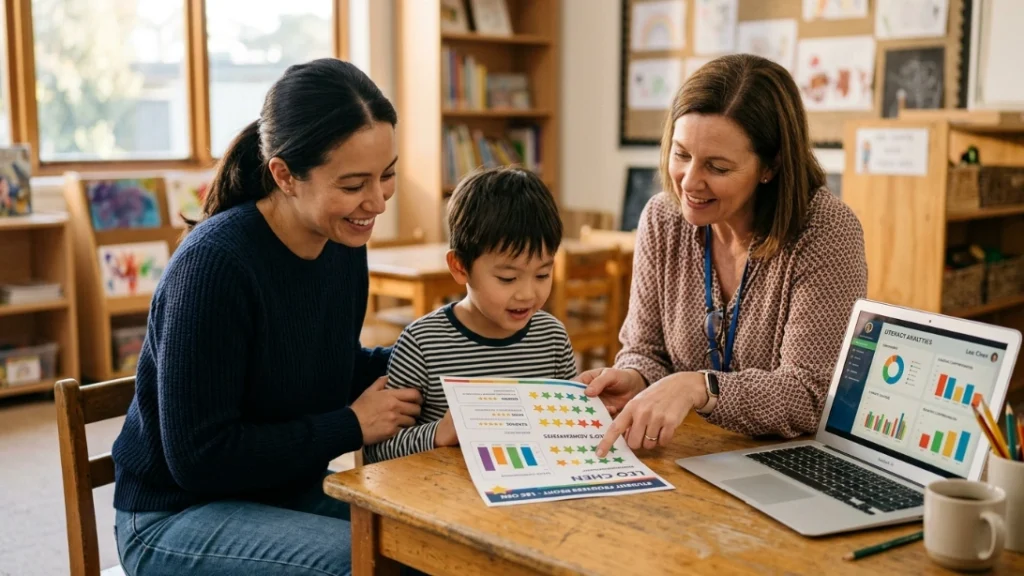
Sell packages, not single sessions. A student who books one hour is a transaction. A student who books eight sessions with a clear goal attached, raise your score by this date, finish this unit before the test, is a relationship, and relationships are what actually stabilize income. This works identically online and in person: the structure matters more than the delivery method. A package might even mix formats, six sessions online and two in person before a major test, giving a family flexibility while keeping you booked further out.
Raise your rate before you feel ready, not after. Most new tutors underprice out of nervousness and then stay underpriced for years because raising a rate on existing students feels uncomfortable. The fix is simple: existing students keep their current rate for an agreed window, new students come in at the higher one. This works whether you’re teaching from a home studio, a rented community space, or entirely on video calls.
Consider pricing in-person and online sessions differently, and be upfront about why. In-person sessions often justify a premium since they include travel time, physical materials, and a level of convenience for families that video calls don’t offer. Online sessions can sometimes be priced lower per hour while still earning more overall, since eliminating travel time between sessions means more hours actually available to teach in a day. Neither approach is universally correct, the right pricing structure depends on your specific market, but treating both formats identically often leaves money on the table in one direction or the other.
For in-person teaching specifically, your local reputation compounds in a way online reviews can’t fully replicate. A tutor who’s known in one school district, one neighborhood, or one parent network becomes the default recommendation, which means referrals eventually replace advertising almost entirely. This kind of trust takes longer to build but tends to be more durable once established.
For online teaching specifically, your reach isn’t capped by geography, which means a genuinely excellent niche tutor can build a full roster of students from an area far larger than any single city could ever provide. The tradeoff is that trust has to be built entirely through what a stranger can see online, reviews, a clear profile, and eventually a portfolio, since there’s no in-person reputation doing that work for you.
Many of the most stable teaching incomes actually blend both. A tutor might run in-person sessions for local students who prefer face-to-face learning, especially younger kids, while filling additional hours with online students in other time zones who’d otherwise be unreachable. Neither path has to be chosen exclusively, and running both often smooths out income more than committing fully to just one, since a slow week for one format can be offset by demand in the other.
Building Your Own Teaching Website: A Portal That Handles Both Formats
Every tutoring marketplace, and every in-person referral network, has the same limitation eventually: someone else controls the relationship, the pricing rules, or the reach. This is the stage where women who make money teaching online start to feel the platform’s limits the most. A marketplace can change its fee structure or algorithm overnight. A purely local, word-of-mouth practice can only grow as fast as your personal network allows. A teaching website of your own solves both problems at once, whether your students find you online, through a friend, or from a flyer at their kid’s school.
A basic teaching portal needs a handful of core pieces, and none of them require you to be technical to set up. You need a booking system where a student, or a parent booking for their child, can see your real availability and reserve a session directly, instead of a back-and-forth over text or email. You need a way to take payment upfront, since chasing payment after a session is one of the most common reasons independent tutors lose income they’ve already earned. You need a simple way to deliver material, whether that’s a video call link for online sessions, a downloadable worksheet for in-person ones, or both.
This is also where the online and in-person sides of your practice can genuinely work together. A single booking page can offer both in-person and online video call options for the same subject, letting a student pick whichever fits them, while you manage both from one calendar instead of juggling separate systems for each. A family choosing between formats can see your real availability for either option side by side, which removes a common point of friction that costs independent tutors bookings without them ever knowing it happened.
Platforms built specifically for course creators and coaches, the same category used by fitness coaches, consultants, and independent teachers, generally handle this without needing custom development. Most offer a website builder, scheduling, and payment processing together, which means the technical setup is a matter of days, not months. The real work isn’t the technical setup. It’s deciding what belongs on that site once it exists, and that’s where the next two pieces come in.
A well-built portal also solves a scheduling problem specific to blended teaching: preventing a double-booking between an in-person slot and an online slot at the same time. A single shared calendar, rather than separate booking pages for each format, is what actually makes running both sustainable instead of a constant source of small scheduling errors.
Quizzes, Performance Evaluation, and the System That Builds Trust in Both Formats
A tutor who can show a parent or an adult student concrete evidence of progress is in a completely different category from one who can only say they’re doing better. Quizzes and performance tracking aren’t busywork, they’re the proof that makes a student, or the parent paying for that student, feel confident continuing to pay for more sessions, and this matters exactly as much whether the lesson happened on a screen or at a table.
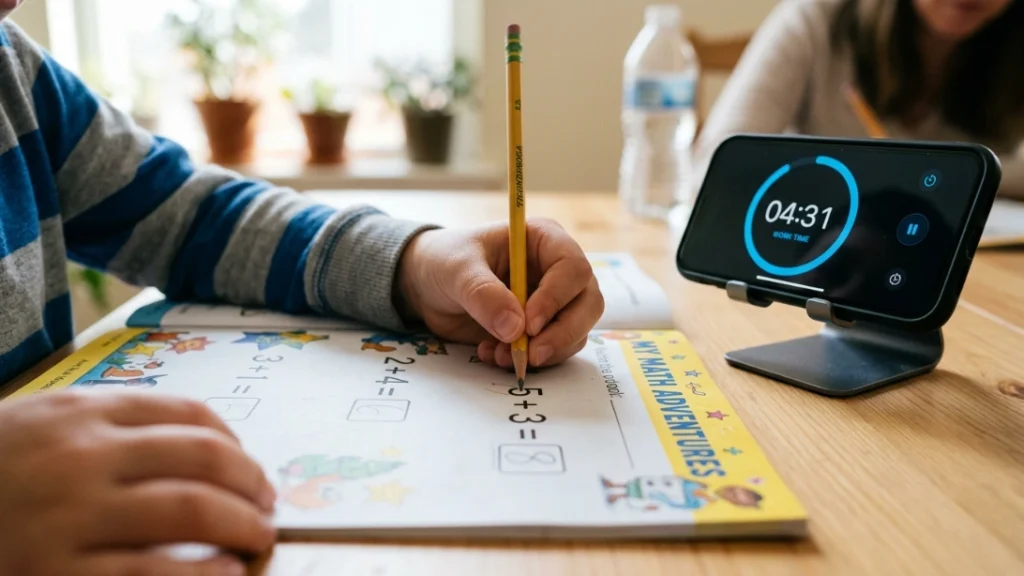
Start with a baseline. Before the first real lesson, a short diagnostic quiz establishes exactly where a student stands. This matters just as much in person as online, a paper diagnostic works identically to a digital one. What matters is that it exists and gets recorded somewhere, because without a starting point, progress is just a feeling, not something you can show anyone.
Build short, frequent checks instead of long, rare tests. A five-question check at the end of each session, whether typed into a simple form after an online call or handed over on paper at the end of an in-person one, gives you a running record of what’s actually sticking versus what needs to be retaught. This also gives a parent something concrete to see: a graph of scores climbing over eight sessions is a far more persuasive renewal pitch than any conversation could be.
Use free or low-cost quiz tools rather than building anything custom at first. Simple form-based quiz tools handle basic multiple choice and short answer questions, auto-grade them, and store the results, which is more than enough structure for most tutoring practices in the first year. For in-person sessions, the same digital quiz can be completed on a phone or tablet at the end of the lesson, so you’re not maintaining two separate systems, and both online and in-person results end up feeding the exact same tracking record.
Turn the data into a report a parent or adult student actually wants to see. A one-paragraph monthly summary, started at 60 percent accuracy on fractions, now consistently above 85 percent, next focus is decimals, does more to justify your rate and secure the next booking than any sales pitch. This is the single most underused tool independent tutors have, and it costs almost nothing to build once the quiz habit is in place.
For a blended practice, a shared evaluation system does something else valuable: it lets you prove that switching a student between formats, moving an in-person student to occasional online sessions during a busy month, for example, doesn’t cost them progress. That’s a genuinely persuasive point for a family weighing whether flexibility will hurt their child’s results.
I am not a financial advisor and this is not financial advice. If you’re planning to formalize this into a registered tutoring business, particularly around collecting payment, business licensing, or working with minors, talk to a qualified professional about the requirements in your state.
The Teacher Portfolio: How It Builds Authenticity, Higher Rates, and More Students
A portfolio is the single fastest way to close the trust gap with someone who has never met you, and it matters for in-person teaching almost as much as online, since even a personal referral eventually leads to can you send me something that shows what you do.
Student results belong at the center of it, not your own credentials. A before-and-after grade improvement, a specific skill a student couldn’t do and now can, a short written testimonial from a parent, these convince a stranger far more than a list of your own qualifications ever will. If you’re just starting and don’t have results yet, ask your very first few students for a short quote after just two or three sessions. Early proof, even small, is worth more than waiting for a perfect showcase later.
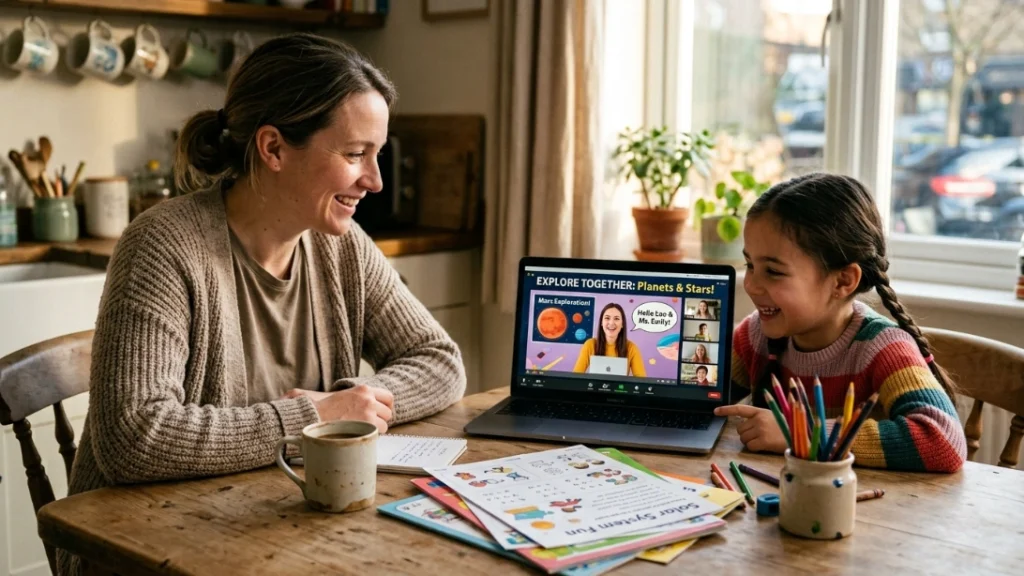
Show your actual teaching, not just a description of it. A one-minute clip of an online session, with the student’s permission and identity protected if they’re a minor, or photos from an in-person lesson showing your materials and setup, does more than any written bio. People trust what they can see happening, not what they’re told happens.
Include your quiz and evaluation system as part of the pitch. A portfolio that says here’s how I track progress, and here’s a real example of what that tracking looks like over eight weeks, signals a level of structure that most independent tutors never show a prospective student. This alone can justify a meaningfully higher rate than a competitor offering the exact same subject with no visible system behind it.
Keep it updated, and keep it specific to the niche you’re actually selling. A portfolio built around broad claims, I’m a great tutor, I love teaching, does very little. A portfolio built around a specific, repeatable result, I’ve helped six students raise their algebra grade by at least one full letter grade within a semester, gives a parent or student something concrete to imagine happening to their own child, or to themselves.
This is also where the earlier decision to blend online and in-person pays off again. A portfolio showing you can deliver real results in both formats signals flexibility that a single-format competitor can’t match, which becomes a genuine selling point when a family is deciding between an online-only tutor and someone who can show up in person when it matters. A portfolio section specifically labeled for each format, one showing in-person session results and one showing online session results, lets a prospective student self-select into whichever proof matters most to their own decision.
Don’t underestimate a simple numbers summary near the top of the portfolio either. A short line stating how many students you’ve worked with, how many sessions delivered across both formats, and an average result, is often the very first thing a skimming visitor reads before deciding whether to look any further.
The Honest Numbers on What Teaching Actually Pays
According to the Bureau of Labor Statistics, the median annual wage across education, training, and library occupations broadly was $59,220 as of May 2024, meaningfully above the median wage of $49,500 across all occupations nationally. Women who make money teaching online or in person rarely see that number reflected in their own paychecks either way, since it covers salaried roles, not freelance teaching. That figure reflects employed teaching roles across the field, not independent tutoring specifically, and it’s worth being direct about why: freelance and independent teaching income, online or in person, varies too widely by subject, location, hours worked, and pricing model to responsibly cite a single number as typical.
What can be said honestly is this: independent tutors and coaches who build a genuine niche, price with intention, and can show real evidence of results consistently report earning meaningfully more per hour than tutors offering broad, undifferentiated subjects at whatever rate a platform suggests by default. The gap between those two groups has far more to do with positioning, packaging, and proof than it does with which subject is being taught or whether the sessions happen online or in person.
Format itself is rarely the deciding factor in what a tutor earns. A well-positioned online tutor with a strong portfolio routinely earns more per hour than an undifferentiated in-person tutor with no evaluation system, and the reverse is just as true. What separates the higher earners in either format is the presence of a real system: a defined niche, a package-based pricing model, a working evaluation process, and proof that ties directly back to results.
There’s no guaranteed number here, and any article promising one specific income figure for teaching, online or otherwise, isn’t being fully honest with you. What’s realistic is this: teaching starts as a modest hourly income on someone else’s platform or through local word of mouth, and grows meaningfully once you have your own booking system, a real evaluation process, and a portfolio that proves what you do actually works, regardless of whether that work happens on a screen or in a room.
Where to Start This Week
Don’t try to build the full system, your own website, a quiz process, and a polished portfolio, before you’ve taught a single paid session. Start with one platform if you’re going fully or partly online, or one local outreach effort, a flyer, a post in a parent group, a conversation with your kids school, if you’re leaning in person. If you’re genuinely unsure which format fits your life right now, start with whichever one requires less setup for you personally, and let real demand tell you whether to add the other format later.
Teach your first few sessions, and start recording results from session one, even informally. Once you have a handful of real students and a little proof of what you can do, build the simplest possible version of your own booking page, offering both formats if that fits your situation, and start turning your session notes into the kind of evidence a portfolio actually needs.
Nobody builds all of this in a weekend, and trying to will just delay your first paid session. The system gets built around real students, not before them, and it can always grow to include a second format once the first one is genuinely working.
However you get there, make money teaching online or in person starts the same way: one real student, one real result, at a time.
People Also Ask
Can you make money teaching both online and in person at the same time?
Yes, and many independent tutors do exactly this, using online sessions to fill hours outside their local reach while keeping in-person sessions for students who prefer face-to-face learning, particularly younger children. A shared booking system makes managing both far easier than running them separately.
Do you need a teaching certification to make money teaching online or in person?
Not usually, especially for tutoring, coaching, and skill-based teaching outside formal school settings. What matters most to students and parents is evidence of results, shown through a portfolio and a track record, rather than formal credentials alone.
What’s the easiest way to start tracking student progress without expensive software?
A simple form-based quiz tool that auto-grades short assessments works for both online and in-person sessions, and costs little to nothing to start. The value comes from consistency, checking progress regularly, not from the sophistication of the tool.
How do quizzes and performance evaluation actually help a tutor earn more?
They turn vague progress into visible proof, which directly supports charging a higher rate and retaining students longer. A parent or adult student who can see measurable improvement is far more likely to continue booking sessions than one relying on your word alone.
Is it better to build your own teaching website or stay on a tutoring platform?
Most tutors do best starting on an existing platform to prove demand and build initial reviews, then building their own website once they have real students and results to showcase. A personal site removes platform fees and control issues, while a portfolio and evaluation system built on your own site becomes the strongest tool for growing beyond what any single marketplace can offer.