
Not a Money Person: The Real Lie Keeping You Broke
Not a money person. That’s what I told myself for years, and I said it with such confidence you’d think it was a medical diagnosis. I said it at dinner tables when money came up. I said it to myself in the car. I said it like it explained everything, like it was just a fact about me the way being left-handed or bad at parallel parking is a fact. I was not a money person. Therefore, money stress was simply my life.
I grew up in a house where money was never discussed out loud. Not because we were wealthy and didn’t need to, but because it was treated like something complicated and slightly shameful, a subject for accountants and husbands and people who had that kind of brain. I absorbed that without knowing I was absorbing it. By the time I was in my twenties, I had built an entire identity around not understanding money, and I protected that identity fiercely without realising that’s what I was doing.
The thing about a story you’ve told yourself for long enough is that it stops feeling like a story. It just feels like the truth.
The Hidden Belief Under the Money Stress
Here’s what “I’m not a money person” is actually doing when you say it.
It’s a permission slip. Not a conscious one, not a mean one, but a very effective one. If your relationship with money is explained by a fixed trait you were born with or didn’t get, then there is genuinely no point examining it more closely. You can’t fix a brain type. You can’t take a class in being a different kind of person. So you don’t look at the numbers, because looking at the numbers won’t help someone who isn’t wired for this, and the not-looking becomes its own habit, and the habit becomes the evidence that you were right all along.
That’s how fixed beliefs work. They protect themselves by generating the exact behaviour that confirms them.
What’s actually underneath the “not a money person” identity for most women is something much simpler and much more workable: fear. Fear of what the numbers might say. Fear of feeling stupid in front of a spreadsheet. Fear of opening statements and finding something you can’t fix. And underneath that fear, usually, is shame. Shame about past decisions, about debt, about not knowing things you think you should have figured out by now.
The money mindset shift that changes everything is not becoming a different kind of person. It’s realising the story you’re in was never about ability.
What I Told Myself That Was Wrong
I told myself that managing money required a kind of mathematical mind I simply didn’t have.
I was wrong. Almost embarrassingly wrong.
Personal finance, at its actual core, requires addition and subtraction. It requires you to know what comes in, track what goes out, and notice when those two numbers don’t match up. That is the whole foundation. There are no quadratic equations. There is no calculus hiding behind the credit card statement. There is arithmetic that a ten-year-old can do, attached to decisions that are mostly about priorities, not formulas.
The night I sat on my bathroom floor with $11 in my account and rent due in four days, I wasn’t there because I couldn’t do math. I was there because I had spent years not looking. Not looking at balances. Not opening statements. Not sitting with the numbers long enough to understand what they were telling me. The belief that I wasn’t a money person had given me permission to stay in the dark, and staying in the dark had consequences that looked exactly like being bad with money but were actually just the result of calculated avoidance.
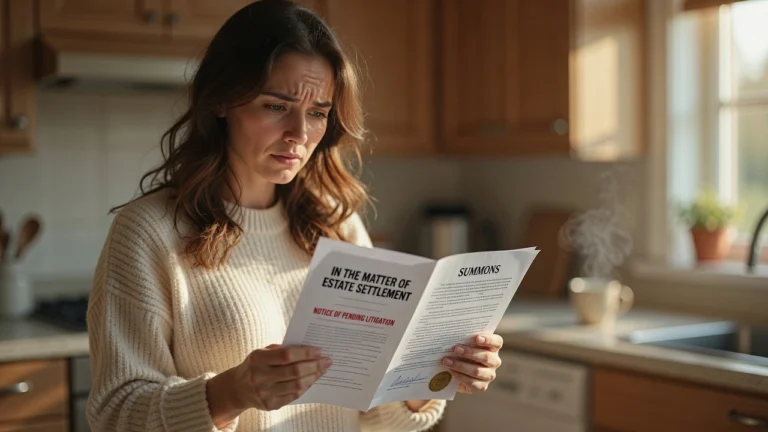
When I finally pulled three months of statements and sat with them at my kitchen table, something unexpected happened. The numbers made sense. Not immediately, not without some discomfort, but they made sense. I found a slow leak of over $300 a month in things I hadn’t consciously chosen and barely remembered paying for. You don’t need an accounting degree to see a pattern like that. You need to look.
Not a Money Person Is Not an Identity, It’s a Habit
This is the part of the money mindset shift that I want you to actually believe, not just nod at.
Financial confidence is not a personality type. It’s a practiced skill, built out of small repeated actions, the same way cooking confidence comes from cooking regularly, not from being born with a particular relationship to heat and flavour. Women who seem naturally good with money are almost always women who started earlier, had someone show them, or got scared early enough that they had to learn. Not a money person is not what they are. It’s what they were before they started.
Managing money basics is genuinely learnable. Not in a “you just need the right attitude” way. In a practical, specific, one-thing-at-a-time way. You learn to read one statement. Then you track one month of spending. Then you notice one pattern. None of those steps require a finance degree. They require willingness, which is different from ability, and willingness is something you can choose.
The women I hear from most often who have made real shifts in their financial lives are not the ones who suddenly became math people. They’re the ones who stopped using “I’m not a math person” as a reason to stop looking. That’s all. They looked. The numbers were confusing at first and then they weren’t, because numbers stop being intimidating once you’ve sat with them long enough to see that they’re just information.
The Hard Numbers on What This Belief Actually Costs
There’s no single statistic that captures what staying financially disengaged costs a person over time, and I won’t pretend there is. What I can tell you is what it cost me in concrete terms.
Three years of a streaming service I’d forgotten I had. Two gym memberships running simultaneously for about four months. A phone insurance plan on a phone I’d already replaced. A subscription box that kept coming because cancelling it required a phone call I kept meaning to make. When I added those up, the slow leak was somewhere around $300 a month. Over a year, that’s $3,600. Over three years of not looking, that’s closer to $10,000 that moved out of my account without me making a single conscious decision about it.
That’s not a math problem. That’s a looking problem.
The financial confidence women build when they start actually examining their numbers almost always surfaces something similar: not dramatic overspending on obvious things, but a quiet accumulation of unchosen expenses that nobody would have agreed to if asked directly. You don’t need a spreadsheet formula to fix that. You need to open the statement.
For a step-by-step way to do exactly this without it feeling overwhelming, the piece on how I found and cut $600 from my monthly spending walks through the same process I used that night at the kitchen table. It’s practical, it assumes nothing, and it does not require you to be a math person.
What Honest Looks Like Now
I’m not going to tell you I love budgeting now. That would be a different kind of lie.
What’s true is that I’m not afraid of the numbers anymore. I check my balance every morning the way I check the weather, not with dread, just as information I need for the day. That shift happened slowly, over months of small repeated contact with my own finances, and it changed the texture of my daily life in ways I didn’t expect. The low-grade anxiety that used to follow me into every purchase decision got quieter. Not because I had more money, though that came too, but because I stopped operating in the dark.
Not a money person is not what I am anymore. Not because I became someone different, but because I stopped letting a story I inherited at someone else’s kitchen table run my financial life. The door was never locked. I just hadn’t tried the handle.
One Thing Before You Go
You don’t need to become a finance expert. You don’t need to build a complicated budget system or read a stack of personal finance books or take a course. You need to look at your numbers one time, without flinching, for long enough to see what’s actually there.
Open one statement this week. Just one. Don’t try to fix anything yet. Don’t make a plan. Just look at it and let yourself see what it says. That single act of looking, done without judgment, is the beginning of the money mindset shift that actually lasts. Not a money person is a story you were handed. You can put it down whenever you’re ready. This week is as good a time as any.
People Also Ask
What does it mean to not be a money person?
Saying you are not a money person usually means you were never taught how to manage money and have since avoided the topic because it feels overwhelming or shameful. It is not a fixed personality trait. It is a gap in financial education that can be closed at any age, usually faster than most women expect once they decide to try.
How do I get better with money if I’ve always been bad at it?
Start with one habit, not an entire system. Checking your bank balance every morning is a complete starting point. Not acting on it, not budgeting from it, just looking at it daily until the number stops producing a stress response. That single habit shifts your relationship with money more than any budgeting app or financial course because it removes the avoidance that keeps most women financially stuck.
Is being bad with money a personality trait or a learned behavior?
It is entirely learned behavior. Financial confidence comes from exposure and practice, not from a personality type you are either born with or without. Women who grew up in households where money was never discussed openly are statistically more likely to describe themselves as not money people, which confirms that the gap is educational, not inherent.
How long does it take to become good with money?
Most women notice a meaningful shift in their financial confidence within 60 to 90 days of consistent small habits, not because the finances change dramatically in that time but because the avoidance pattern breaks. Once you stop dreading the numbers and start looking at them regularly, the practical skills follow much faster than most people expect.