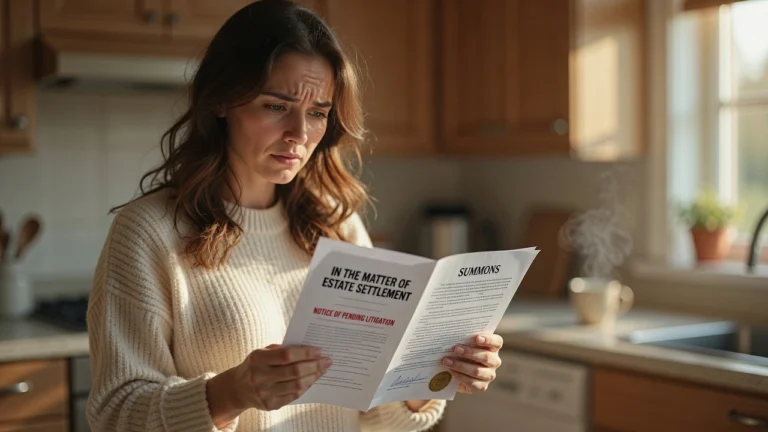

None of this needs fixing today. But once you’re out and ready to deal with it, rebuilding credit after a relationship like this follows a fairly predictable path, and it’s worth reading ahead of time so it doesn’t feel like starting from zero all over again.
You know the exact amount in your checking account right now. Down to the dollar. You probably know it without looking, because you check it more than you’d admit to anyone. That habit is not paranoia. It is a skill you built because someone made it necessary.
If you are reading this on a shared device, or you are worried about your search history, close this tab now and come back on your phone’s browser in private mode, or on a computer your partner does not use. That is not a dramatic overreaction. It is the first practical step in everything below.
A financially controlling relationship is not always the version you see in a made-for-TV movie, with a locked bank account and a weekly cash allowance counted out at the kitchen table. Sometimes it looks like a joint account you technically have access to, but every withdrawal gets a follow-up question you have learned to dread. Sometimes it looks like being the one who earns the money and still having to ask permission to spend it. The common thread is not how much money exists. It is who gets to decide what happens to it, and how much of that decision has quietly stopped being yours.
This is not a checklist to run through in one sitting. Some of it will apply to you immediately. Some of it will not apply for months, if ever. Take what’s useful and leave the rest.
Most articles about a financially controlling relationship are written for the moment right before you leave, or the year after. There’s less written about the long, quiet middle: the months or years where you’re still there, still functioning, still making dinner and going to work, while privately working out how to build something that’s actually yours. This is written for that middle stretch.
What This Actually Looks Like Day to Day
Financial control rarely announces itself. It tends to arrive dressed as responsibility. One person is “just better with numbers,” so they handle the accounts. One person’s paycheck goes into a joint account and the other’s stays separate, and there’s always a reasonable-sounding explanation for why. Bills get paid, but you never see the full picture: not the balances, not the statements, not what’s actually owed.
Over time, the explanations stop mattering as much as the pattern. You stop asking for the new debit card, because asking starts a conversation you don’t have the energy for. You get a small side income, cash from selling things online or a few babysitting hours, and you find yourself not mentioning it, not because you’re hiding wrongdoing, but because you’ve learned that any money you touch becomes a topic. If any of that sounds familiar, you are not imagining it, and you are not bad at managing money. You are managing money inside a system built to keep you from managing it independently.
There’s also a version of this that has nothing to do with a locked account at all. Some women in a financially controlling relationship have full technical access to every dollar and still feel like they can’t touch it, because every purchase gets weighed, questioned, or turned into evidence of irresponsibility later. Access without autonomy is still control. If you can see the balance but every withdrawal costs you an argument, that counts too.
The confusing part, and the part that keeps a lot of women stuck longer than they need to be, is that this rarely feels like abuse from the inside. It feels like being bad with money, or being the “irresponsible one,” or being lucky to have a partner who’s “so good at this stuff.” That framing usually didn’t arrive by accident. A person who wants ongoing control over the finances benefits from you believing you couldn’t manage them yourself.
Why “Just Leave” Skips the Actual Problem
People who have never lived inside a financially controlling relationship tend to reduce it to a single decision: leave. Pack a bag, walk out, done. What that framing misses is that leaving usually requires money, and the money is exactly what’s been controlled. You cannot put down a security deposit with an allowance. You cannot hire a lawyer, or move a child across town, or simply survive the first thirty days on your own, if every dollar that passes through your hands has to be accounted for before it arrives.
This is the trap, and it is a deliberate one in relationships where the control is intentional: the very resource you’d need to leave is the one thing you’ve been cut off from building. Recognizing that is not an excuse to stay indefinitely. It is the reason the plan matters more than the moment. A rushed exit with no money behind it often ends in going back, not because the decision to leave was wrong, but because the logistics weren’t ready yet.
There’s also a quieter cost that doesn’t get talked about as much: the toll of doing all of this thinking alone, while still living day to day beside the person you’re planning around. Grocery shopping. Small talk. Birthdays. All of it continues while you’re privately building an exit that has to stay invisible. That’s exhausting in a way that’s hard to explain to someone who hasn’t lived it, and it’s worth naming plainly, because carrying it silently doesn’t make you weak. It makes you someone managing two full-time jobs at once: the relationship as it appears, and the plan underneath it.
Building Something That’s Actually Yours, Quietly
Leaving a financially controlling relationship rarely happens in one dramatic step. It happens in a series of small, unglamorous ones, most of which have nothing to do with confrontation at all.

Everything in this section assumes one thing: you are not in immediate physical danger. If you are, none of this is the priority right now. Get somewhere safe first, and call the National Domestic Violence Hotline at 1-800-799-7233, or reach them by chat at thehotline.org, for help building a safety plan specific to your situation. Financial independence can wait a day. Your safety cannot.
If you are safe enough to move slowly, the goal is not to build a fortune. It is to build a small, boring, quiet buffer that exists outside your partner’s view. That buffer is what eventually turns “someday” into a real date on a calendar.
Start with an account they don’t know about. Some banks and credit unions will mail statements to a different address, like a trusted friend’s house or a P.O. box, or let you switch to paperless statements sent to an email your partner doesn’t access. A credit union across town, or a well-known online bank with no physical branch near your house, tends to draw less attention than something local.
Move money in amounts too small to notice. Ten dollars from a grocery run. A rounded-down gas fill-up. Cash back from a purchase that gets pocketed instead of spent. None of these individually look like anything. Over months, they add up to something real.
Treat any income that’s genuinely yours as genuinely yours. Selling clothes you don’t wear anymore, a few hours of freelance work, cash from a hobby. If it’s currently going into a shared account by habit rather than agreement, that habit is worth quietly reconsidering.
Keep the paper trail as thin as possible. A banking app with notifications turned off. A browser history cleared after each visit, or better, a private window every time. A statement that never prints. This is not about deception for its own sake. It’s about not handing someone information that could be used to slow you down or escalate a conflict before you’re ready.
Learn what you’re actually working with, slowly. You don’t need a financial degree to leave a financially controlling relationship. You need the actual numbers: what’s owed, what’s owned, what’s in whose name. If you genuinely don’t know, that’s common, and it’s not a personal failing, it’s often the exact outcome the arrangement was built to produce. Start small. One statement at a time, one login at a time, whenever you get a private moment.
The Documents Matter As Much As the Dollars
Getting out of a financially controlling relationship isn’t only a money problem. Money alone doesn’t get you out. Information does too, and it’s often easier to gather because it doesn’t move through an account your partner can see.
A photo of your Social Security card and your children’s, taken on your phone and saved to a private cloud folder, not the shared family album. A copy of your ID, your birth certificate, any lease or mortgage documents with your name on them, your marriage certificate if that becomes relevant later. A written note, even a rough one, of account numbers, outstanding debts, and anything with both your names on it. None of this needs to leave the house physically. A photo saved somewhere private is often safer than a paper copy that has to be hidden.
This is also the moment to check your own credit report, separately from anything joint. It’s free to do at annualcreditreport.com, and it will tell you two things: what’s actually in your name, and whether anything’s been opened in your name that you didn’t know about. Both matter.
If a debt was opened using your identity without your informed consent, that’s not simply a bad financial decision someone made. It’s coerced debt, and it has real consequences for years afterward: it can block an apartment application, tank a car loan, or follow a credit report long past the relationship itself. The Consumer Financial Protection Bureau is actively working to change how credit reporting handles debt tied to domestic violence and coerced financial abuse, a direct response to how common this pattern turned out to be, not a sign that it’s rare or unusual.

I am not a financial advisor and this is not financial advice. For your specific situation, especially anything involving joint debt, custody, or property, talk to a qualified professional, ideally one experienced with financial abuse specifically, not just general family law.
What Actually Helps Once You Have a Little Room
Every woman who has actually left a financially controlling relationship will tell you some version of the same thing: it wasn’t the size of the savings that mattered most, it was simply that the money existed and no one else knew about it.
A few hundred dollars sounds small next to the scale of the problem. It rarely is. A private account with even modest savings changes the math on your timeline. It means the difference between waiting for the “right” moment indefinitely and having an actual date on the calendar. It means you can afford a locksmith, a first month’s rent, a plane ticket, without having to explain the withdrawal to anyone first.
Local domestic violence organizations often have resources specifically for this stage: emergency funds, help understanding your legal options around joint accounts and debt, sometimes direct financial coaching for survivors.
Many of these services are free and confidential, and reaching out doesn’t commit you to any particular timeline or decision. You’re allowed to gather information long before you’re ready to act on it. And when you do get to the other side of this, rebuilding a financial life that’s genuinely yours has its own shape, one this article doesn’t try to cover.
If you want a second, independent walkthrough of this same groundwork, NerdWallet has a solid step-by-step guide to preparing financially before leaving that’s worth reading alongside this one.
You Don’t Have to Do the Thinking Alone
Everything described above is designed to be done quietly, which can start to feel isolating fast. That isolation is worth pushing back on, carefully and selectively. You don’t need to announce a plan to leave a financially controlling relationship to everyone in your life. You need one or two people who can hold information without repeating it, and ideally at least one resource outside your personal circle entirely: a domestic violence hotline, a local advocacy organization, or a financial counselor who has specifically worked with survivors before.
That last distinction matters more than it might seem. A general financial advisor might give you sound advice for a typical couple untangling shared finances. A financial abuse advocate understands why “just talk to your partner about the budget” is not usable advice inside a financially controlling relationship, and can help you build a plan that accounts for the parts a standard budgeting conversation would miss entirely: safety, timing, and the fact that transparency itself carries real risk right now.
Rebuilding Credit Comes Later, But Start the Paper Trail Now
You don’t need to fix your credit while you’re still inside a financially controlling relationship. You do need to know what shape it’s in now, because that knowledge changes what’s realistic once you’re out. Rebuilding after a financially controlling relationship is its own project, and it goes faster when you already know exactly what you’re working with. Pull your free credit report at annualcreditreport.com and read it line by line, not just the summary score. Look for accounts you don’t recognize, credit limits that don’t match what you thought existed, and anything showing a pattern of late payments on accounts you didn’t know were struggling.

If you find something that looks like coerced debt, meaning an account opened in your name that you didn’t knowingly and freely agree to, write down what you find, including dates and account numbers, and save it somewhere private. You won’t necessarily act on it immediately. Having the record matters more than acting on it right away.
Who This Isn’t For
If your situation involves physical violence, threats, or you genuinely fear what happens if your partner discovers you’re planning to leave, the sequence above is not built for you. Quiet financial groundwork assumes time is roughly on your side. When it isn’t, safety planning through a domestic violence advocate needs to come first, because an advocate can help you think through timing and risk in ways a personal finance article never can.
Common Questions
Is it illegal for my partner to control our finances? A financially controlling relationship isn’t automatically illegal on its own, which is part of what makes it so hard to name and so hard to get help for. It becomes a legal issue when it crosses into specific actions: opening credit in your name without consent, forging your signature, or, in some states, forms of coercive control that now carry their own legal definitions. A local domestic violence legal advocate can tell you what applies where you live.
Won’t my partner notice a new account on our credit report? A new bank account typically doesn’t appear on a credit report at all, since checking and savings accounts aren’t credit products. A new credit card would show up, so if you’re building credit independently, expect that a joint credit monitoring service, if one exists, might surface it.
How much money do I actually need before I leave? There’s no single number that fits every situation, and anyone giving you one confident figure is guessing. It depends on your city’s cost of living, whether children are involved, whether you have family nearby, and how fast you can generate independent income once you’re out. A domestic violence financial advocate can help you build a realistic number for your specific circumstances.
What if I don’t have any income of my own right now? Start with the documents and the credit report check, both of which cost nothing and require no income. Small selling and freelance opportunities, even a few hours a week, can begin the account before a full job search is realistic. The order matters less than simply starting.
Should I tell anyone what I’m doing? One trusted person, ideally someone outside your household who isn’t at risk of slipping and mentioning it, can matter enormously, both for practical help and for not carrying a financially controlling relationship alone. Choose carefully, and choose someone whose discretion you genuinely trust, not just someone you like.
How long does it usually take to be financially ready to leave? There’s no honest single timeline. For some women it’s a few months of quiet saving. For others, especially with children or shared debt involved, it’s closer to a year or more. What matters more than speed is that the plan keeps moving, even slowly, rather than stalling out entirely.
Before You Close This Tab
There’s no finish line here, no single moment where you’ll feel fully ready. Most women who get out of a financially controlling relationship describe the same thing afterward: they didn’t feel ready when they left. They were simply ready enough, on that particular day, with whatever they’d managed to put aside. That’s the actual bar. Not certainty. Not a perfect plan. Enough.
If all you do after reading this is open one account this week, that’s not a small step. That’s the whole thing, started.