
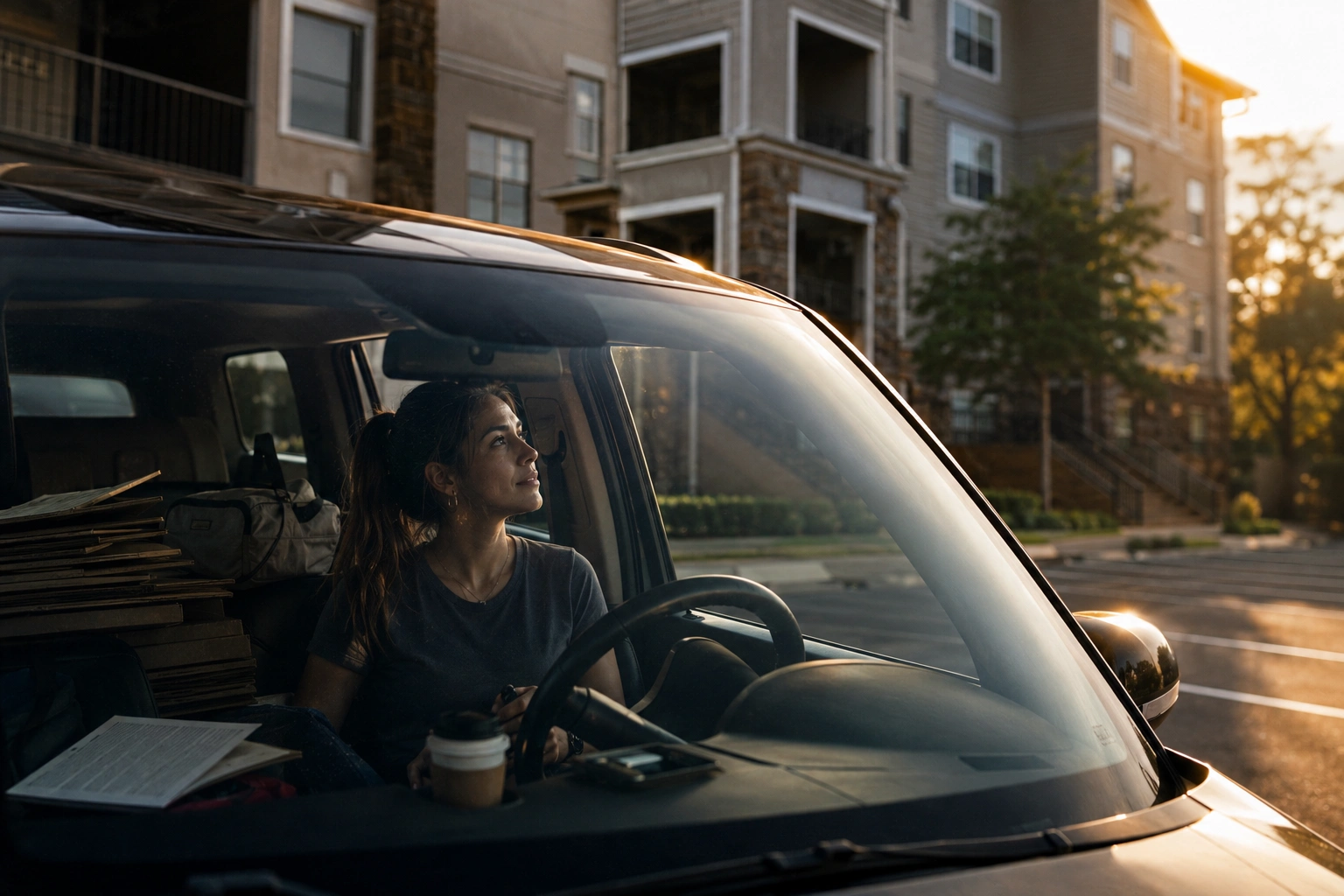
First apartment essentials rarely match what a generic checklist tells you to buy. She sits in the car for one extra minute before going in, keys already in her hand, a stack of flattened boxes in the back seat. The building looks bigger from here than it did during the walkthrough.
This is written for young women in 2026 moving into their first apartment, often for the first time managing rent, utilities, and safety entirely on their own. It covers what to actually prioritize before you move, what a realistic move-in budget looks like, and how long it takes before a new apartment stops feeling like someone else’s space.
First apartment essentials cover five categories: paperwork and deposits, safety basics, daily-use items for sleeping, eating, and cleaning, a realistic move-in budget, and a plan for the adjustment period afterward. Getting the order right, safety and paperwork before decor, saves both money and stress in the first month.
The Move-In List Nobody Warns You About
Most first apartment checklists online focus on what to buy. Fewer of them mention what to gather, prove, or set up before a landlord will even hand over the keys. That gap is where a lot of last-minute stress comes from.
Before signing anything, most landlords ask for proof of income, which can mean recent pay stubs, an offer letter, or bank statements, along with photo identification and sometimes a credit report. Some also request references from a previous landlord. None of this is optional, and scrambling for it after finding the right place is one of the most common reasons a good apartment slips away to another applicant.
Then there’s the money that has to exist before move-in day even starts. A security deposit. First month’s rent. Often an application or administrative fee on top of both. These numbers get discussed far less than the fun parts of apartment hunting, but they’re the real gate between “found it” and “moved in.”
A short, saved-up runway makes this whole process dramatically less stressful. If saving up that runway feels far off right now, a real 90-day plan to save your move-in costs breaks down exactly how to build that cushion without needing a huge income to start.
First Apartment Essentials, Room by Room
Once the paperwork and deposit are handled, first apartment essentials come down to two questions for every room: what keeps you safe, and what do you actually use every day. Everything else can wait.
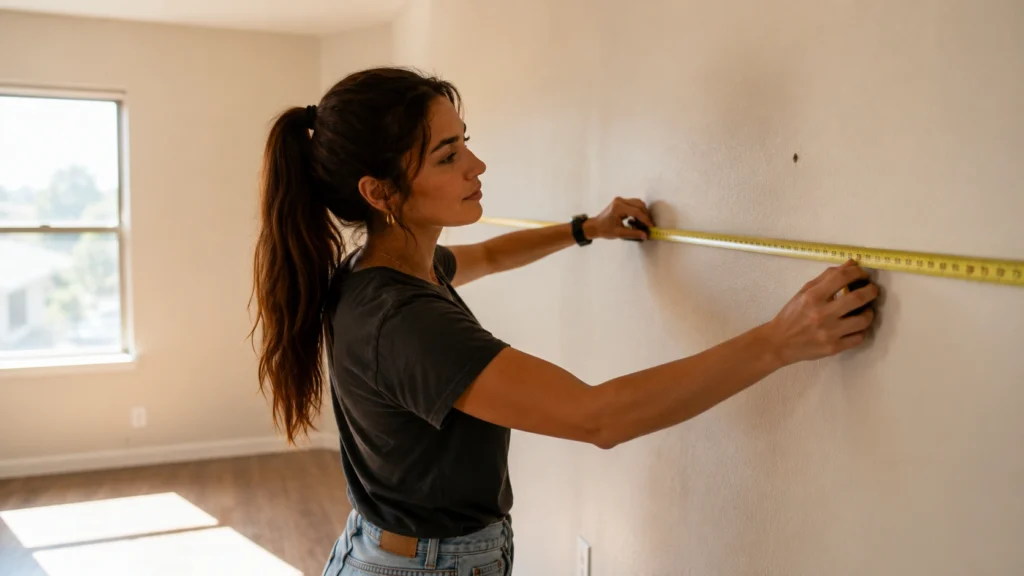
The Safety Essentials Landlords Won’t Tell You About
A landlord’s job is to hand over a livable space. It isn’t always their job to walk you through making it a safe one, especially for someone living alone for the first time. That part is worth doing yourself, on day one, before the boxes are even unpacked.
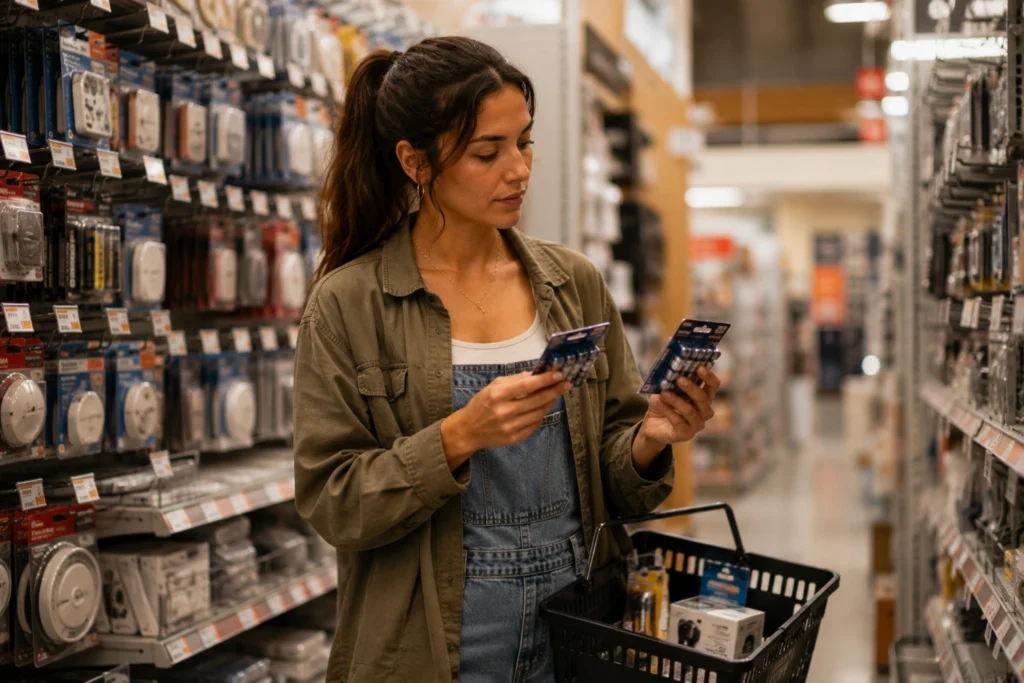
Test the smoke detector and carbon monoxide detector immediately, and replace the batteries even if they look new. Check that every door lock and deadbolt actually functions, not just that it exists. A door stopper sounds minor until you’re carrying boxes in with your hands full and the door keeps swinging shut on you. Know where the nearest fire extinguisher and exit are before you need either one in a hurry.
Renters insurance belongs on this list too, not as an afterthought. It typically costs far less than people expect relative to what it actually protects, and most leases either require it or strongly assume you have it. Skipping it to save a few dollars a month is one of the more expensive mistakes a first apartment can teach you.
Furnishing Without Going Into Debt
Furnishing an entire apartment on day one is neither necessary nor realistic on most starting budgets, and trying to do it anyway is how credit card balances quietly spiral before the first rent payment is even due.
Start with what you’ll use daily: a bed, basic cookware, cleaning supplies, a shower curtain, and trash cans. That short list covers sleeping, eating, and cleaning, the three functions an apartment has to support before anything else matters. A sofa, a coffee table, and decor can be added over weeks or months, not all at once.

Secondhand and thrifted furniture does most of the heavy lifting here. A frame or dresser from a secondhand shop often costs a fraction of retail and holds up just as well with a little cleaning. If putting a space together on a tight budget still feels intimidating, a frugal styling method that still looks put together applies the exact same logic to making a space look intentional without spending like it.
What Moving Day Actually Costs
Here’s a realistic walk-through of what a first apartment move actually costs, based on general, typical pricing rather than any single cited figure, since exact numbers vary widely by city and unit.
- Security deposit: often equal to one month’s rent, sometimes less depending on the property and your credit history.
- First month’s rent: due at signing in most leases, paid before you receive keys.
- Application and administrative fees: usually a smaller amount, but often non-refundable, so budget for it separately from the deposit.
- Move-in essentials: a modest budget for the daily-use items listed above, often less than people fear once decor is postponed.
- Utility setup and deposits: some providers require a deposit for new accounts with no prior payment history, refundable later in most cases.

Added together, most first-time renters end up needing somewhere between two and four times their monthly rent available before move-in day, general estimate, not a specific cited figure. Renting instead of buying still tends to require far less upfront capital overall, something worth understanding fully if you’re weighing your options. The real cost breakdown of renting vs buying covers that comparison in more depth.
I am not a financial advisor and this is not financial advice. For your specific lease terms, deposit amount, or credit situation, talk to a qualified professional or read your lease carefully before signing.
The First Month Adjustment
Nobody warns you that a first apartment can feel like someone else’s space for weeks, even once every box is unpacked. That’s normal, not a sign anything went wrong.
The first week is usually the least comfortable. New sounds at night, an unfamiliar layout, the strange quiet of nobody else being home. That tends to ease by the second or third week as routines form, groceries get restocked once, and the space starts holding evidence of an actual life being lived in it.
Money habits shift in this window too, often in small, easy-to-miss ways. A few extra takeout orders because the kitchen isn’t fully stocked yet. A forgotten subscription that used to feel worth it and now competes with rent. The small spending leak worth catching first walks through exactly this kind of quiet budget drift, which shows up almost universally in someone’s first few months living alone.
By around six to eight weeks, most people report the apartment starting to feel genuinely theirs rather than borrowed. That timeline isn’t a guarantee, but it’s a realistic one, and it’s worth knowing in advance so week two doesn’t feel like a failure.
What Actually Makes It Feel Like Home
She’s back in the driver’s seat weeks later, same building, same parking spot, and the nerves from that first evening are gone. The boxes are flattened and recycled. The smoke detector has fresh batteries. The kitchen has been cooked in enough times that it smells like her cooking now, not like an empty unit.
None of that came from a perfect move-in day. It came from handling the paperwork first, the safety basics second, and letting the rest build slowly, on a budget that never asked her to go into debt to feel settled. First apartment essentials were never about having everything on day one. They were about having the right things, in the right order.
People Also Ask
A few questions come up constantly from people about to move out for the first time.
How much money should I save before moving into my first apartment?
Most first-time renters need roughly two to four times their monthly rent available before move-in day, general estimate, covering the security deposit, first month’s rent, application fees, and basic move-in essentials. Exact amounts vary widely by city and property.
What safety items does every first apartment need?
A working smoke detector and carbon monoxide detector, functioning door locks, a door stopper, renters insurance, and a known location for the nearest fire extinguisher and exit. These first apartment essentials matter more than any decor purchase in the first week.
Is it cheaper to buy furniture new or secondhand for a first apartment?
Secondhand and thrifted furniture is typically far cheaper than new, often a fraction of retail price for comparable quality, especially for larger pieces like dressers, bed frames, and sofas that see heavy markup when purchased new.
How long does it usually take to feel settled in a new apartment?
Most people report their first apartment starting to feel genuinely like home somewhere around six to eight weeks in, general estimate, after routines form and the space accumulates evidence of daily life rather than sitting half-unpacked.