
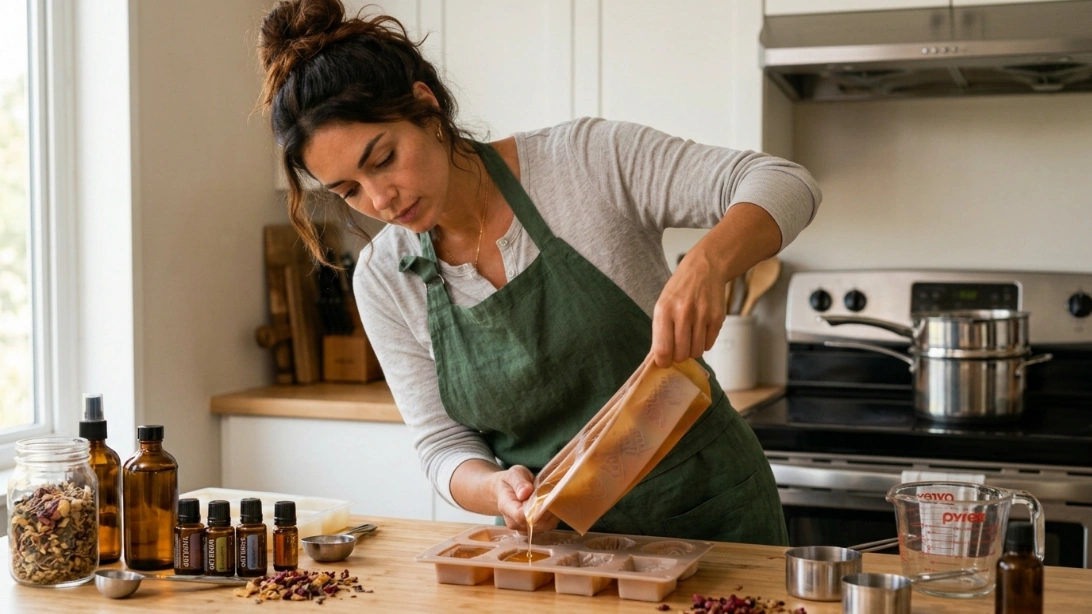
Every soap-making blog on the first page of Google will tell you what equipment to buy and how to price a bar. Almost none of them will tell you the one thing that actually determines whether your home soap making business is legal or accidentally breaking federal cosmetics law: what you’re allowed to say on the label.
A home soap making business is genuinely one of the more accessible crafts to turn into real income. The startup cost is low, the skill is learnable in a weekend, and the market for handmade, natural alternatives to commercial soap keeps growing. It’s also one of the few home businesses where the difference between a hobby and a compliant business comes down to a handful of specific words you either can or can’t put on your packaging, and getting that wrong is the mistake nobody warns you about until it’s already a problem.
The Distinction That Changes Everything
Here’s the part almost every beginner guide skips or gets slightly muddled. Federal regulators draw a hard line between what’s legally considered “true soap” and what’s legally considered a cosmetic, and which category your product falls into depends entirely on how you make it and what you claim about it, not on what you call it.
According to the Consumer Product Safety Commission, a product only qualifies as true soap if it’s made primarily from an alkali salt of fatty acids, meaning the traditional oil-plus-lye process, its cleaning action comes from that same chemical reaction rather than added synthetic detergents, and it’s labeled and sold only as soap, with no other claims. The moment you add a claim like “moisturizing,” “deodorizing,” or “gentle for sensitive skin,” even if the recipe itself doesn’t change at all, the product legally becomes a cosmetic instead, which means it falls under an entirely different, more involved regulatory framework through the FDA rather than the CPSC.
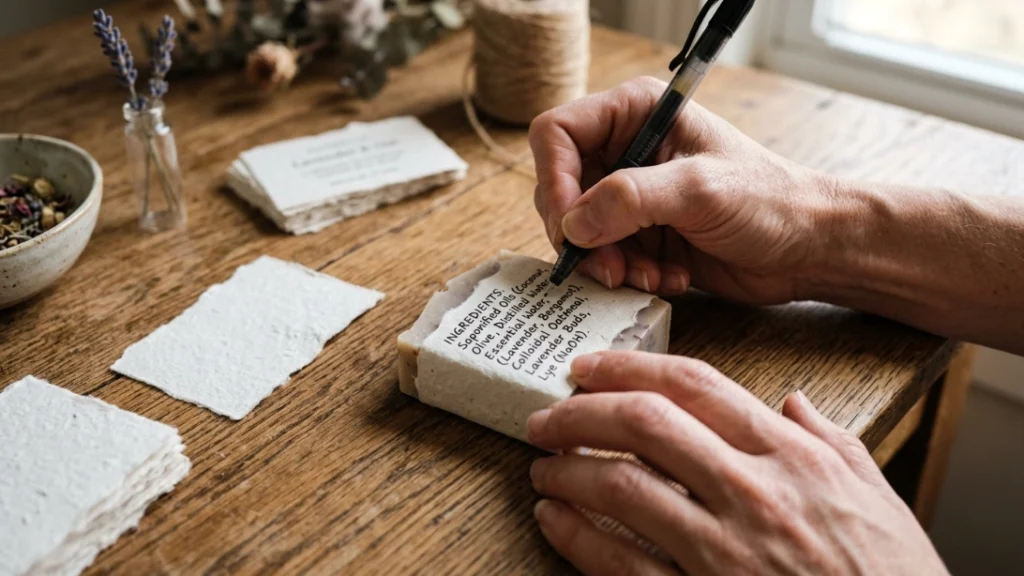
This matters immediately and practically for a home soap making business, because nearly every instinct a new soap maker has when writing a label description pushes toward exactly the kind of language that flips a product from true soap into a cosmetic. “Leaves skin feeling soft” sounds harmless. Legally, it’s a cosmetic claim.
Where This Trips Up Even Experienced Crafters
This isn’t a rule that only catches complete beginners. Plenty of soap makers who’ve been at it for years still slip into cosmetic language without realizing it, simply because it’s the natural way to describe why a product is good. Words like “gentle,” “luxurious,” “silky,” and “hydrating” all describe an experience, not a cleaning function, which is exactly the line the regulation draws.
The practical fix isn’t avoiding beautiful language altogether. It’s being deliberate about where that language lives. A product description on a website or social media post has more flexibility than the actual label affixed to the bar itself, since the physical label is what regulators evaluate most directly. Many home soap making business owners keep their labels strictly cleansing-focused while allowing themselves more descriptive freedom in marketing copy elsewhere, a workable middle ground that keeps the product legally simple while still selling the experience through other channels.
What This Actually Means for Your First Batch
None of this means cosmetic status is something to avoid at all costs. Plenty of successful home soap making businesses operate as cosmetics companies and comply with the requirements that come with it. What matters is knowing which lane you’re in before you print labels and start selling, rather than discovering the distinction after a customer complaint or an unexpected regulatory letter forces the question.
If staying in the simpler true-soap category matters to you, especially while starting small, the safest approach is sticking to strictly cleansing language on every label and any marketing copy: “cleanses,” “for washing,” nothing about how skin feels afterward, nothing about scent benefits beyond simply naming the scent. If you want to make the kind of claims that naturally sell handmade soap, the ones about how luxurious or nourishing it feels, you’re choosing to operate as a cosmetics business, and that comes with real additional requirements under the 2022 update to federal cosmetics law, including ingredient registration and different labeling rules than true soap requires.
I am not a financial advisor and this is not financial advice. For your specific product line and label language, a consultation with a business attorney or a direct read of the FDA’s small business fact sheet on homemade cosmetics is worth the hour it takes, especially before your first real batch goes up for sale rather than after.
Starting Small Without Overspending
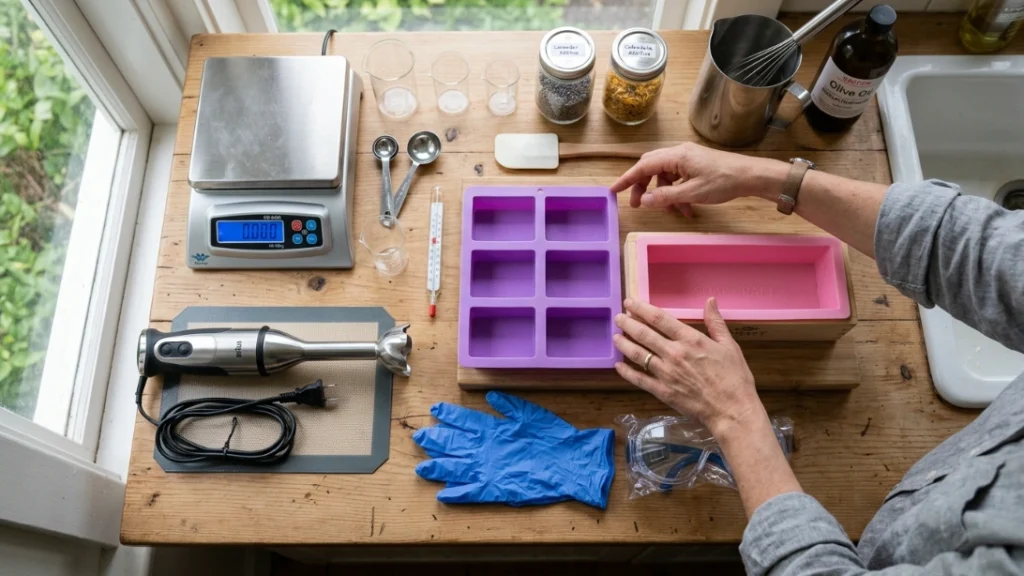
Starting a home soap making business doesn’t require a large upfront investment, and treating the first few months as genuinely experimental, rather than committing to inventory you’re not sure will sell, protects both your money and your motivation. A digital kitchen scale, a stick blender, basic molds, safety goggles, and gloves cover the essential equipment, most of it available secondhand or already sitting in a kitchen drawer.
Melt-and-pour soap base is the standard starting method for a reason: it skips working directly with lye, which genuinely requires safety knowledge and careful handling, while still producing a real, sellable bar. Cold process, working with lye from scratch, gives more control over ingredients and texture and tends to command a slightly higher price once you’re comfortable with it, but it’s worth building confidence with melt-and-pour first rather than starting with the higher-risk method on day one.
Pricing So You’re Actually Paid for Your Time
The single most common mistake in a home soap making business isn’t the recipe. It’s the pricing. Materials for a single bar might cost a dollar or two, which makes a five-dollar sale price feel generous. It rarely accounts for the actual time spent measuring, mixing, molding, cutting, curing, labeling, and packaging, time that adds up to real hours even for a small batch.
A more honest pricing approach for any home soap making business starts with calculating true cost of goods, every ingredient, every piece of packaging, down to the label itself, then multiplying by three to five times to reach a retail price that actually compensates for labor, not just materials. Selling underpriced soap doesn’t just hurt your own bottom line. It trains your customers to expect prices that can’t sustain a real business once the initial excitement of a new hobby wears off, and it undercuts other home soap makers trying to charge what their time is actually worth.

A Realistic Batch-to-Sale Timeline
Knowing roughly how long the process takes from a first batch to money in hand helps set expectations before disappointment sets in. Melt-and-pour soap can be made, cooled, and ready to sell within a day, since it skips the curing period cold process requires. A cold process batch, by contrast, needs four to six weeks of curing on a shelf before it’s genuinely ready, which means a home soap making business built around cold process soap needs to plan inventory well ahead of any specific selling event, not the week before.
This timeline difference is worth factoring into which method to start with. Someone hoping to sell at a market three weeks from now is better served starting with melt-and-pour, saving cold process for a second round once there’s more runway to let a batch properly cure. Rushing a cure time to hit a deadline is one of the more common ways a promising first batch turns into a soft, underwhelming bar that doesn’t represent the craft well.
Where to Actually Sell It
Farmers markets and local craft fairs remain one of the strongest starting points for anyone launching a home soap making business, because handmade soap benefits enormously from being smelled and held before a first purchase, something no online photo replicates. Building a small local following this way, then directing those same customers to an online shop for repeat purchases, tends to work better than launching online-only with no existing audience at all.
Etsy remains a reasonable secondary channel once you have product photos and a few sales under your belt, though competition there is real and visibility takes patience. Selling directly to a handful of local boutiques or salons willing to carry a small handmade line, once your product and packaging feel genuinely ready, often produces steadier income than either farmers markets or Etsy alone, since it doesn’t depend on your own time standing at a booth every weekend.
Building a Scent and Style Identity Early
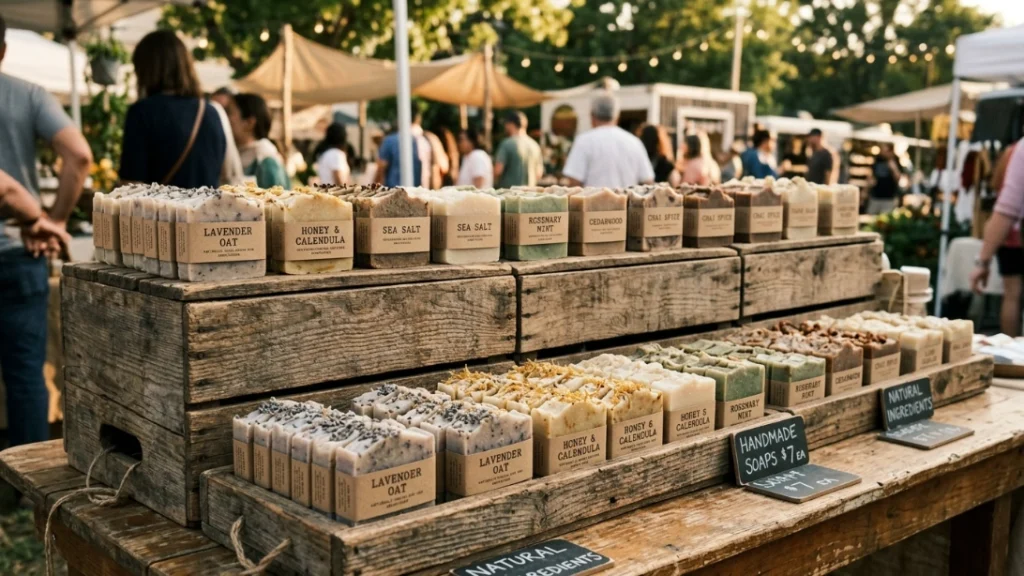
A home soap making business that tries to offer everything at once, every scent, every shape, every ingredient trend, tends to blend into the crowded handmade soap market rather than standing out in it. Choosing a small, consistent identity early, whether that’s a specific aesthetic, a particular set of signature scents, or a focus like unscented and sensitive-skin-friendly bars, gives customers a reason to remember and return, rather than encountering an ever-shifting product line with no clear throughline.
This doesn’t mean never experimenting. It means treating experimentation as intentional, a seasonal limited scent, a new shape tested at one market before adding it permanently, rather than constant, undirected variety that never lets any single product build a following. A recognizable style becomes genuinely valuable once repeat customers start recommending a specific soap by name rather than describing it vaguely to a friend.
What Homeowners Insurance Doesn’t Cover
A detail that surprises a lot of new soap makers running a home soap making business: standard homeowners or renters insurance typically doesn’t cover product liability if something you made and sold causes an allergic reaction or an injury. This isn’t a reason to avoid starting a home soap making business, but it is a reason to look into a low-cost general liability or product liability policy, often available specifically for craft-based small businesses, before your first real sale rather than after an incident makes it urgent.
Many craft fair and farmers market organizers actually require proof of this kind of coverage before allowing a vendor to set up a booth at all, so it’s worth checking early rather than discovering the requirement the week before an event you already planned to attend.
Fitting This Around an Already Full Schedule
Soap making has a natural rhythm that works well for anyone squeezing a home soap making business around kids, a day job, or both. Melt-and-pour batches can be made and molded inside a single naptime, with the actual hands-on time closer to thirty minutes than a full afternoon. Cold process soap, once mixed and poured, needs weeks of hands-off curing time on a shelf, which means the ongoing time investment is smaller than it initially appears; the labor is front-loaded into short, defined sessions rather than spread thin throughout every week.
Batch scheduling around predictable pockets of free time, rather than trying to fit soap making into whatever moment happens to be free, tends to produce more consistent output. Some sellers set aside one or two dedicated soap-making sessions a week, treating everything else, labeling, packaging, order fulfillment, as separate smaller tasks that fit into shorter windows throughout the days between.
Keeping Ingredient Costs From Creeping Up
Ingredient prices for a home soap making business can drift upward quietly over months, especially for popular oils like coconut and olive that fluctuate with broader commodity markets. Buying in slightly larger quantities once a recipe is settled, rather than restocking small amounts repeatedly, tends to lower per-bar cost noticeably, though it does require more upfront cash and proper storage space for oils that can go rancid if kept too long.
Building a small buffer into pricing for this natural cost drift, rather than pricing tightly against today’s ingredient costs and having to raise prices every few months, tends to feel more stable for both the business and returning customers who notice price changes more than new ones do. A five to ten percent cushion above current costs absorbs normal fluctuation without requiring a public price change announcement every quarter.
Who This Isn’t For
If the idea of reading and following specific labeling rules feels like more friction than the craft itself is worth, a home soap making business built around anything beyond the simplest true-soap claims may not be the right fit. This works best for someone genuinely willing to treat the regulatory side as part of the craft, not an annoying afterthought, since the labeling distinction above isn’t optional once real money is changing hands.
Common Questions
Do I need a business license to sell soap from home? Requirements vary significantly by state and sometimes by city, so checking your local business licensing portal before your first sale, not after, is worth the short time it takes for any home soap making business, however small. Some areas allow small-scale home sales under a simplified cottage food or craft business exemption, others require standard registration regardless of scale.
Can I really start a home soap making business with almost no money? A very small first batch, using melt-and-pour base and basic kitchen tools, can realistically start under a hundred dollars, though most people find a few hundred dollars gives more room to actually test different scents and recipes before settling on what sells.
Is cold process soap actually worth learning if melt-and-pour is easier? Eventually, often yes. Cold process gives more control over ingredients and tends to justify a higher price point once your skill and reputation are established, but starting with melt-and-pour first, rather than skipping straight to lye-based soap making, is the safer and more forgiving way to build the underlying skill.
How long does it actually take before a home soap making business turns a real profit? It varies enormously by how much time you can put in and how quickly a local following builds, and anyone promising a specific timeline is guessing. Many successful sellers describe the first several months as more about building product quality and a customer base than actual profit, with income becoming more consistent after that initial period.
What’s the biggest mistake new soap sellers make besides pricing? Skipping a proper cure time to sell inventory faster. Cold process soap generally needs several weeks to fully cure before it’s at its best, and rushing that process to have product ready sooner tends to produce a softer, shorter-lasting bar that reflects poorly on the whole home soap making business behind it.
Start With One Honest Batch
If you take one thing from this: make a single small batch, price it using real time and materials, and decide deliberately, not by accident, whether you’re staying in true-soap territory or stepping into cosmetic claims before you ever print a label. A home soap making business built on that clarity from day one avoids nearly every expensive mistake this list could otherwise become.