Most families treat Halloween costumes as one purchase per kid. A smaller number treat it as a supply chain, closets, swaps, and timing, and that second group spends a fraction of what the first group does without anyone noticing the difference on the actual night.
Cheap Halloween costumes aren’t a compromise. They’re what happens when you stop treating each kid’s costume as a separate $30-plus decision and start treating the whole household’s Halloween as one system. That distinction is exactly why cheap Halloween costumes matter more in a single-income household, where costume costs for two or three kids don’t multiply the way a two-income budget can absorb, they stack directly against whatever else that one paycheck already has to cover.
Cheap Halloween costumes for single moms come from three sources: your own closet, a costume swap, and a handful of dollar-store materials. Skip pre-made licensed costumes entirely for multiple kids, since $30 to $100 per child adds up fast on one income, and build from what’s already in the house instead.
Myth One: A Good Costume Has to Be Store-Bought
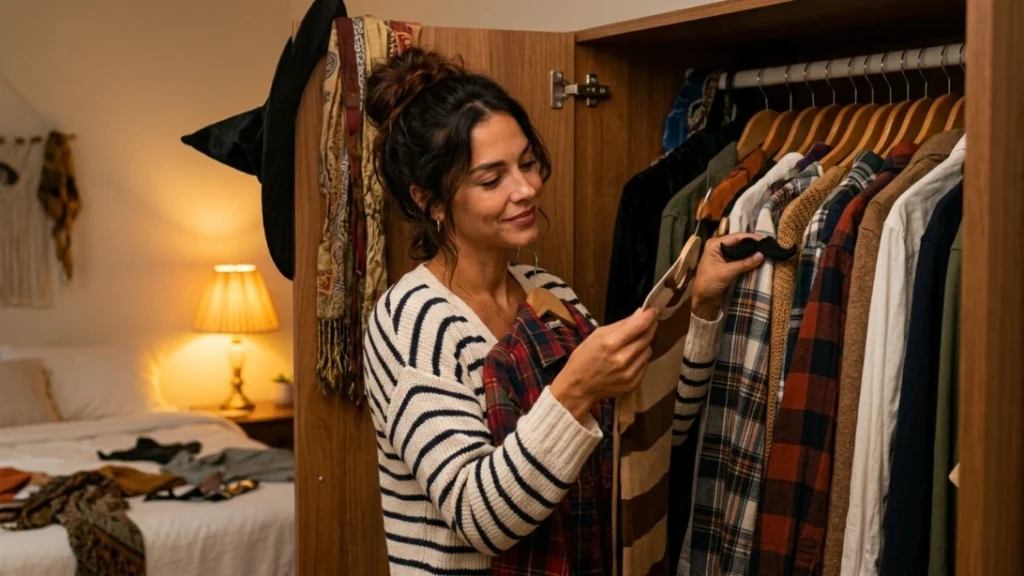
It doesn’t, and the gap between homemade and store-bought is smaller than most parents assume for genuinely cheap Halloween costumes. A plaid shirt and jeans is a lumberjack. A black dress with basic accessories is a witch. A hoodie with felt patches sewn on is a genuinely common way parents solve a specific character request without buying a licensed costume at all.
Kids also don’t judge costumes the way adults expect them to. A costume that took an evening to build with a parent tends to get remembered longer than one pulled off a store rack, mostly because it came with a story attached, not because it looked more expensive.
Myth Two: DIY Always Saves Money
This myth about cheap Halloween costumes is worth being honest about, because it isn’t automatically true. A complicated build can quietly cost as much as buying one. An elaborate build using fairy lights, structured foam, or specialty paint can quietly cost as much as a store-bought costume once every material is added up.
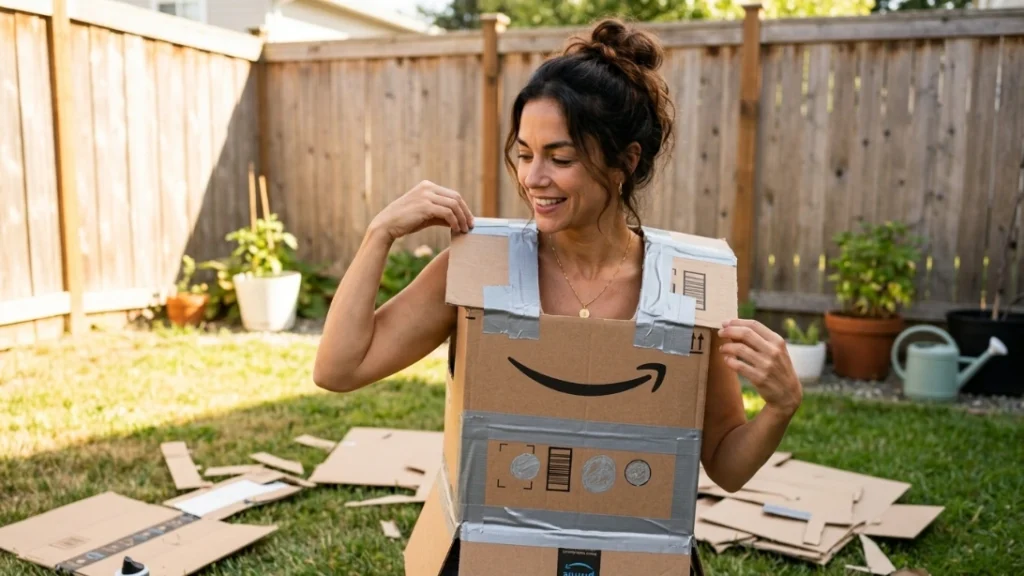
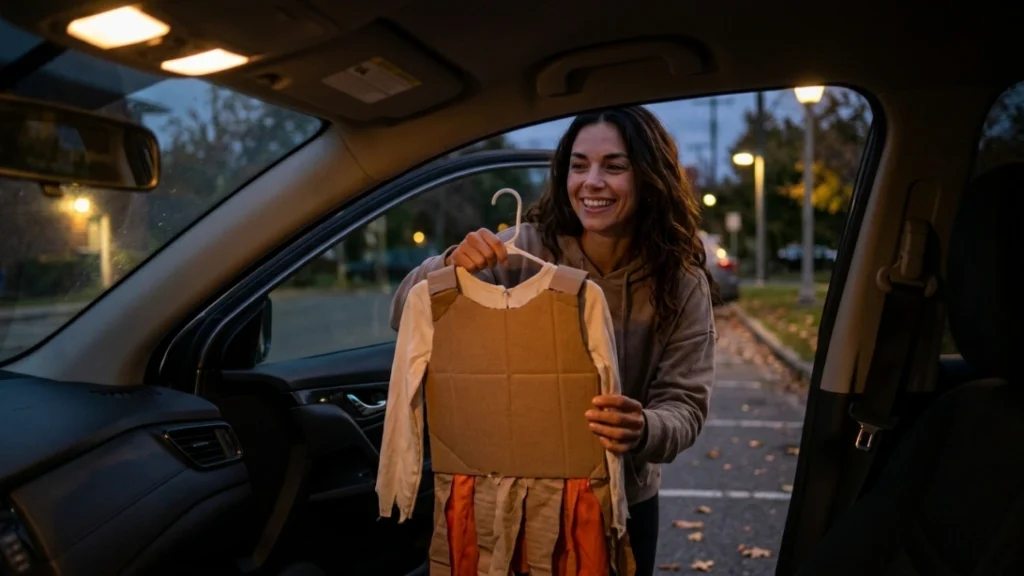
The real savings show up in simple builds, not elaborate ones. A cardboard box, a marker, and a can of one-color spray paint stays under $15 total. The moment a DIY costume needs specialty materials, LED lights, structured foam, multiple fabric types, it stops being the budget option and just becomes a different kind of expensive.
Myth Three: You Have to Buy New Every Year
Costume swaps solve this almost completely for anyone chasing genuinely cheap Halloween costumes, and they’re more common than most parents realize. School parent groups, neighborhood chat groups, and local buy-nothing communities all see a real surge of gently used costumes in the weeks before Halloween, since kids outgrow sizes every single year whether the costume gets worn twice or not at all.
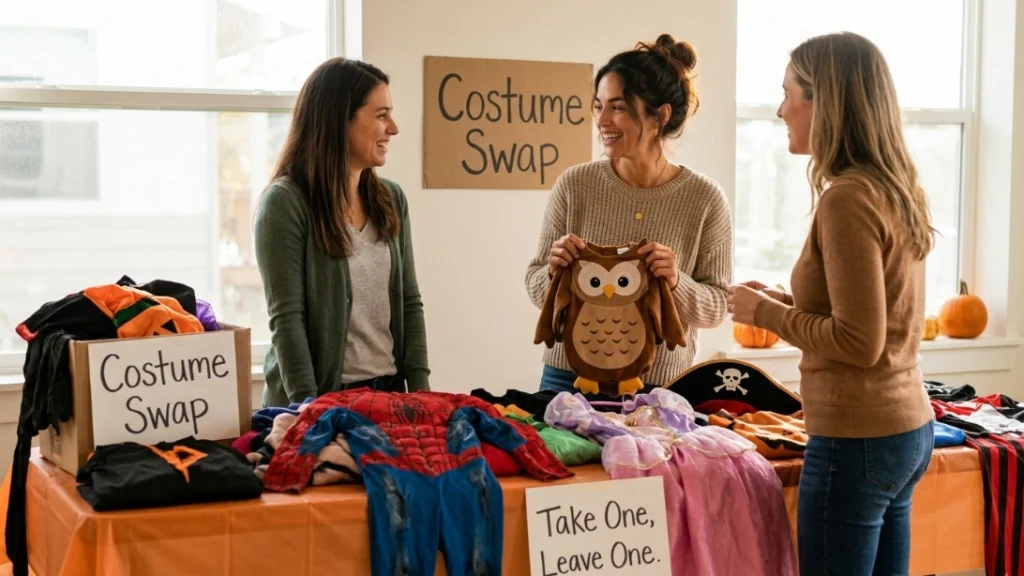
Organizing or joining a swap two to three weeks out means every family walks away with something new to their kid, for zero dollars. If a formal swap isn’t happening in your area, thrift stores and resale marketplaces fill the same gap, the tradeoff is you’re searching for a specific size instead of it being guaranteed like a swap.
Myth Four: Multiple Kids Means the Cost Multiplies
This is the myth that hits hardest on one income, and it’s also the most fixable through cheap Halloween costumes done right. If pre-made costumes run $30 to $100 per child, a family with three kids is looking at $90 to $300 just for costumes, before candy, decorations, or anything else October asks for.
The closet-and-swap approach to cheap Halloween costumes breaks that multiplication. Three kids built from existing clothes, felt, and cardboard typically lands under $30 total, not $30 per child. That’s not a small percentage difference, it’s the difference between costumes eating a real chunk of a single paycheck and costumes barely registering as a line item at all.
Myth Five: Costumes Have to Match Perfectly to “Count”
Cheap Halloween costumes don’t need to be a coordinated, magazine-ready family theme to be a win. Setting a hard spending limit before shopping and letting go of the idea that every piece needs to be flawless takes real pressure off, especially when you’re the only adult managing the whole production alone.
A costume that’s 80 percent right and cost nothing beats a perfectly matched set that stretched the budget past where it should have gone. Trick-or-treaters and party guests remember the fun of the night, not whether the felt edges were perfectly glued.
Age-by-Age: Cheap Halloween Costumes That Take Almost No Effort
Different ages call for different approaches to cheap Halloween costumes, and knowing what actually works at each stage saves real time hunting for ideas that don’t fit.
For toddlers and preschoolers, the simplest cheap Halloween costumes tend to be the most successful anyway, since young kids rarely sit still for elaborate builds and rarely notice the difference between a detailed costume and a simple one. A onesie with felt ears safety-pinned on makes a convincing animal. A plain colored sweatsuit with a few painted-on details covers dozens of character ideas without any structural building at all.
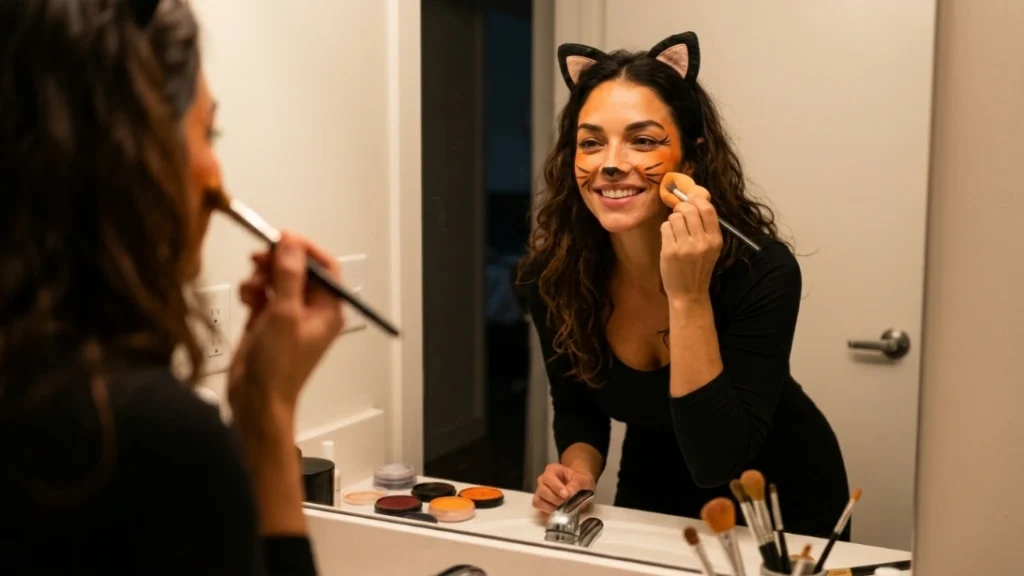
Elementary-age kids can handle slightly more involved cheap Halloween costumes, since they’re old enough to help with the actual assembly and often enjoy being part of the process rather than just the recipient of a finished product. A cardboard robot, a felt superhero cape, or a face-painted animal all fall into this range, genuinely cheap, genuinely simple, but with enough visible effort that a kid feels like the costume is “theirs.”
Tweens and teens tend to want more control over the final look, which actually works in favor of cheap Halloween costumes, since a teenager assembling an outfit from their own closet plus a thrifted accessory piece often produces something more specific and personal than anything bought off a rack. This age group is also the easiest to involve directly in a costume swap search, since they can browse a resale marketplace or a swap table themselves rather than needing a parent to manage the entire process.
What This Actually Looks Like in Practice
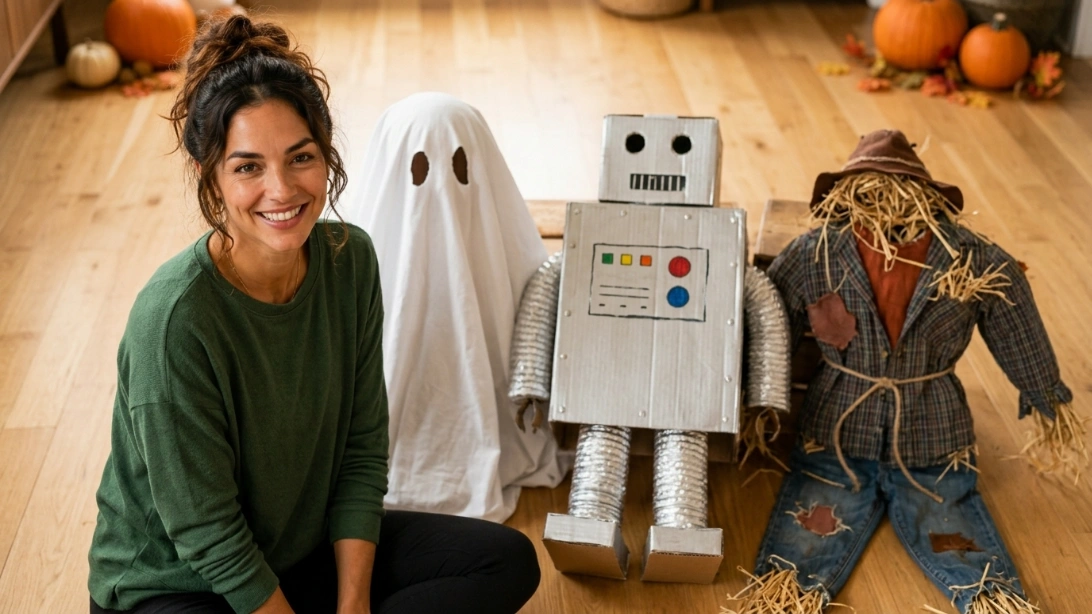
Here’s the real math worked through once, plainly. A household with two kids, one going as a homemade ghost, an old white sheet, scissors, zero cost, and one going as a DIY robot, two cardboard boxes and a six dollar can of spray paint, spends six dollars total for both cheap Halloween costumes. Compare that to two store-bought costumes at even the low end of retail pricing, roughly sixty dollars, and the closet-and-cardboard approach just saved fifty four dollars, money that can go straight to whatever else the month actually needs, the same logic the Consumer Financial Protection Bureau applies to holiday spending generally, planning a fixed amount ahead of time rather than deciding in the moment.
I am not a financial advisor and this is not financial advice. For your specific situation, especially if costume spending is part of a larger pattern of holiday-season strain, talk to a qualified professional or take a look at a full household budgeting approach rather than treating Halloween as its own isolated problem. Halloween costume spending is often just the visible tip of a broader spending leak worth tracking down across the whole month, not just this one holiday.
Pick one thing. Go through the closet before buying anything, or send one message to a school parent group asking if a costume swap already exists this year. Either move costs nothing and takes ten minutes, and it’s the same first step whether you have one kid or four.
Cheap Halloween costumes were never really about spending less. They’re about noticing how much of what a good cheap Halloween costume needs is already sitting in a closet, a bin of last year’s Halloween stuff, or a group chat full of other parents solving the exact same problem you are, alone, on one income, every October.
A Second Scenario: Three Kids, One Weekend
The two-kid math above is a useful starting point, but a household managing three kids’ costumes on cheap Halloween costumes principles tells a fuller story. One kid goes as a ghost using an old sheet, zero cost. A second goes as a witch using a black dress already in the closet plus a five dollar thrifted hat. A third goes as a cardboard robot, six dollars in spray paint. Total spend across three kids: eleven dollars.
Compare that to three store-bought costumes at the same low-end retail estimate of thirty dollars each, ninety dollars total, and the gap widens considerably with each additional child. This is exactly why cheap Halloween costumes matter more, not less, as family size grows on a single income, the math that feels manageable for one child becomes genuinely difficult for three under a store-bought approach, while a closet-and-swap approach barely shifts at all per additional kid.
People Also Ask
How can a single mom afford Halloween costumes for multiple kids?
Building costumes from items already in the closet, combined with a costume swap through a school or neighborhood group, typically brings the total cost for multiple kids under thirty dollars combined, compared to thirty to a hundred dollars per child for store-bought options.
What’s the cheapest Halloween costume to make at home?
A classic ghost costume using an old white sheet costs nothing beyond scissors. A cardboard-box robot or similar build typically costs ten to fifteen dollars in spray paint and basic supplies, making both strong options for cheap Halloween costumes on a tight timeline.
Are DIY Halloween costumes actually cheaper than store-bought ones?
Simple DIY builds using cardboard, felt, and items already owned are genuinely cheaper. Elaborate DIY builds requiring specialty materials like LED lights or structured foam can end up costing close to a store-bought costume, so cheap Halloween costumes depend on keeping the build simple.
How far in advance should I plan Halloween costumes on a budget?
Two to three weeks ahead is realistic for most swap and closet-based approaches, since that’s when school and community costume swaps tend to cluster before the holiday itself.
Where can I find free or nearly free Halloween costumes?
School parent groups, neighborhood social media groups, and local buy-nothing communities regularly have costume swaps or giveaways in the weeks before Halloween, since kids outgrow sizes every year regardless of how much a costume was worn.
Do cheap Halloween costumes work for teenagers too, or just younger kids?
Yes, often even more easily. Teens can pull cheap Halloween costumes together from their own closet plus one or two thrifted or swapped accessory pieces, and many prefer that level of creative control over a pre-made costume anyway.