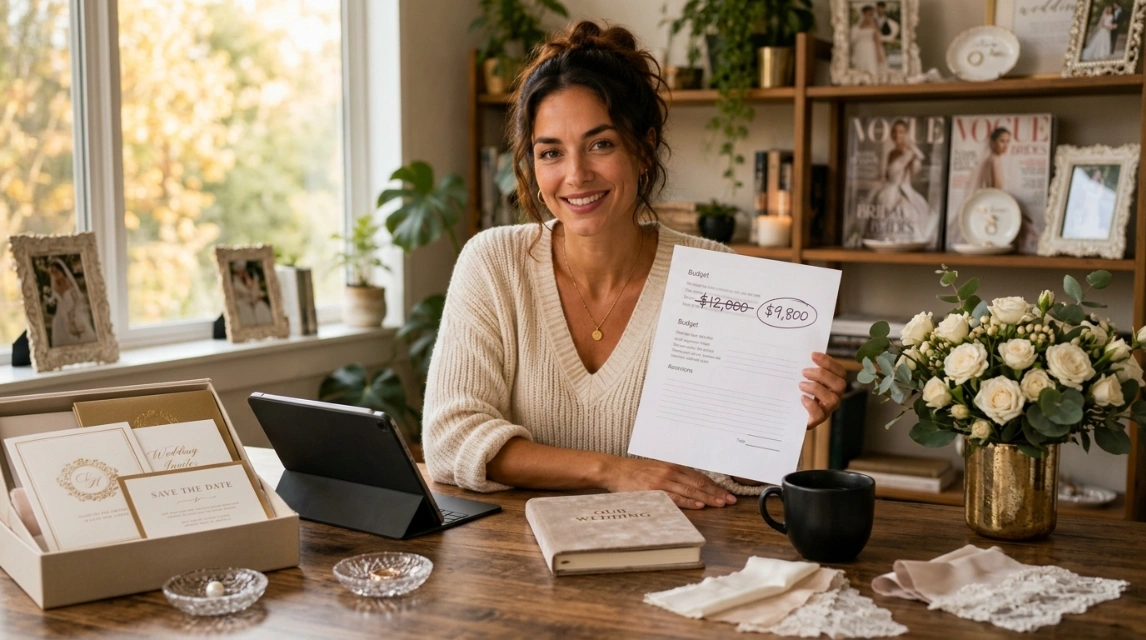
Eco-friendly budget wedding ideas for brides who are already broke tend to get buried under glossy sustainability content built for couples with money to spare. Eco-friendly weddings have a reputation problem. Ask most brides and the assumption comes back instantly: going green means spending more, not less. That belief is backwards, and it is costing couples real money. An eco friendly budget wedding is not a contradiction. In most cases, the sustainable choice and the cheaper choice are the exact same choice, because waste and overspending tend to travel together.
That matters for the woman actually planning this, not just the planet. According to NerdWallet, the average wedding in the US runs around $34,000, built from a stack of individually expensive choices: a venue that needs full decorating, a florist shipping out-of-season blooms, single-use everything from table settings to favors. Every one of those line items is also where the waste lives. Cut the waste and the number usually drops with it, sometimes by more than couples expect going in.
This is written for the bride planning her eco friendly budget wedding in 2026 on a real budget, not an influencer’s idea of one, and for anyone standing between two vendors right now trying to decide which one actually deserves the deposit. It is also written for the couple who never used the word “sustainable” out loud once during planning, and who simply wants the numbers to work without feeling like the day was scaled down to get there.
An eco friendly budget wedding works by cutting the same things that inflate cost and waste at once: fewer disposable single-use items, a venue that needs little added decor, seasonal local flowers instead of imported ones, and a smaller, more intentional guest list. None of these choices require a bigger budget. Most of them shrink it, since the wedding industry has quietly built “more” and “wasteful” into the same price tag for years.
The Myth That’s Costing Couples More Than It Should
The wedding industry has spent decades selling a specific story: sustainable equals expensive, equals fewer choices, equals a smaller, sadder version of the wedding you actually wanted. That story survives because a handful of premium eco-branded vendors charge premium eco-branded prices, and couples assume that markup is the floor, not a choice one specific vendor made.
Here’s the part that gets missed. Renting furniture instead of buying it is both the cheaper option and the lower-waste option. A local, in-season flower order is both the cheaper option and the lower-waste option. Digital invitations are both the cheaper option and, obviously, the lower-waste option. The sustainable path and the affordable path are not competing lanes here. They’re the same lane, and a lot of couples are paying extra to avoid it because nobody told them otherwise.
There’s a real exception worth naming honestly, because pretending otherwise would undercut everything else in this piece. Some certified sustainable products, FSC-certified paper, GOTS-certified fabric, a small-batch ethical designer gown, do cost more than their mass-produced equivalent, because certification and ethical labor cost money and that cost gets passed along. If your version of an eco friendly budget wedding depends on buying new certified-everything, you will spend more, not less, and that’s worth knowing before you build a budget around the wrong assumption. The actual budget-friendly version of this looks different: buy less, buy secondhand, buy local, and skip the premium eco-label entirely in favor of the low-waste option that was never trying to be a marketed product in the first place.
This distinction matters because a lot of eco-friendly wedding content online conflates two very different things: sustainable-as-a-purchased-upgrade, and sustainable-as-simply-buying-and-wasting-less. The second one is nearly always cheaper. The first one usually is not, and confusing the two is exactly how a bride ends up believing green weddings cost more across the board.
A quick gut check before moving forward: if a sustainable option is being sold to you as a premium upgrade, with a price tag to match, it’s probably the first category. If it’s simply the option that involves buying, shipping, and throwing away less, it belongs in the second, and that’s the category an eco friendly budget wedding should live in almost entirely.
Eco Friendly Budget Wedding Ideas That Actually Move the Number
Real eco-friendly budget wedding ideas for brides who are already broke rarely start with a Pinterest board. They start with five categories where cost and waste consistently overlap: venue, flowers, attire, paper goods, and food. Go through them in order and the total drops fast, usually before you touch anything that feels like a genuine sacrifice.
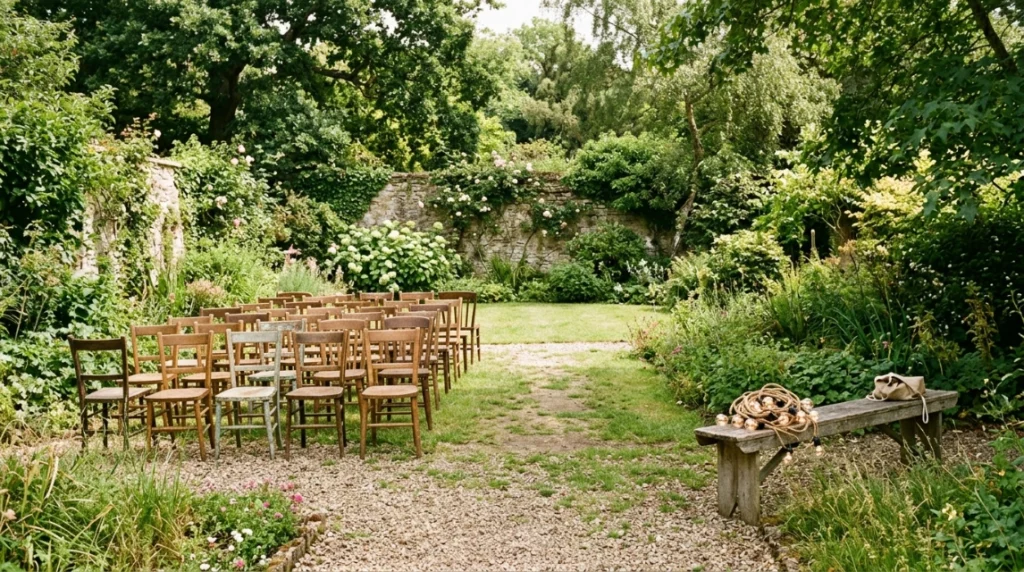
Venue and setting. This is usually the first decision in building an eco friendly budget wedding, since it shapes how much decor spending follows it. A location that already looks finished, a garden, a family backyard, a barn, a park pavilion, needs little to no added decor. That single decision often cuts both your décor budget and your décor waste by more than any individual purchase you could make elsewhere.
Outdoor and semi-outdoor venues also tend to run cheaper than full-service ballrooms, since you’re not paying for a built-in draping and lighting package you’d otherwise strip out and throw away anyway. Ask directly whether the venue includes tables, chairs, and basic lighting before you price out rentals separately. A lot of “budget” venues quietly push those costs onto a separate rental contract, which erases the savings you thought you’d found.
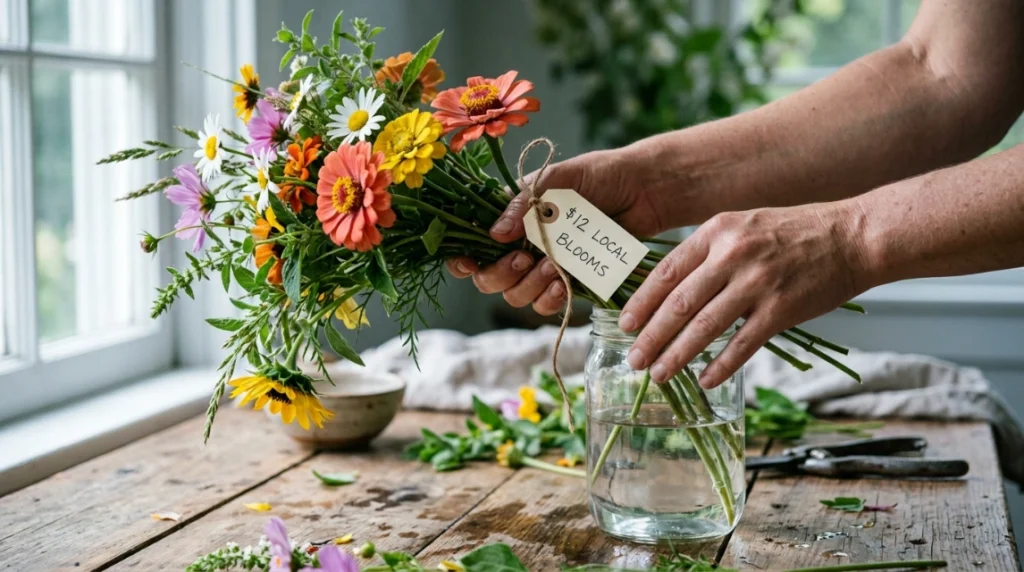
Flowers. Seasonal, locally grown flowers cost less than flying in out-of-season blooms, and they hold up better through a long reception because they weren’t refrigerated across a continent to reach your reception table. A florist working from what’s actually blooming near you in your wedding month will almost always quote lower than one building an order around imported peonies in October. If flowers still feel non-negotiable, ask your florist which three varieties are cheapest and most abundant that specific week, and build the arrangement around those instead of a Pinterest board assembled from four different growing seasons.
Attire Without the New-Gown Price Tag
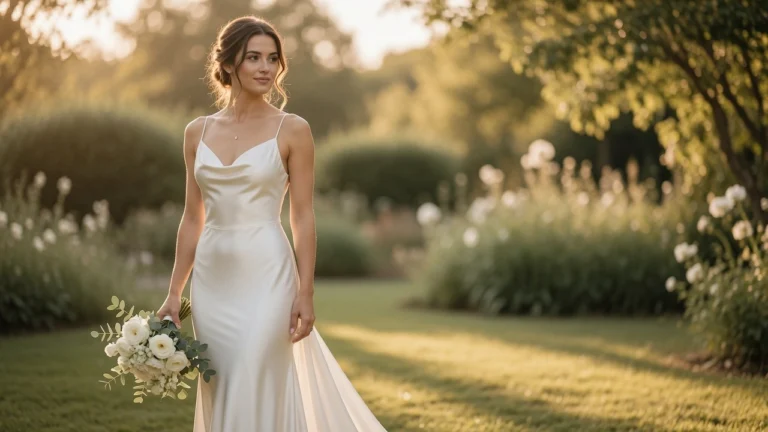
A preowned wedding gown is one of the sharpest moves inside an eco friendly budget wedding, and it is not a compromise dress. Resale and sample-sale gowns from the same designers regularly sell for a fraction of retail, since a dress worn once, or never, still counts as “used” the moment it leaves the shop floor. The environmental case here is obvious: one fewer gown manufactured, shipped, and eventually discarded after a single wear. The financial case is just as obvious, and it’s the one that actually moves a real budget, sometimes by thousands of dollars on the single most expensive garment either of you will ever buy.
The same logic covers bridesmaid dresses, the groom’s suit, and guest attire suggestions. Renting formalwear, encouraging a “wear something from your closet” dress code for the wedding party, or buying secondhand all point the same direction: less new manufacturing, less landfill-bound fabric, and a noticeably smaller bill for everyone involved, not just the two of you. If a member of the wedding party can’t afford a new dress in the color you picked, a secondhand option in the same general shade solves two problems with one conversation.
Paper, Favors, and the Things Nobody Keeps
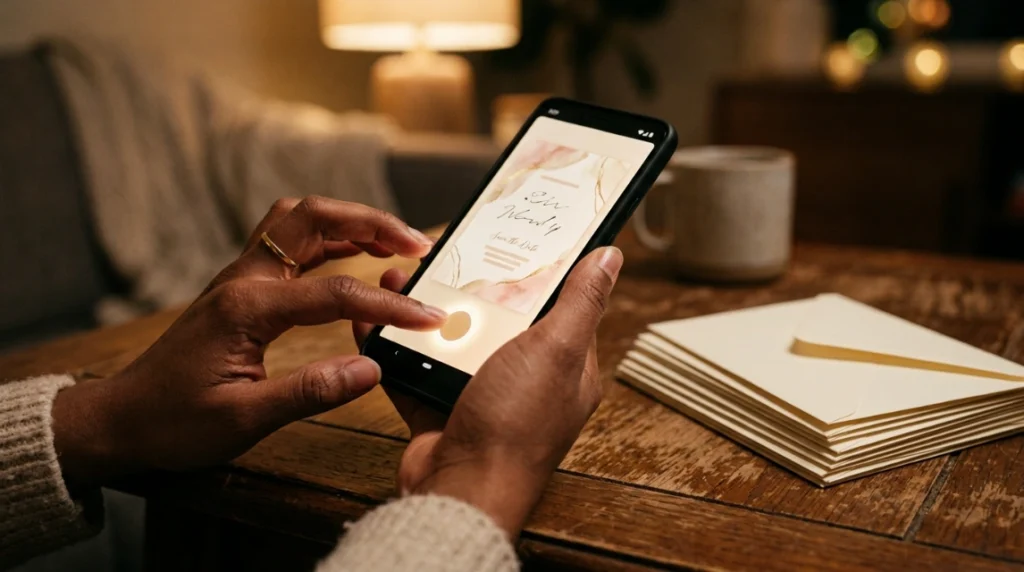
Digital invitations and a wedding website replace an entire line item that used to include printing, postage, and RSVP cards nobody mailed back on time anyway. If paper still matters to you for the formal invite, FSC-certified or recycled stock closes most of the environmental gap without changing the cost much either way, so this is a place where you can follow personal preference without a real budget penalty.
Favors deserve a harder look than they usually get. Most wedding favors get left on the table, thrown out with the centerpieces, or forgotten in a coat pocket by the following Tuesday. Skipping them entirely, or replacing them with something genuinely consumable like a small local product or a donation in guests’ honor, removes cost without removing anything guests will actually miss. Nobody has ever left a wedding wishing there had been one more scented candle in a gift bag.
Food and catering. This category gets less attention in most eco-wedding guides, but it carries real weight in any eco friendly budget wedding. A caterer who plans portions realistically instead of padding for a buffer, and who has an actual plan for leftover food, whether that’s guest take-home containers or a donation arrangement, cuts both cost and the single largest physical waste stream at most weddings. Ask any potential caterer directly what happens to unserved food. The answer tells you a lot about how carefully the rest of the menu was planned.
The Ones That Actually Move the Number
Not every eco-conscious swap carries equal weight, financially or environmentally. If time or energy is limited while planning an eco friendly budget wedding, these three matter more than the rest combined, and they’re worth tackling first.
First, guest list size. Every ten fewer guests removes ten meals, ten favors, ten chairs, ten place settings, and, according to NerdWallet’s cost breakdown, a meaningful chunk of a per-person catering line that regularly runs $80 or more a head. This is the single biggest lever in the entire wedding, sustainable or not, and it’s the one most couples are most reluctant to pull, usually out of guilt rather than genuine desire to include everyone on the initial list.
Second, the venue decision. A space that requires minimal transformation removes rental costs, draping, lighting rigs, ceremony backdrops, that often run into the thousands, and removes the waste stream that comes with trucking all of it in and back out again the same night. This decision alone can shape the entire feel of an eco friendly budget wedding before a single decor purchase gets made.
Third, food waste specifically. Working with a caterer who plans portions realistically, and who has a plan for donating or repackaging leftovers, addresses the single largest physical waste stream at most weddings, most of it edible food that was never going to get eaten by anyone once the reception ended.
A fourth, smaller lever worth naming: timing. An off-peak season or a Friday or Sunday date instead of a Saturday in June routinely comes with lower venue and vendor pricing, independent of anything sustainable about the choice itself, and it happens to reduce the demand pressure that drives a lot of rushed, wasteful vendor decisions during peak wedding months.
A Worked Example: Cutting $6,000 Without Cutting Guests
Take a hypothetical 100-guest wedding budgeted the conventional way: a full-service venue requiring rented draping and lighting, imported flowers, a new retail gown, a printed invitation suite, and individual favors. Swap each of those for its lower-waste equivalent, a naturally scenic venue, local seasonal flowers, a preowned gown, digital invitations, and skipped favors, and the reductions stack. None of these swaps touch the guest list, the food quality, or the photography. They touch exactly the categories where an eco friendly budget wedding and a conventional wedding diverge financially, which is precisely why an eco friendly budget wedding works without feeling like a downgrade to anyone attending.
This is a hypothetical illustration built from the categories above, not a quoted total from any single verified source, since actual savings depend heavily on region, vendor pricing, and guest count. Treat it as a way to see how the categories interact, not a number to promise a fiancé.
Who an Eco Friendly Budget Wedding Isn’t For
An eco friendly budget wedding doesn’t fit every couple equally well. If your top priority is a large, traditional ballroom reception with a specific well-known venue you’ve dreamed about for years, most of these swaps won’t apply, since that venue’s pricing structure is largely fixed regardless of how sustainably you decorate inside it. Similarly, if a religious or cultural tradition requires specific new attire, printed materials, or ceremonial items, those requirements come first, and the sustainable version of this plan should work around them rather than override them. An eco friendly budget wedding is a framework for couples with real flexibility on format, not a mandate that every wedding should look the same.
The Hard Numbers
Real cost data specific to sustainable weddings is thin, since most industry surveys track total spend, not the eco-conscious subset of it. Here’s what does exist, current as of 2026 sourcing, and honestly labeled where it’s a general range rather than a hard figure. Note that individual vendor pricing shifts region to region and season to season, so the table below should inform your planning conversations, not replace them.
| Line item | Conventional average | Lower-waste alternative | Approximate savings |
|---|---|---|---|
| Venue decor | Full draping and lighting rental | Naturally scenic venue, minimal add-ons | Often several hundred to low thousands |
| Flowers | Imported, out-of-season blooms | Local, in-season blooms | Generally lower, varies by region and season |
| Attire | New gown at retail | Preowned or sample-sale gown | Up to roughly 70 percent, per bridal resale guidance |
| Invitations | Printed suite plus postage | Digital invitations plus wedding website | Nearly the full line item |
| Favors | Individual keepsake favors | Skipped or a consumable local item | The full line item |
According to NerdWallet’s most recent breakdown of average wedding spending, venue and flowers alone can account for well over $15,000 of a typical $34,000 wedding. Even modest reductions across those two categories, without touching the guest experience at all, move the total meaningfully. Exact savings vary widely by region, guest count, and how much of an eco friendly budget wedding you do yourself versus hire out, so treat these figures as directional, not a quote you can take to a vendor.
I am not a financial advisor and this is not financial advice. For a wedding budget specific to your income, debt, and family circumstances, talk to a qualified professional before signing any vendor contract.
People Also Ask
Is an eco-friendly wedding actually cheaper than a traditional one?
In most categories, yes. An eco friendly budget wedding saves money in venue decor, flowers, attire, and paper goods specifically because the lower-waste option and the lower-cost option are usually the same option. The exception is certified sustainable products bought new, which can cost more than their mass-produced equivalent because of certification and labor costs.
What’s the easiest place to start an eco friendly budget wedding?
Start with the guest list and the venue, in that order. Trimming the guest list reduces cost and waste across food, favors, and rentals at once for an eco friendly budget wedding. Choosing a venue that already looks finished removes the need for most decor spending before you’ve booked a single vendor for anything else.
Do sustainable wedding dresses cost more than regular ones?
A newly made dress from a certified sustainable designer often does cost more, since ethical labor and certified materials carry a real price. For an eco friendly budget wedding, a preowned or sample-sale gown, sustainable simply by being reused, typically costs significantly less than buying new, regardless of the original label or designer name.
How much can you realistically save going eco-friendly on a wedding budget?
There’s no single verified figure for this, since most wedding-cost research tracks total spend, not sustainable choices specifically. What’s consistent across cost breakdowns is that venue decor, flowers, and attire, the same three categories that shape an eco friendly budget wedding, are also where the biggest realistic savings sit for an eco-conscious couple.
Can you have an eco-friendly wedding without telling guests it’s eco-friendly?
Yes, and many couples do exactly this. None of the choices in an eco friendly budget wedding require an announcement or a themed hashtag. A naturally scenic venue, seasonal flowers, and a preowned dress read as simply a beautiful, well-planned wedding to most guests, not a statement about sustainability at all.
Is it tacky to ask guests to skip gifts and donate instead?
No, and it’s increasingly common. A registry note asking for a charitable donation instead of a physical gift, or a request for experiences over objects, is standard enough now that most guests won’t blink. If it fits your values as part of a broader eco friendly budget wedding, phrase it as an option rather than a rule, and let guests who still want to give something tangible do so without friction.
Where to Start This Week
If you came here looking for eco-friendly budget wedding ideas for brides who are already broke, not brides with room in the budget for a sustainability upgrade, pick one category from this list, the guest list, the venue, or the dress, and make one decision this week instead of trying to green your entire wedding at once. An eco friendly budget wedding gets built decision by decision, not through a single sweeping overhaul that stalls out by the second vendor call.
If someone pushes back and says sustainable means settling for less, the honest answer is that most of what gets cut is exactly the stuff nobody remembers about a wedding six months later: the extra draping, the imported flowers, the favor nobody wanted. What’s left is what people actually came for, and it cost noticeably less to give them.
An eco friendly budget wedding, at the end of the planning process, tends to look less like a themed event and more like a well-run one: fewer things bought only to be thrown away, fewer costs that existed to prop up an idea of what a wedding is supposed to look like rather than what this particular couple actually wanted, and a total that reflects real choices instead of default ones.