You need $3,500 to walk down that aisle looking right. That’s what the boutique down the street just told you, anyway, with a straight face and a dress that isn’t even fully beaded yet.
Except, no. Let’s not start there, because that number is the entire problem, not a fact you have to accept. The bridal industry has spent decades convincing brides that the decimal point moves the moment “wedding” gets attached to a garment, and most of that markup has nothing to do with fabric, construction, or craftsmanship. It has to do with the word on the tag.
Wedding dresses under $600 exist in real quantity through three channels: designer sample sales where floor models sell at 40 to 90 percent off retail, off-the-rack retailers that use street sizing instead of inflated bridal sizing, and boutique clearance sections clearing out last season’s stock. Combined with a realistic alterations budget, these routes routinely produce gowns that look far more expensive than what a bride actually paid.
Why “Just Go To A Discount Store” Advice Doesn’t Actually Work
Here’s the advice you’ve probably already gotten, and here’s why it’s not specific enough to actually use. “Shop the sale rack” isn’t a strategy. It’s a hope. Sale racks at traditional boutiques are often picked over by the time a bride without a wedding planner even hears about them, and “affordable” gets used so loosely in bridal marketing that it can mean anywhere from $400 to $2,000 depending on which site you land on.
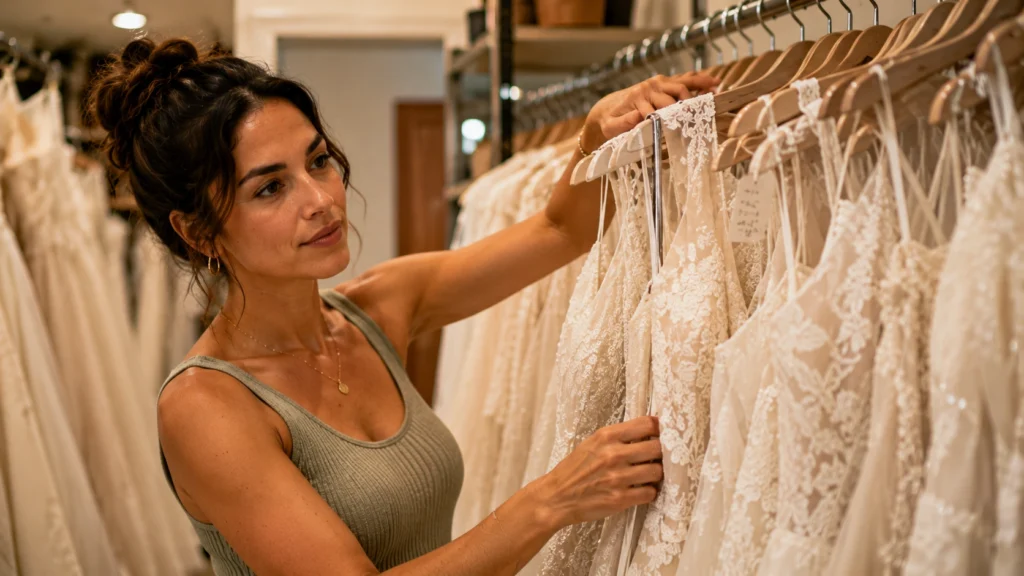
The real gap in most advice is timing. Sample sales, the events where boutiques and designer outlets clear floor models to make room for new inventory, are scheduled, seasonal, and largely invisible unless you know to look for them. Recent bridal industry spending research cited in this analysis suggests the average bride currently spends somewhere in the $1,800 to $1,900 range on a gown alone, but that number hides enormous variation underneath it. Roughly a quarter of brides are already spending under $500. You’re not being unrealistic by aiming for wedding dresses under $600. You’re just aiming at a target most articles don’t bother explaining how to hit.
The Real Strategy Behind Every “Impossible” Bridal Bargain
Every genuinely stunning low-cost gown you’ve seen on someone else’s wedding day got there through one of three doors, and understanding which door fits your timeline changes everything about how you shop.
Designer sample sales are the biggest lever. These are floor models, one-of-a-kind pieces that have been tried on repeatedly, sold at deep discounts because the boutique needs the rack space more than it needs full retail price. Discounts of 40 to 90 percent off original retail aren’t exaggerated marketing language here. They’re standard for how this specific inventory channel works. The tradeoff: these pieces are almost always final sale, and you’re shopping what’s physically in stock that day, not a made-to-order size and color.
Off-the-rack, street-sized retailers are the second door, and they solve a completely different problem: the sizing nightmare covered in detail below. These retailers stock in-season, ready-to-wear styles using normal clothing sizes, which means faster turnaround and, in many cases, actual return policies instead of the final-sale terror of a sample gown.
Boutique clearance and remainder sections are the third door, quieter and less predictable, but worth checking regularly if you’re shopping close to home and want to try before you buy. Regional boutiques often mark down out-of-season styles or previously-tried floor samples well before a scheduled sample sale event, and inclusive sizing has become a real differentiator among boutiques that want repeat local business.
Wedding Dresses Under $600: The Mechanics Explained Simply
None of these three doors work if you walk in without understanding two things: what your actual bridal size is, and how much of your budget alterations are genuinely going to eat. Skip either one and you’ll either overpay for a “safe” size or underbudget for the tailoring that makes a $400 dress look like it cost four times that.
Bridal Sizing vs. Street Sizes: The Conversion Nobody Explains Well
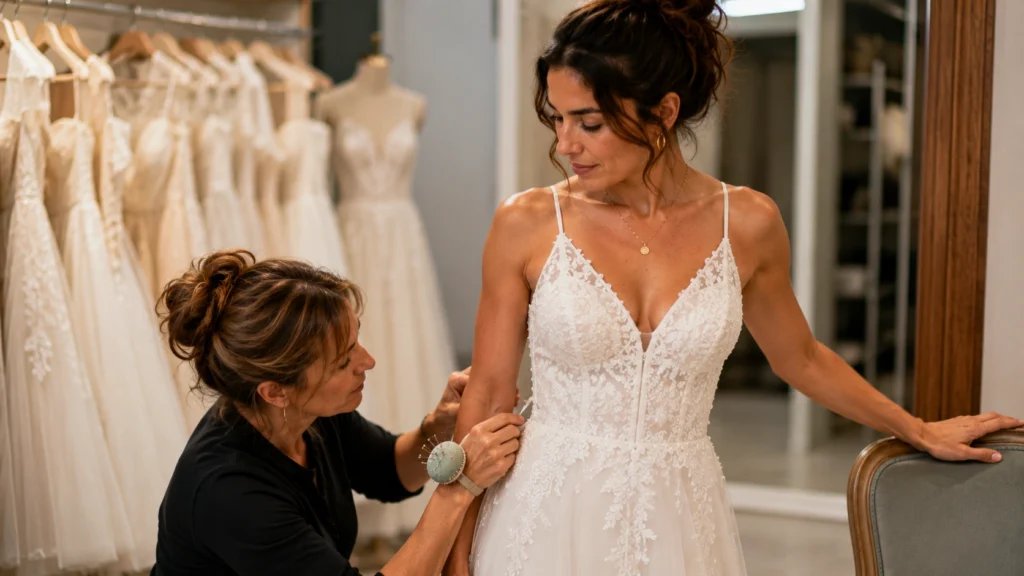
Here’s the number that catches almost every first-time bridal shopper off guard. Bridal sizing typically runs two to three sizes larger than the clothes hanging in your regular closet. If you wear a street size 10, expect a bridal size 14 or 16 to come up during fittings, and that gap is not a reflection of your body changing. It’s an inconsistency baked into how the bridal industry has sized garments for decades.
The rule that actually protects you here: order based on your single largest measurement, whether that’s bust, waist, or hip, and plan to tailor everything else down to fit. This is exactly why alterations aren’t optional in the wedding dresses under $600 strategy. They’re the mechanism that turns a “close enough” size into a dress that fits like it was made for you specifically.
The Alterations Budget That Makes Or Breaks The Final Look
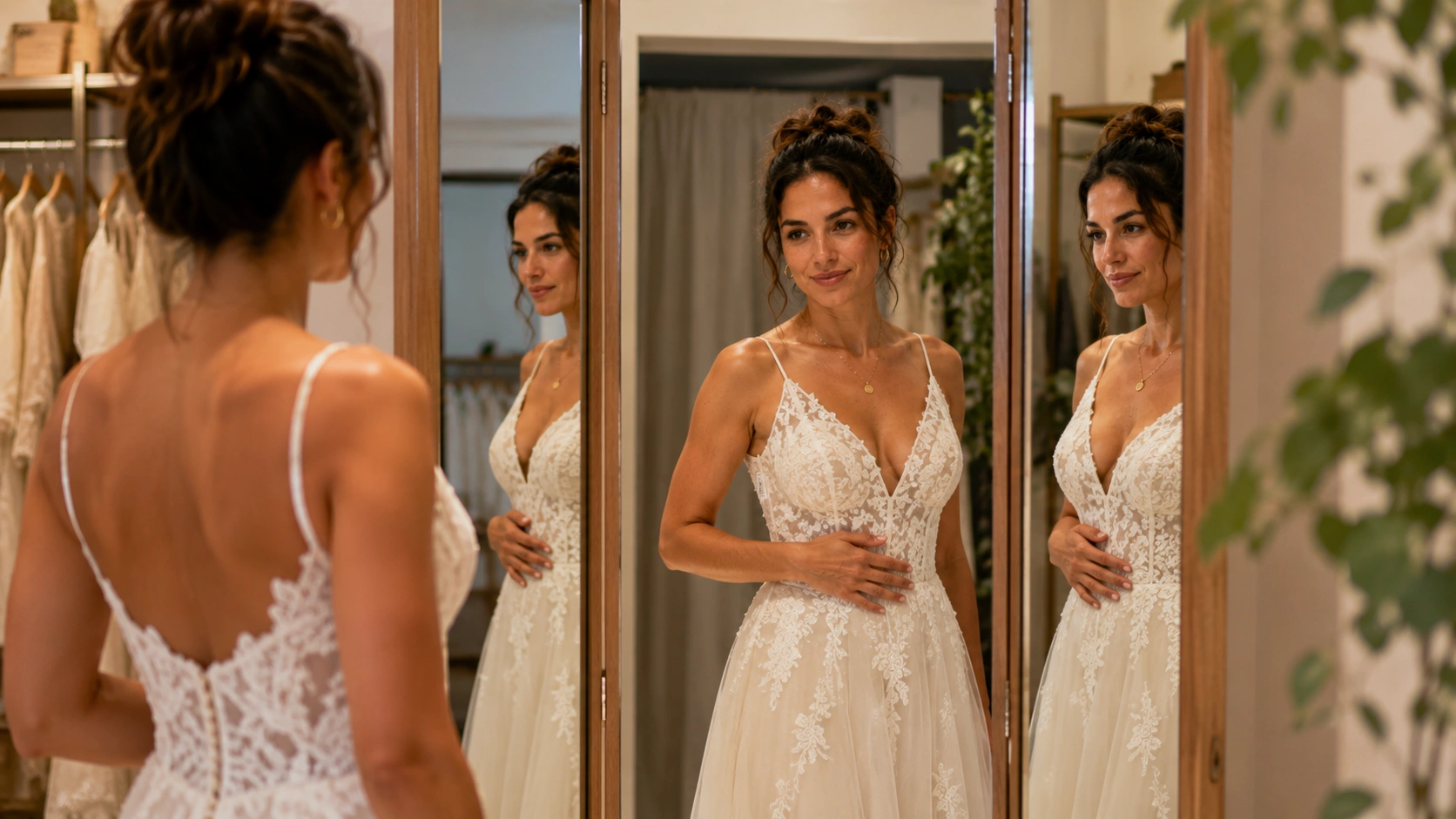
Reserve $100 to $400 for tailoring, full stop, before you even start shopping. A thoughtfully altered $400 dress reliably outperforms an ill-fitting $4,000 gown in every photo taken that day, because fit does more visual work than fabric cost ever will. Most gowns, including sample pieces bought two or three sizes up, can be taken down that same two to three sizes without losing structural integrity, provided the alteration is done by someone who actually works with bridal fabric regularly.
This is also where the “old money” aesthetic your search results probably keep pointing you toward actually comes from. It’s not a specific designer. It’s a well-fitted, minimalist silhouette in a fabric that drapes properly, which is a direct result of paying for a good seamstress rather than a big brand name.
What Brides Are Actually Spending in 2026, By the Numbers
Bridal industry spending research cited in this analysis breaks the market into rough brackets: close to a quarter of brides spend under $500 on their gown, roughly a third land between $500 and $1,000, another significant share spends $1,000 to $2,000, and only a smaller minority spends over $2,000. Exact figures vary widely depending on region, season, and individual boutique, so treat these as directional ranges rather than a strict rule, but the pattern itself is consistent: a meaningful majority of brides are already spending well under what boutique marketing implies is “normal.”
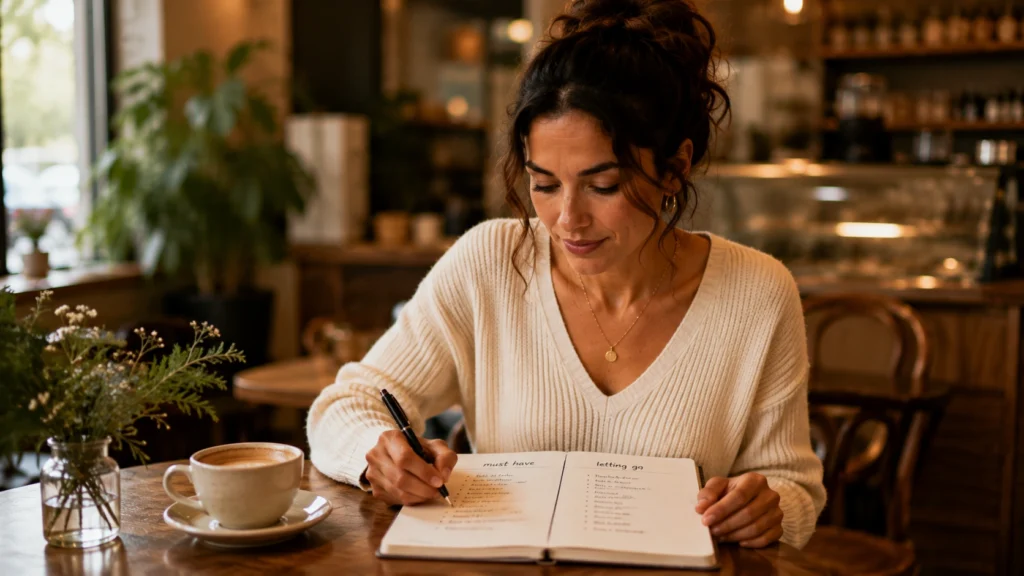
Fabric is a big part of why a lower price tag doesn’t mean a lesser dress. Minimalist fabrics like satin, crepe, mikado, and chiffon create a genuinely sophisticated look without the labor cost of heavy beading or intricate lace overlay. Clean silhouettes, an A-line or a simple sheath, tend to photograph better and age better in photos than heavily embellished ballgowns, which is worth knowing before you assume more embellishment automatically means more elegant.
I am not a financial advisor and this is not financial advice. For your specific situation, especially if wedding costs are being split across a shared budget with other major expenses, talk to a qualified professional about how a dress purchase fits into your overall plan. For a fuller look at where the rest of a modest wedding budget tends to go, this honest breakdown of planning a beautiful wedding without feeling like you compromised covers the categories beyond the dress itself.
What Changes Once You Stop Shopping By Price Tag Alone
The moment you stop treating price as a proxy for quality, the whole search gets easier. You start asking better questions in a fitting room: does this fabric move the way I want it to, does the silhouette suit my actual shape, is the alteration this piece needs realistic for my seamstress and my timeline. Those questions matter more than a designer name ever will, and they’re the exact questions boutique sales staff rarely bring up first, because a higher price tag benefits them more than it benefits you.
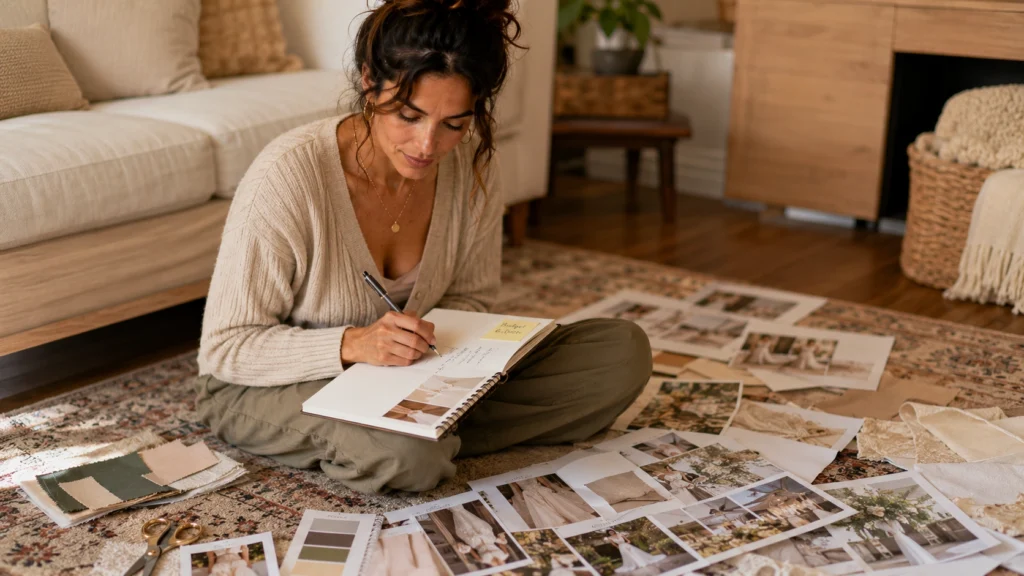
Shopping early changes your odds dramatically too. Beginning the search eight to twelve months out gives you access to a full season of sample sale events rather than whatever happens to be left two months before your date, and it removes the rush fees that come with last-minute ordering or emergency alterations. If venue costs are also weighing on your overall number, these ten real venue ideas under $5,000 are worth reading alongside this, since the dress and the venue are usually the two biggest line items competing for the same budget.
People Also Ask
Can you actually find a designer wedding dress under $600?
Yes, most commonly through sample sales, where floor model gowns from mid-range and higher-end designers are sold at 40 to 90 percent off original retail. These pieces are typically final sale and available in limited sizes, so success depends on flexibility around fit and timing rather than a specific brand search.
Why is bridal sizing different from regular clothing sizes?
Bridal sizing charts run two to three sizes larger than standard street sizing across most traditional designers. This means a dress labeled several sizes above your normal size may actually be the correct fit. Ordering by your largest measurement and planning for alterations is the standard way to navigate wedding dresses under $600 without ending up in the wrong size entirely.
How much should I budget for wedding dress alterations?
Reserve $100 to $400 separately from the dress price itself. Alterations affect how a gown drapes, moves, and photographs far more than the original price tag does, and a well-tailored budget gown consistently looks more polished than an unaltered expensive one.
Do off-the-rack wedding dresses use normal clothing sizes?
Many off-the-rack, ready-to-wear bridal retailers do use standard street sizing rather than inflated bridal sizing, which also often comes with actual return policies. This differs from traditional sample sale inventory, which is typically final sale regardless of the sizing system used.
The Dress Was Never the Point Anyway
Somewhere in this search, you’re going to catch yourself feeling guilty about not spending more, like a lower number means you’re settling. You’re not. Wedding dresses under $600 aren’t a compromise category, they’re where a meaningful share of brides are already shopping, whether the boutique down the street wants to admit that or not.
The excuse worth naming here is the one that says a cheaper dress won’t feel special enough for the day. It will, once it’s altered to fit your actual body in a fabric that moves the way you want it to. That’s the whole formula, and it costs a fraction of what you were told it had to.