
Most advice about seasonal holiday income treats November as the starting line. It isn’t. Retailers and event staffing agencies build their holiday teams in September and October, and by the time the general public starts searching in November, the best shifts, the ones with predictable hours and the highest hourly rates, are already claimed by whoever applied first.
[DIRECT ANSWER BLOCK] Seasonal holiday income during the November-to-December window typically comes from three sources: gift wrapping ($14 to $20 an hour), general retail temp work ($16 to $19 an hour), and event or party staffing ($20 to $35 an hour for specialized roles like bartending or brand ambassador work). Hiring for all three genuinely starts in September, not November, and applying early is the single biggest factor in which shifts and pay rates you actually get offered.
Gift Wrapping: The Job Everyone Underrates
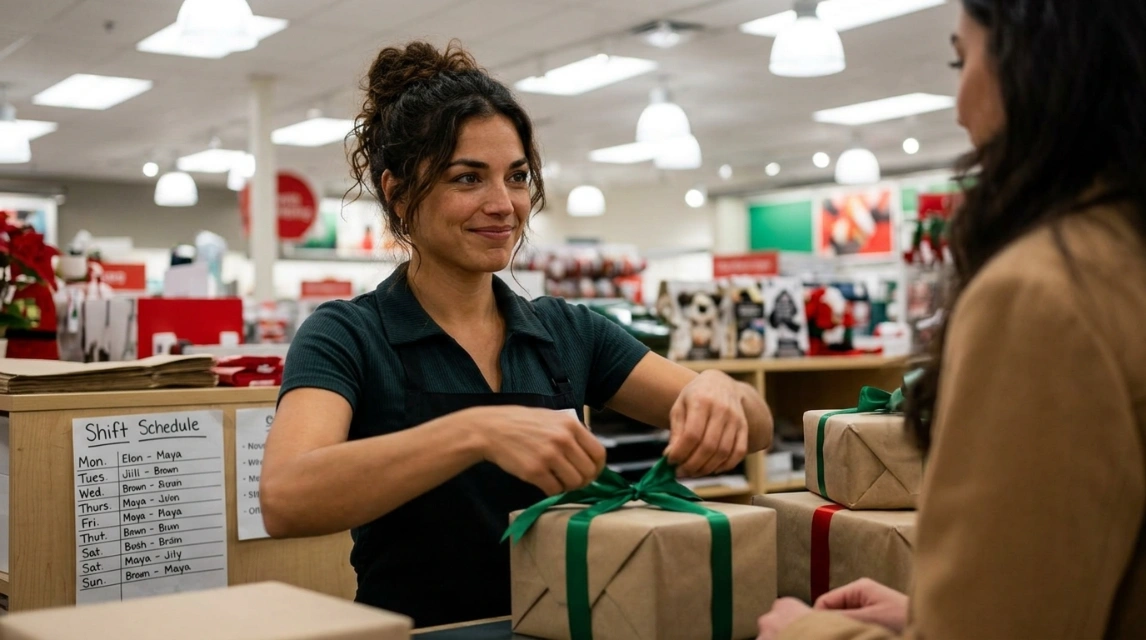
Gift wrapping gets treated like a throwaway seasonal role, and that’s a mistake if you’re actually trying to maximize a short window. National postings run $14 to $20 an hour depending on region, with Los Angeles-area listings running closer to $19 to $21 and rural markets sitting nearer the floor. The job itself is simple to learn but physically repetitive, standing for full shifts, working quickly under customer pressure, and it rewards genuine speed and neatness with better hours as the season progresses, since stores notice who’s actually fast.
What most listings don’t say directly: gift wrapping roles are often the first ones filled at big retailers because they require zero prior experience, which means the application window closes early even though the season runs long. If this is your target, apply the moment postings appear, typically late September through early October, not when you’re personally ready to start working in November.
Retail Temp Work: Steadier Hours, Slower Pay Growth
General seasonal retail work pays $16 to $19 an hour in most markets as of 2026 ZipRecruiter data, with some regional variation and a small premium in higher cost-of-living areas. The tradeoff against gift wrapping is real: retail temp roles usually come with more predictable weekly hours and a defined schedule set two weeks out, which matters if you’re coordinating childcare or a second job around the shifts. The tradeoff against event staffing is also real: the ceiling on hourly pay is lower and doesn’t move much regardless of how well you perform.
I’ll push back on the common advice that retail temp work is the “easy default” option. It’s the steadiest option, not necessarily the easiest, since holiday retail floors are genuinely demanding during peak weeks in December. If steady, predictable hours matter more to you than maximizing hourly rate, this is usually the right call. If maximizing income in a short window matters more, it usually isn’t.

Event and Party Staffing: The Highest Ceiling, the Least Certainty
Holiday party season creates real, specific demand for bartenders, servers, and brand ambassador roles at corporate and private events, and this category pays meaningfully more, commonly $20 to $35 an hour for specialized event roles according to 2026 staffing industry data, sometimes higher for bartending with the right certification. The catch is scheduling volatility: event work clusters heavily into specific weeks (early-to-mid December for corporate parties) rather than spreading evenly across the whole window, so it’s rarely a reliable full six-week income source on its own.
Event staffing agencies, not individual venues, are usually the fastest path in if you don’t already have hospitality experience; most will take on new staff for basic serving roles and pair a smaller number of paid shifts with the busiest weeks, which is exactly when the highest hourly rates show up.

Seasonal Holiday Income by the Numbers
| Job type | Typical pay | Hiring window opens | Hour reliability |
|---|---|---|---|
| Gift wrapping | $14–$20/hr | Late September | High, but fills fast |
| Retail temp work | $16–$19/hr | September–October | High, predictable schedule |
| Event / party staffing | $20–$35/hr | October | Lower, clusters in December |
These figures reflect national 2026 postings and staffing industry data; actual pay varies by region, employer, and whether a role requires prior certification (bartending licenses, for example, meaningfully raise the ceiling in event staffing specifically).
What Actually Determines Your Total Take
The real math on seasonal holiday income isn’t just the hourly rate, it’s rate multiplied by how many weeks you’re actually scheduled, and that second number is where timing decides everything. A gift wrapper who applies in late September and works a full eight-week season at 20 hours a week nets roughly $2,400 to $3,200 before tax withholding. The same job applied for in mid-November might only offer four weeks of remaining shifts, cutting that total by more than half regardless of the hourly rate. Seasonal employers plan headcount around their busiest projected weeks, and once those slots fill, they genuinely stop hiring rather than adding people later at the same rate.
If you’re building toward a specific dollar goal rather than just picking up extra hours, our guide to realistic side hustle earnings walks through how to size a target against actual weekly time available, which applies just as directly to a seasonal window as to a year-round side hustle.
I am not a financial advisor and this is not financial advice. For questions about how seasonal income affects your specific tax situation or existing benefits eligibility, talk to a qualified professional before assuming a number is fully yours to keep.
People Also Ask
How much can you realistically earn from seasonal holiday income in six weeks?
A worker earning $17 an hour at 20 hours a week for six weeks earns roughly $2,040 before tax withholding. Actual take-home seasonal holiday income depends heavily on which of the three job types you land and how early you applied, since later applicants are typically offered fewer total weeks rather than a lower hourly rate.
Is event staffing better paid than retail seasonal work?
Yes, event and party staffing typically pays $20 to $35 an hour compared to $16 to $19 for general retail, but the hours are far less predictable and cluster heavily into December rather than spreading evenly across the full season, so total seasonal holiday income from event work alone can still land lower than steadier retail hours.
When should I start applying for seasonal holiday jobs?
Hiring for gift wrapping and retail temp roles typically opens in September, and event staffing agencies usually start recruiting in October. Applying at that point, rather than waiting until November when the public search volume spikes, is the single biggest factor in getting more total weeks of seasonal holiday income rather than just leftover shifts.
Do seasonal jobs ever turn into permanent positions?
Sometimes. Retail seasonal roles occasionally convert to permanent positions based on performance and post-holiday staffing needs, though this isn’t guaranteed and shouldn’t be the primary reason to take a seasonal role if the immediate goal is short-term seasonal holiday income rather than long-term employment.
The One Number That Actually Matters
Six weeks at $17 an hour, worked in full, is worth roughly $2,000 before withholding. Six weeks at the same rate, worked in half because you applied in November instead of September, is worth roughly $1,000. The hourly number gets all the attention in seasonal holiday income searches. The application date is what actually decides which of those two totals you end up with.