
Most women who start a candle business buy a $40 starter kit, pour a dozen candles in their kitchen, post them once on Facebook, and quit six weeks later when nobody buys anything. A smaller group does something completely different from day one, and that group is the one actually making money. If you’re looking into a candle business for beginners in 2026, the difference between those two groups has almost nothing to do with luck, and almost everything to do with treating this like a real small business instead of a hobby with a price tag on it.
Candles are one of the most forgiving products to start with because the supplies are cheap, the learning curve is short, and the demand never really goes away. Sellers who move from marketplaces like Etsy and eBay into their own branded storefront on Shopify tend to follow a similar arc, start on someone else’s platform, prove the product sells, then build something that’s actually theirs. But forgiving doesn’t mean easy, and this walks through the whole thing the way you’d want a friend to explain it, not the way a craft blog explains it with a smile and no real numbers.
A candle business for beginners typically starts with soy wax, wicks, fragrance oil, and molds costing under $150 total, and grows through a mix of marketplaces (Etsy, eBay, Amazon Handmade) and social selling (Facebook, Instagram, TikTok Shop) before scaling into a private label brand on Shopify. Realistic income ranges from a few hundred dollars a month as a side hustle to five and six figures a year for sellers who build an actual brand, run ads, and treat fulfillment like a real operation.
What Almost Everybody Gets Wrong Before They Even Buy Their First Bag of Wax
Here’s the honest problem. Women jump into candle making because it looks calming on TikTok, and they treat the “business” part as an afterthought. They pick a mold because it’s cute, not because it pours clean. They pick a fragrance oil because it smells nice in the bottle, not because it actually throws scent once it’s cold. And they list their candles on one platform, wait, and wonder why nothing sells.
A real candle business for beginners plan works backward from the sale, not forward from the hobby. Before you melt a single ounce of wax, you should already know where you’re planning to sell (Etsy first, almost always), what makes your candle different from the thousand other soy candles already listed, and roughly what it costs you to make one candle so you’re not accidentally selling at a loss. That last part trips up more new sellers than anything else. Wax, wick, fragrance oil, jar, label, and box add up faster than people expect, and if you price based on “what feels fair” instead of actual cost plus a real margin, you can sell fifty candles and still be broke.
What You Actually Need Before You Pour Your First Candle
You don’t need a workshop. You need a clean, flat, ventilated surface, a handful of specific supplies, and patience for your first few batches to come out a little uneven. Here’s what that supply list actually looks like.
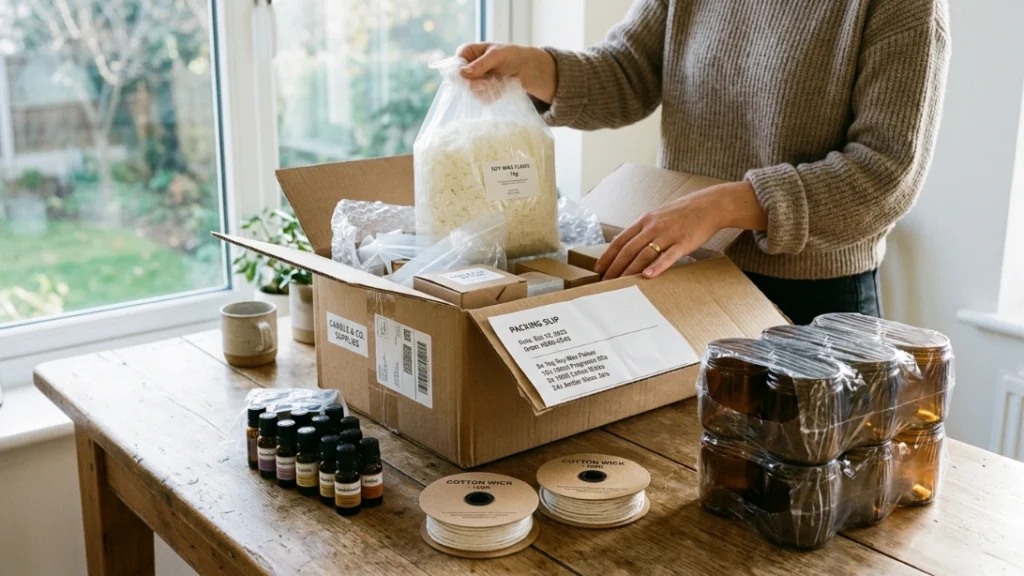
Wax. Soy wax is the standard starting point for a home candle business because it’s clean burning, holds fragrance well, and doesn’t require the safety precautions that paraffin or certain specialty waxes do. Buy it in bulk from a wholesale candle supply company rather than a craft store, since the per-pound price drops significantly at bulk quantities.
Wicks. Wick size depends entirely on the diameter of your container, not personal preference. A wick that’s too small won’t melt the wax to the edges, and a wick that’s too big will smoke and burn too hot. Most suppliers sell sample wick packs specifically so beginners can test sizes before committing.
Fragrance oil. This is where quality actually matters. Cheap fragrance oil can smell strong in the bottle and disappear completely once the candle cools, which is called poor “cold throw.” Buy from suppliers who specialize in candle-safe fragrance oils, not general craft fragrance, and always check the recommended usage rate for your specific wax.
Molds and containers. Decide early whether you’re doing container candles (glass jars, tins) or pillar candles poured into silicone or metal molds. Containers are more forgiving for beginners and sell well on Etsy and Instagram. Molds let you create unique shapes that stand out, which matters enormously once you’re competing against thousands of jar candles online.
Thread and wick tabs. Before any wax goes into a mold, the wick has to be anchored properly, either glued to a metal tab at the base of a container, or threaded through a pillar mold and held taut at the top so it stays centered as the wax cools. Skip this step or do it loosely, and you’ll end up with a crooked wick and an uneven burn, which is one of the fastest ways to get a bad review.
The Actual Candle Making Process, Step by Step
This is the part most articles rush through with one photo and a paragraph. I’m not doing that, because if you’re actually starting this, you need to see and understand every single step before you waste a fifty pound bag of wax getting it wrong.
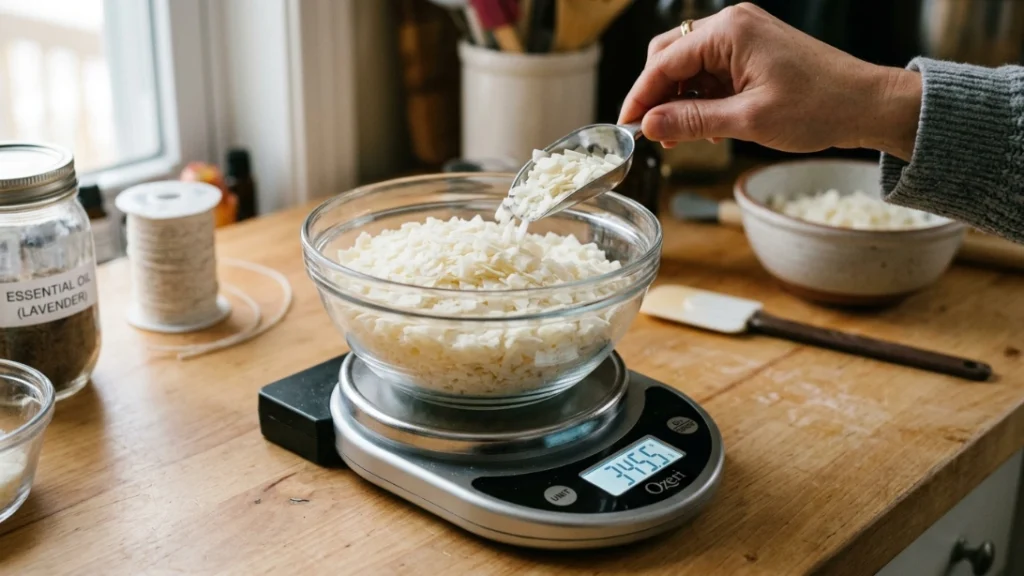
Step one: measure your wax. Weigh your wax before melting it, not after. Candle recipes are measured by weight, not volume, because wax density changes as it heats. A kitchen scale is non negotiable here.
Step two: melt the wax slowly. Use a double boiler setup, a pouring pot sitting inside a pot of simmering water, never direct heat on the wax itself. Wax is flammable at high enough temperatures, and slow, even melting also produces a smoother finished candle. Use a candy thermometer clipped to the pouring pot so you know exactly when the wax hits your fragrance oil’s recommended temperature.
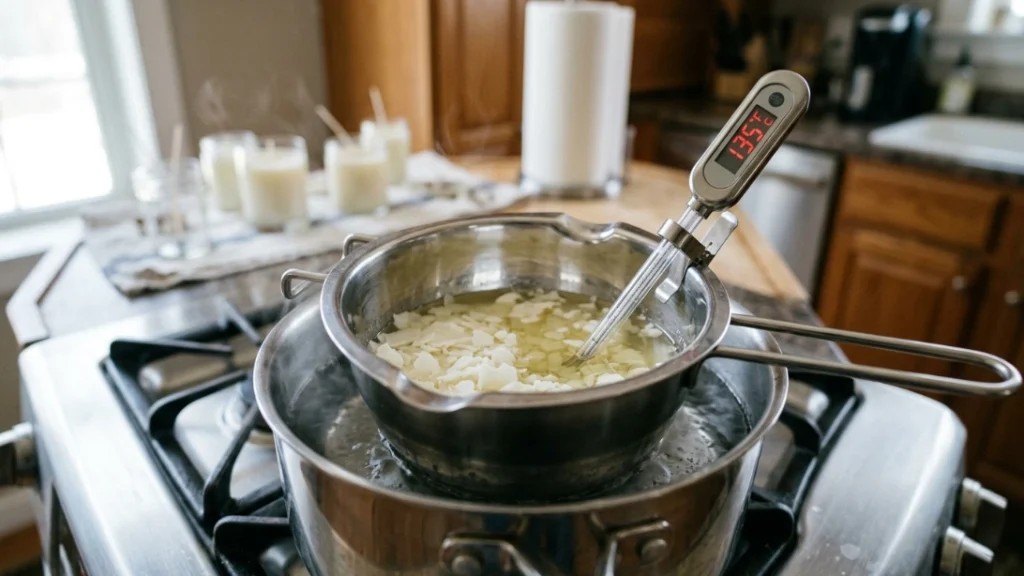
Step three: prep your containers or molds while the wax melts. Wipe down glass jars or tins to remove any dust. If you’re using silicone molds for pillar candles, apply a light mold release so the finished candle releases cleanly later.
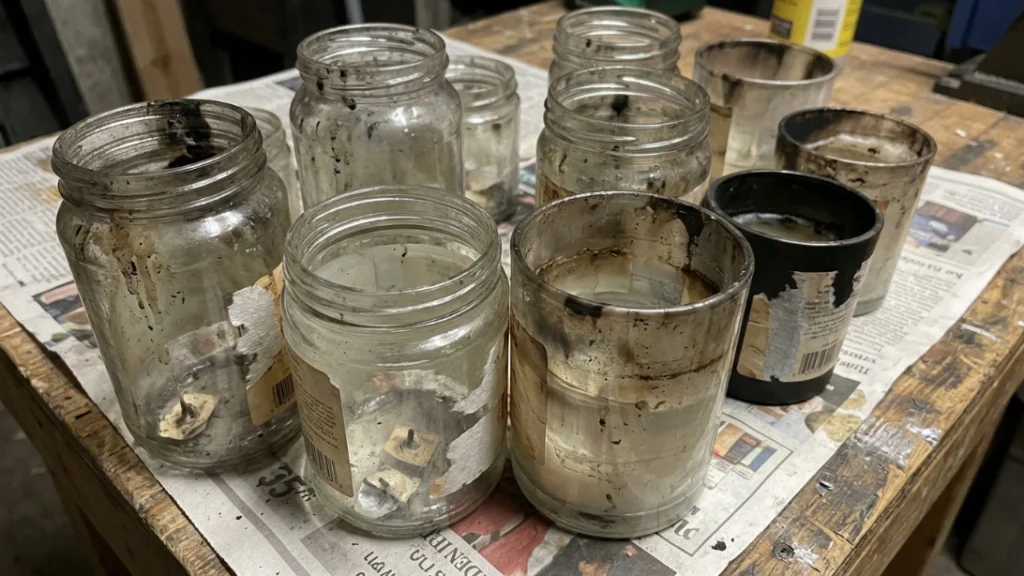
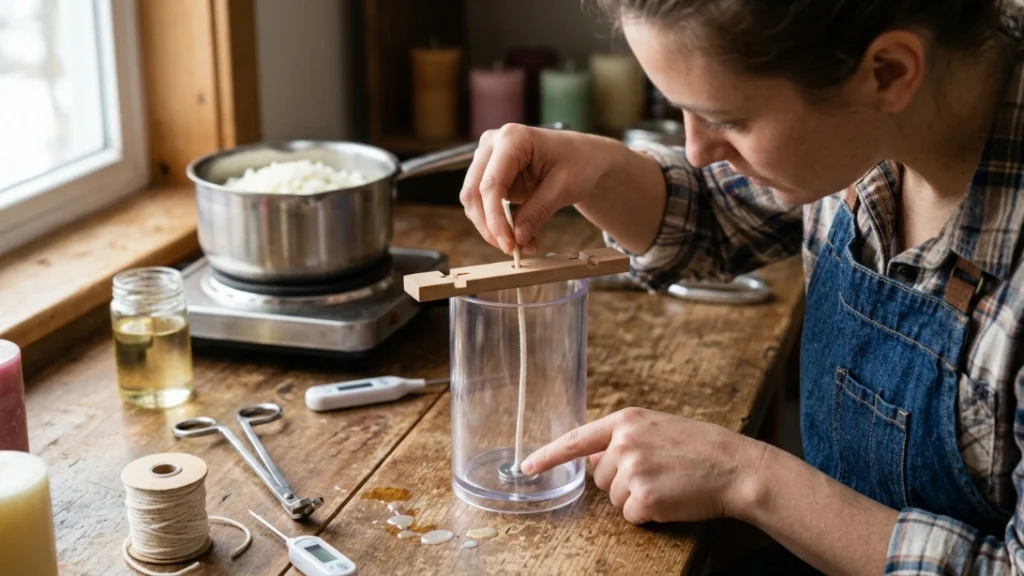
Step four: secure the wick before anything else goes in. This is the step almost every beginner skips or rushes, and it’s exactly the one you asked me to slow down on. Before you pour a single drop of wax, the wick needs to already be in place, either glued to the base of a jar with a wick tab, or threaded through the center of a pillar mold and clipped taut at the top with a wick centering tool or even a simple pencil laid across the opening. If the thread isn’t centered and secure before the wax goes in, it will drift as the wax sets, and a crooked wick almost always means an uneven, tunneling burn.
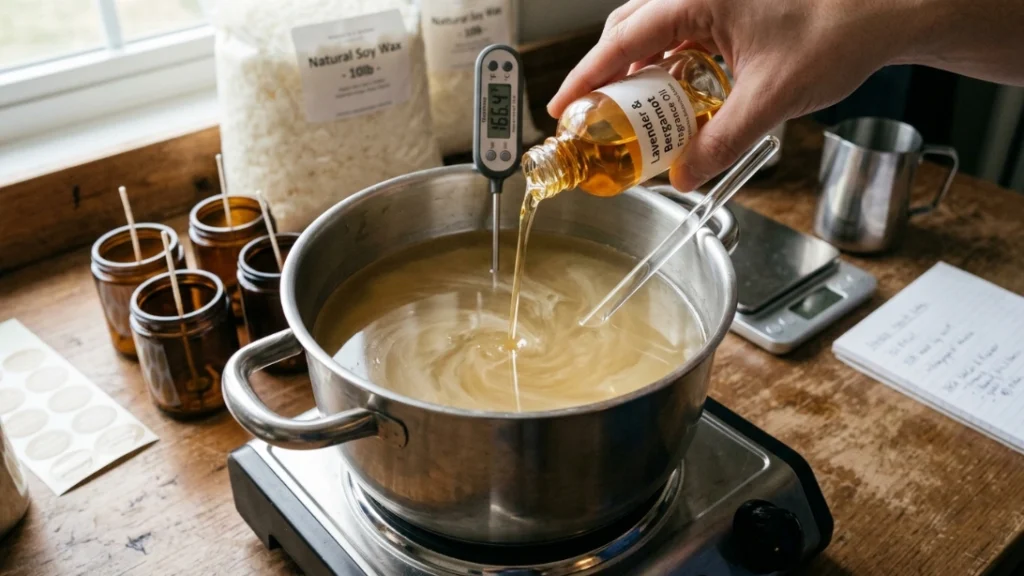
Step five: add fragrance oil at the right temperature. Once your wax hits the temperature recommended by your fragrance supplier, usually somewhere in the 180 to 185 degree range for most soy blends, remove it from heat and stir in your fragrance oil at the recommended usage rate, typically 6 to 10 percent of the total wax weight.
Step six: add dye if you’re coloring your candles. Candle dye chips or liquid dye go in after fragrance oil, stirred thoroughly until the color is even with no streaks.
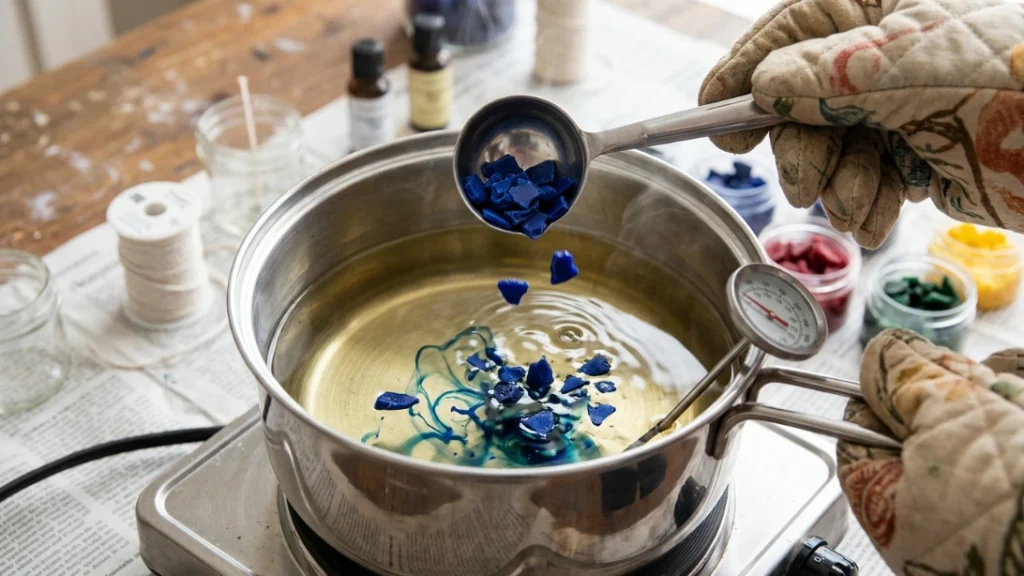
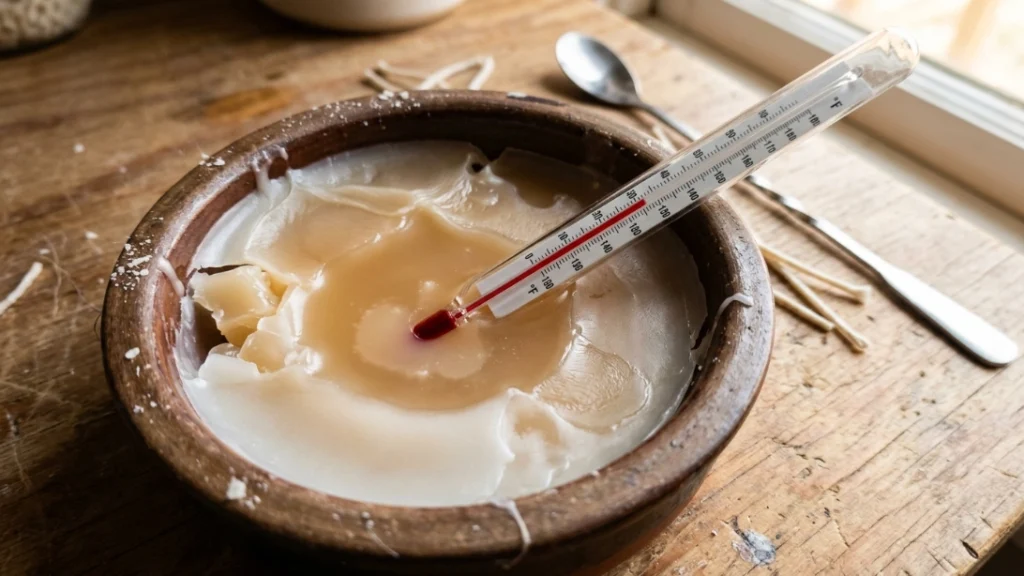
Step seven: let the wax cool slightly before pouring. Pouring wax too hot causes sinkholes and rough tops once it cures. Most soy waxes pour best somewhere around 130 to 135 degrees, but always follow your specific wax supplier’s guidance.
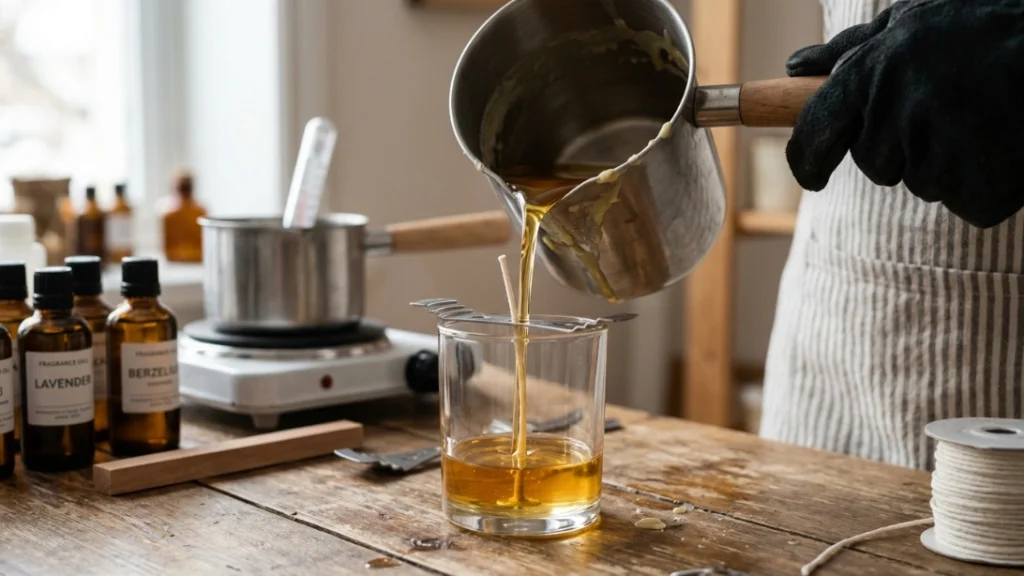
Step eight: pour the wax into your prepared mold. Pour slowly and steadily down the side of the container or mold, keeping the wick centered as you go. This is the moment where all your earlier prep either pays off or doesn’t.
Step nine: let it cool undisturbed. Do not move, touch, or place the candle near a draft while it sets. Uneven cooling causes cracking and rough surfaces. Most candles need several hours, and some pillar molds need overnight.
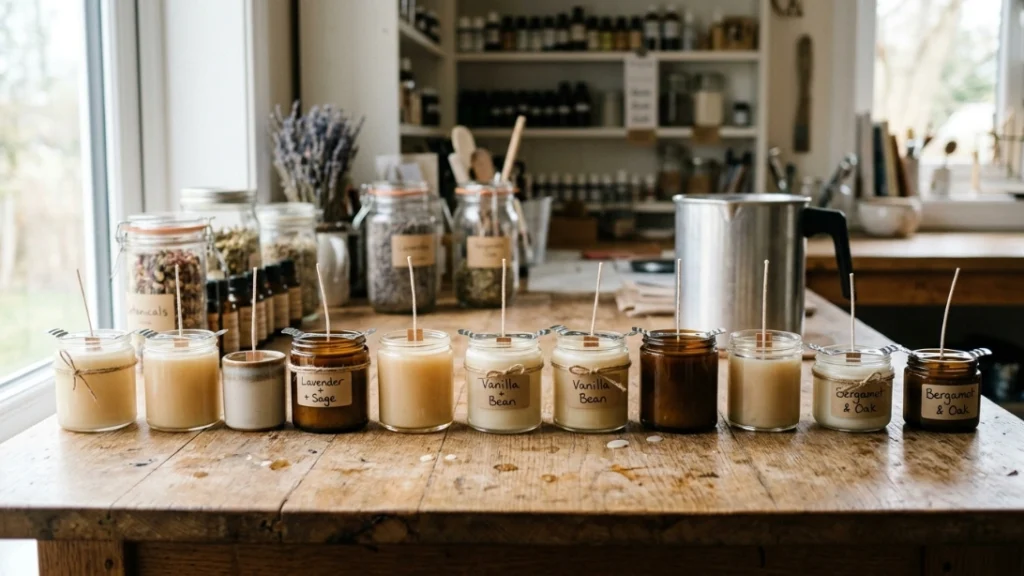
Step ten: trim the wick. Once fully cured, trim the wick down to about a quarter inch. A wick that’s too long causes soot and an uneven flame.
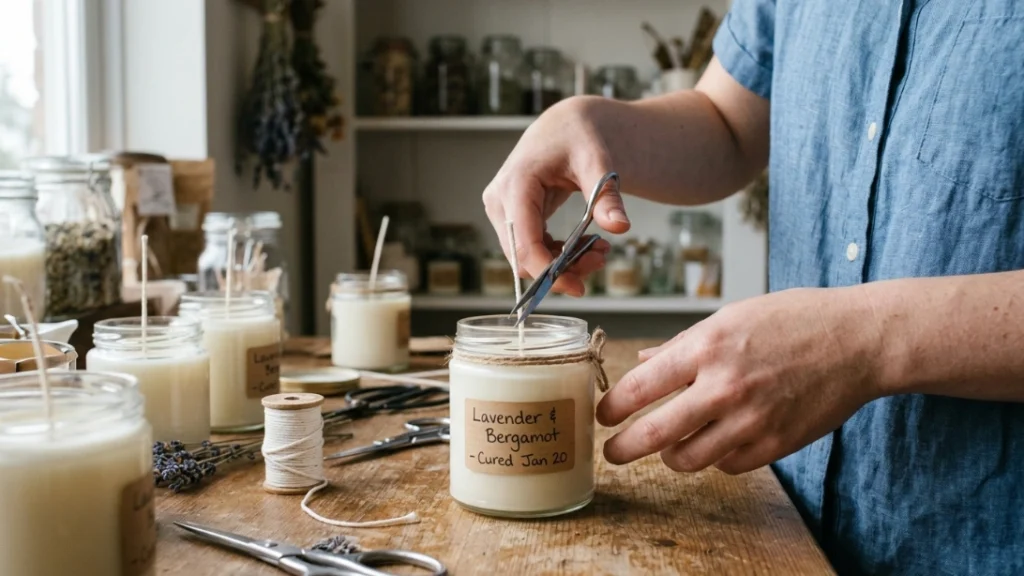
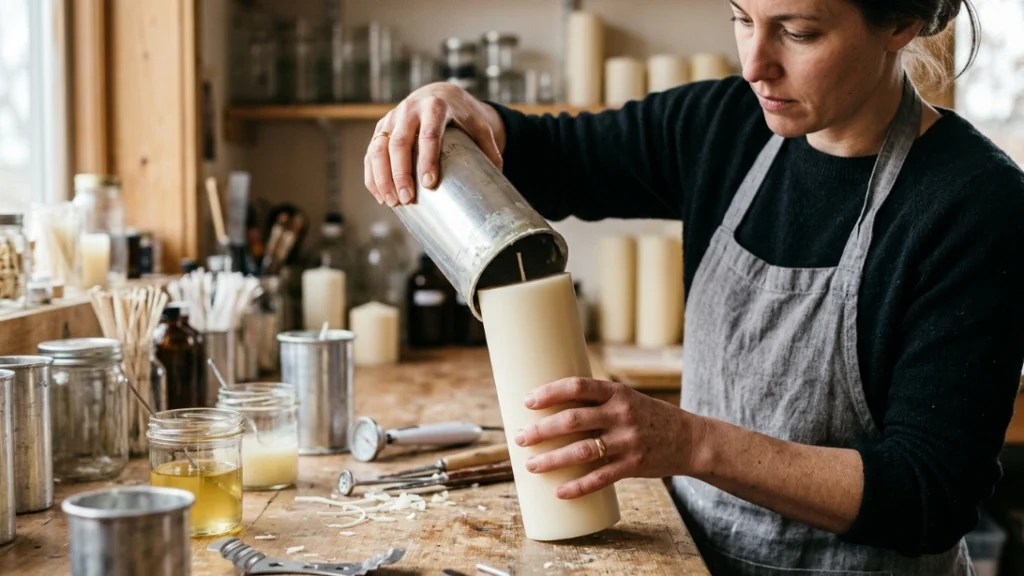
Step eleven: remove the candle from the mold. For pillar candles, gently release the finished candle from the silicone or metal mold once fully cooled. This is one of the most satisfying parts of the whole process and also the moment where quality issues become obvious if something went wrong earlier.
Step twelve: inspect for quality. Check for sinkholes, uneven color, off-center wicks, and cracks before a single candle goes anywhere near a customer. This is the step new sellers skip because they’re excited, and it’s exactly why bad reviews happen.
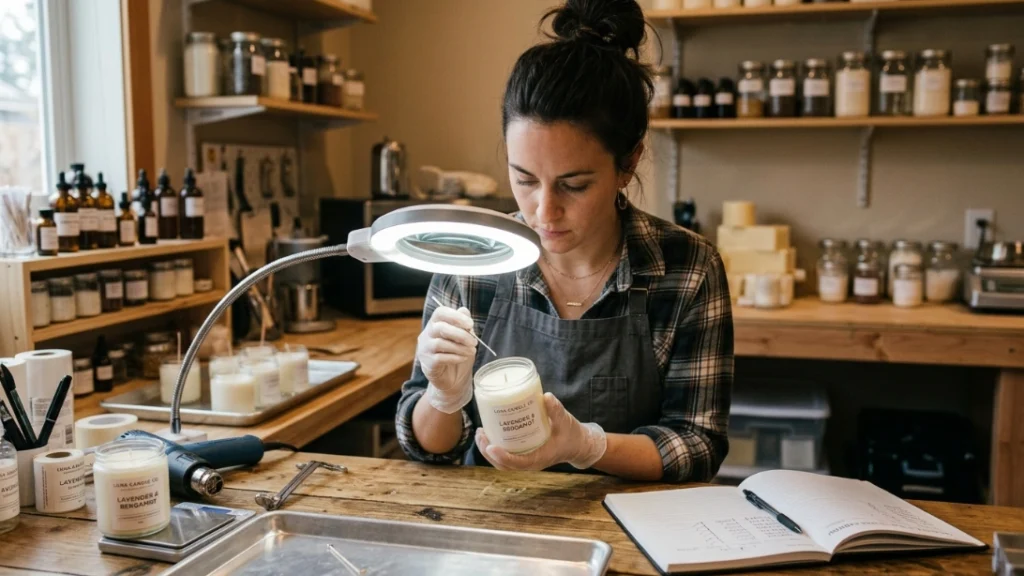
Step thirteen: label and brand. Apply your label, ingredient list, burn time warning, and brand name. This is also the step that starts turning a candle into a candle business, which we’ll get into in a minute.
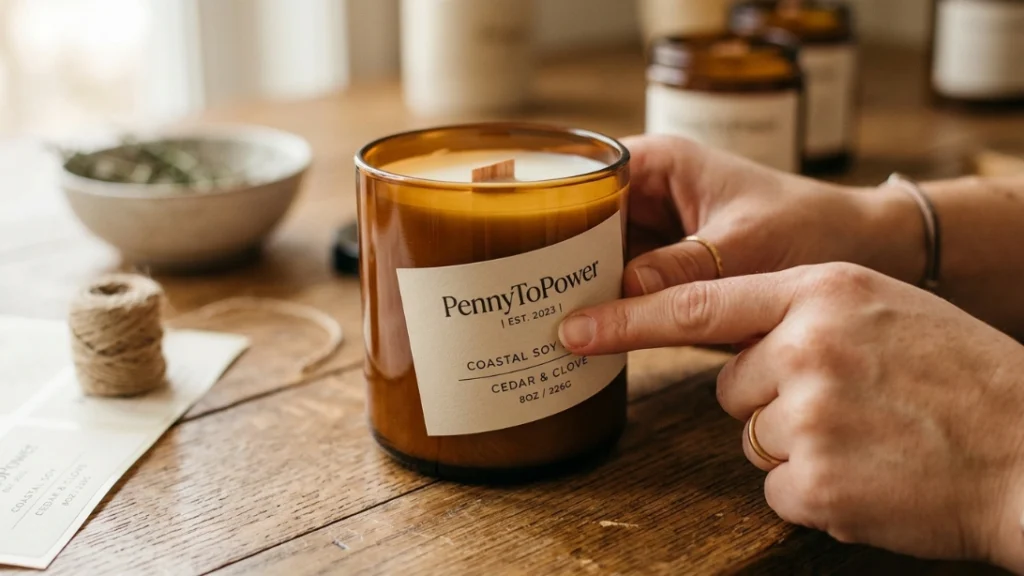
Step fourteen: pack for storage or shipping. Wrap candles individually, especially glass containers, and pack them in boxes with enough padding that they won’t shift or crack during shipping.
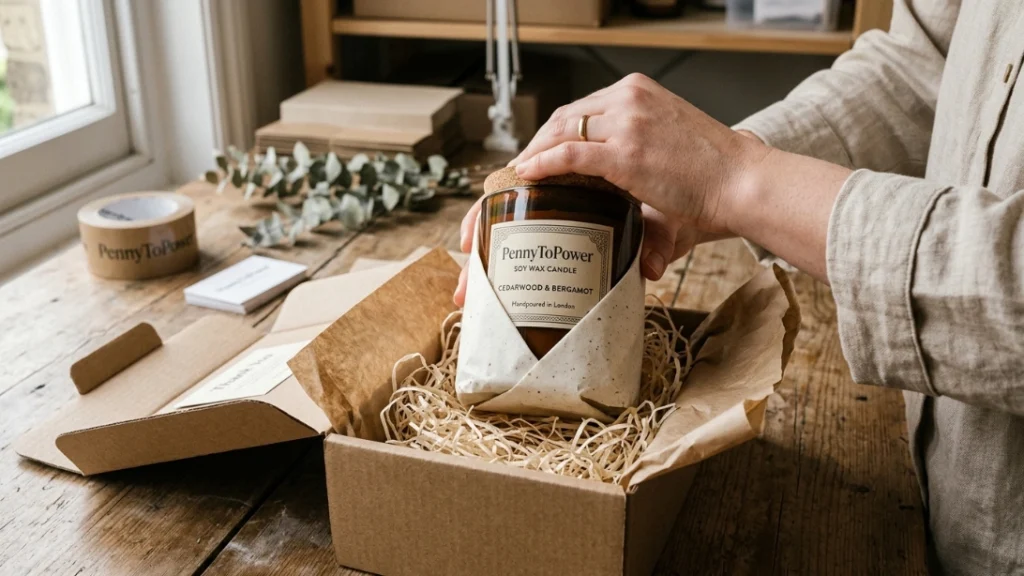
Step fifteen: prepare the order for pickup or drop-off. Label the outer box with the shipping label, and stage it wherever your courier or postal pickup happens.
That’s the full physical process, start to finish. None of it requires a workshop. Most of it requires patience and a willingness to throw out your first few “good enough” batches instead of selling them.
Packaging That Actually Sells the Candle Before It’s Even Burned
People buy candles with their eyes first. A candle that’s beautifully made but sloppily labeled will sit unsold next to a mediocre candle wrapped and branded well. Invest in decent labels, a consistent color palette across your listings, and if your budget allows it, a simple branded box or tissue paper insert. This is not vanity spending. It’s the difference between looking like a hobbyist and looking like a real candle business for beginners is about to outgrow that description.
Where to Actually Sell: Picking Your Platforms Instead of Guessing
This is where most new candle sellers get scattered, throwing the same three photos onto five platforms and hoping something sticks. Each platform behaves differently, and treating them the same is a mistake.
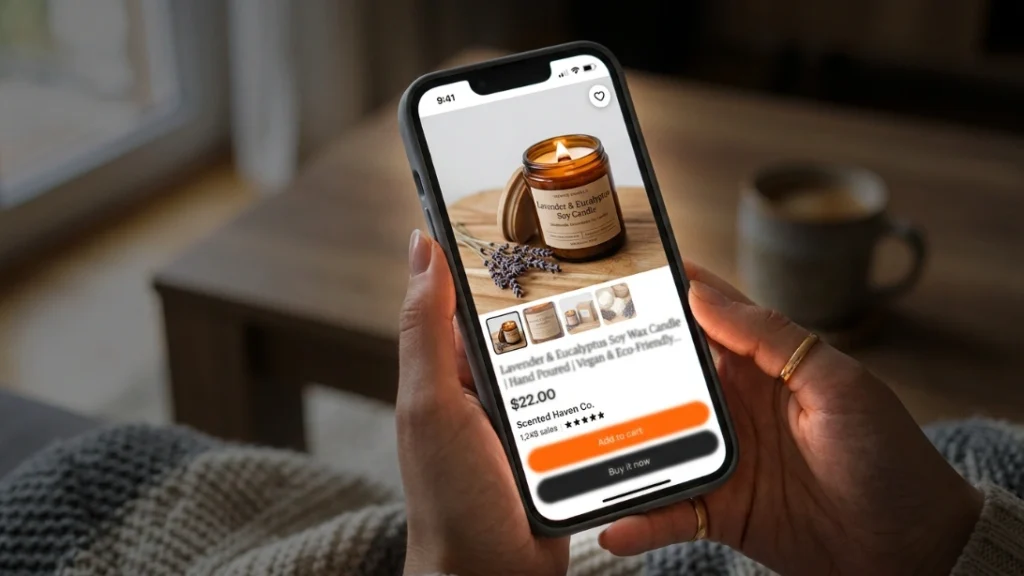
Etsy. This is almost always the right starting point. Etsy shoppers are already looking for handmade goods, which means you’re not fighting to convince anyone that a homemade candle is worth buying. Focus your Etsy listings on strong photography, clear scent descriptions, and honest burn time estimates.
eBay. Less obvious for handmade goods, but useful once you have multiple candle designs and want to reach shoppers who are comparison shopping by price. eBay buyers tend to be more price sensitive, so this works better for simpler, lower cost candles than for premium branded pieces.
Amazon. Amazon Handmade exists specifically for sellers like you, and the built in trust and search traffic of Amazon can be a real advantage once you have consistent inventory and reliable production. It’s a heavier lift to set up correctly, so most sellers add this after Etsy is already working.
Facebook and Instagram. These aren’t just listing platforms, they’re where you build actual relationships with buyers. Facebook groups built around your local area or a specific interest (home decor, self care, small business support) can move product fast without any ad spend at all. Instagram works best when you show the process, not just the finished product, since people trust a candle more once they’ve watched it get made.
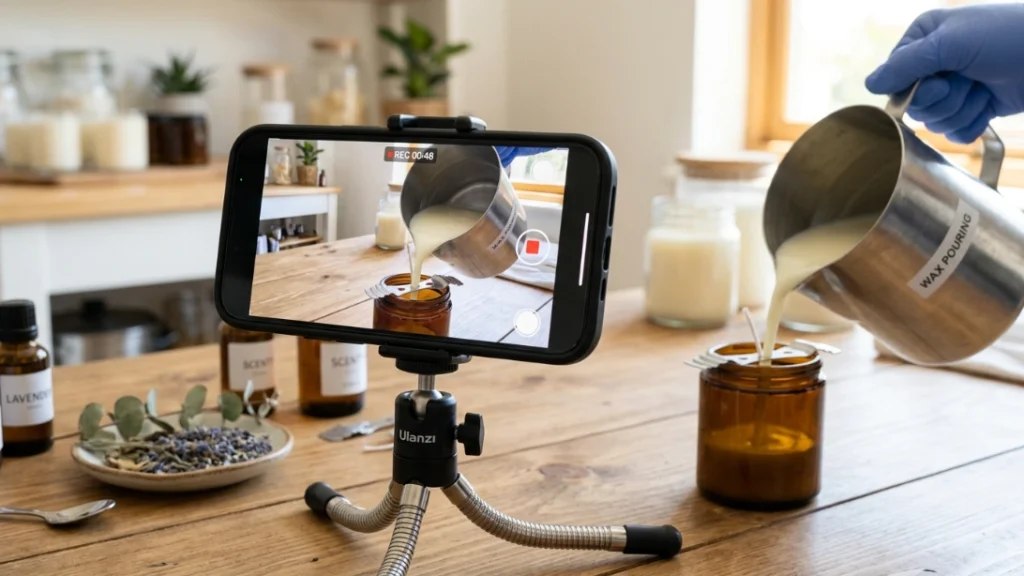
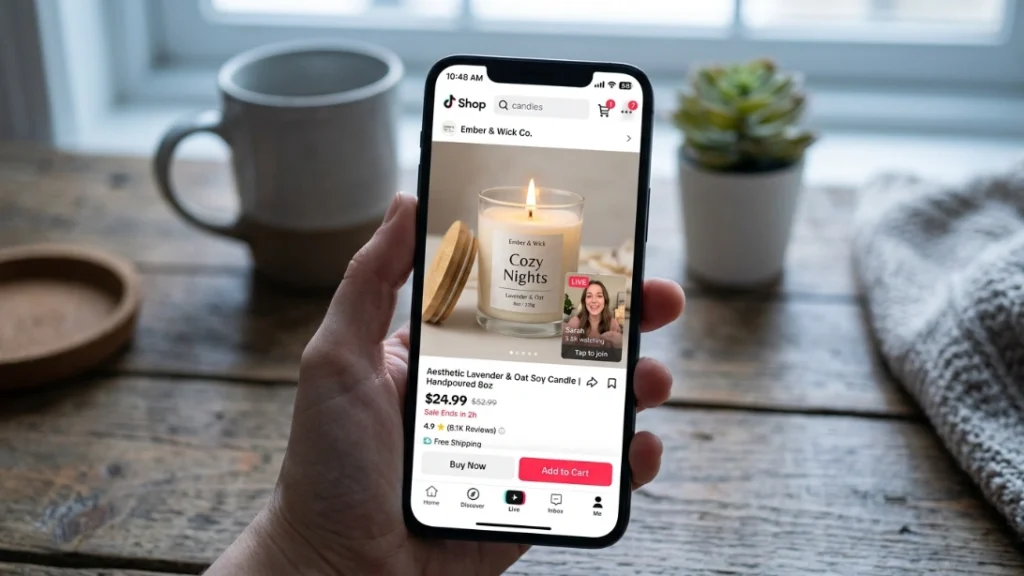
TikTok Shop. This is the newest and, right now, one of the fastest growing channels for small candle brands. TikTok Shop rewards process content specifically, videos of the pour, the unmolding, the labeling, far more than polished product shots. If you already have the sixteen process images and steps above, you already have your first two weeks of TikTok content.
Building Your Own Brand: Why Private Label Matters More Than People Realize
Here’s the part that separates a side income from a real business, and it’s the part most beginners skip entirely because it sounds like extra work. Selling on Etsy, eBay, or TikTok Shop means you’re building someone else’s platform, not your own audience. Every sale happens on their terms, their algorithm, their fees, and if that platform changes its rules tomorrow, your income changes with it.
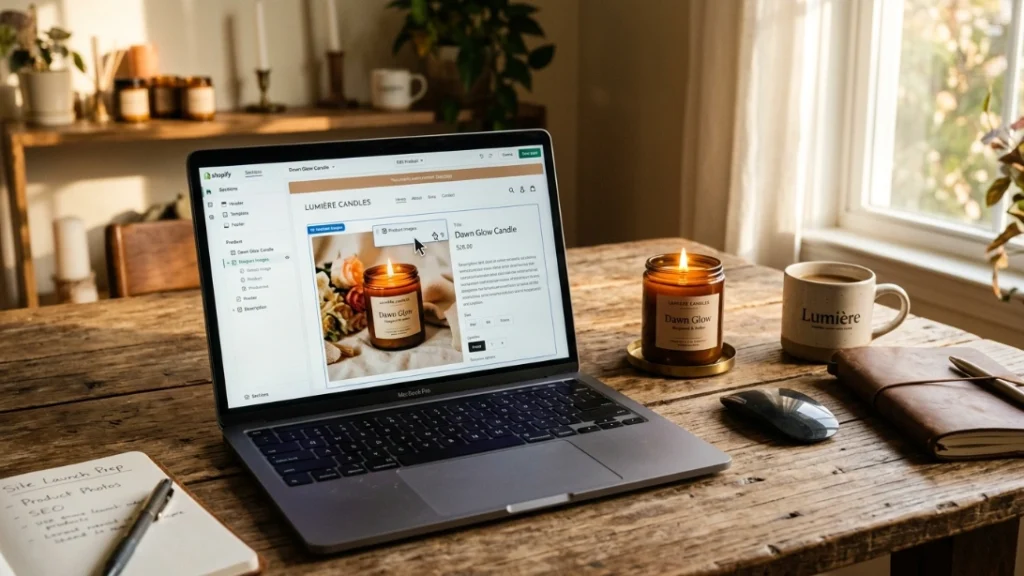
Private label means you’re not just making candles, you’re building a recognizable brand around them, your own name, your own packaging, your own story, your own website. This matters for a few concrete reasons. First, a branded product with a consistent look sells at a higher price point than an unbranded one, because buyers are paying for the experience, not just the wax. Second, once you have your own brand, you can move buyers off marketplaces and onto your own website through Shopify or WooCommerce, where you keep more of every sale and aren’t competing directly next to a hundred other sellers on the same page.
Setting up a Shopify store is genuinely the easier route for most beginners, since it’s built specifically for product based businesses and handles payment processing, shipping labels, and basic marketing tools in one place. WooCommerce, which runs on WordPress, gives you more control and lower long term fees, but it takes more setup work and a bit more comfort with technical details. Either way, the goal is the same: your own website becomes the home base, and every other platform, Etsy, Instagram, TikTok Shop, becomes a way to funnel people back to it.
Building an audience comes before the big sales numbers, not after. Post the process consistently, answer every comment, and treat your first hundred followers like real customers, not just numbers. Once you have a base audience and some sales history, running small paid ads on Facebook or Instagram, even five or ten dollars a day, can put your candles in front of people who’ve never heard of your brand and turn them into buyers far faster than organic posting alone. Trust builds slowly and compounds. A woman who buys one candle from your Shopify store and loves it becomes the person who buys three the next time and tells a friend.
I am not a financial advisor and this is not financial advice. For your specific situation, especially anything involving business licensing, sales tax collection, or how to structure your business legally, talk to a qualified professional in your state.
Taking Orders, Confirming Details, and Getting Candles Out the Door
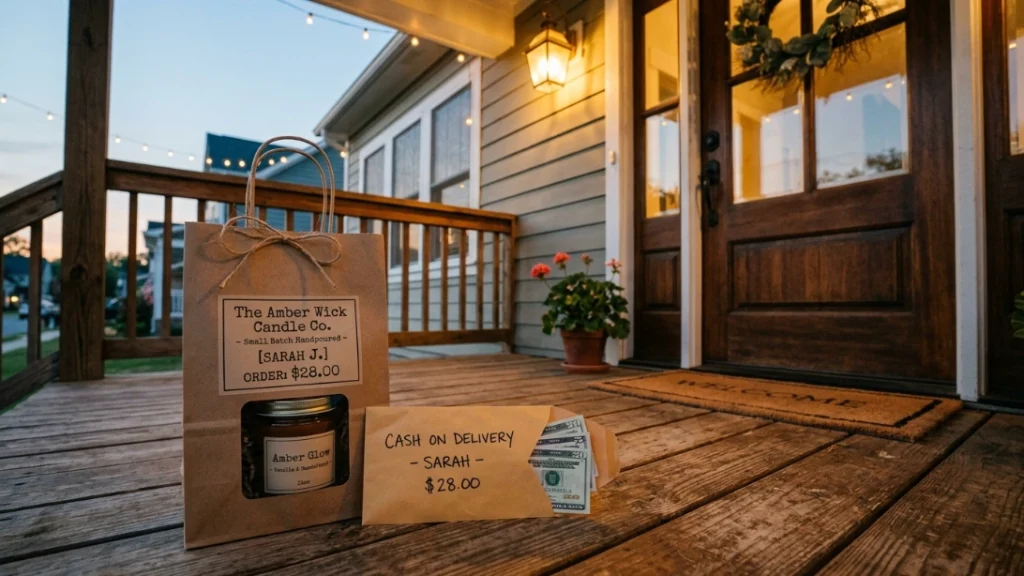
Once orders start coming in, especially across multiple platforms, staying organized is what keeps you from shipping to the wrong address or losing track of what’s actually in stock. For higher value or custom orders, especially ones coming through Facebook or Instagram direct message, it’s worth calling the buyer directly to confirm the order details and shipping address before you box anything up. It feels old fashioned, but it cuts down on shipping mistakes significantly, and buyers genuinely appreciate the personal touch from a small business.

On payment, most established platforms like Etsy, Amazon, and TikTok Shop require upfront payment processed through their own system, which protects you as the seller. For direct sales through Facebook or Instagram, offering both a prepaid option and cash on delivery can genuinely increase your close rate, since some buyers are hesitant to pay upfront to a business they haven’t bought from before. Cash on delivery does carry more risk of a wasted trip if the buyer isn’t home or changes their mind, so many sellers require at least a small deposit for COD orders on higher priced items to protect against no shows.
The Honest Money Talk
I want to be straight with you instead of throwing around a number that sounds exciting. Exact income from a candle business varies enormously depending on how much you’re producing, what platforms you’re selling on, and whether you’ve built your own brand or you’re still selling one candle at a time on marketplaces. A woman pouring candles a few hours a week and selling through Etsy and Facebook alone might realistically bring in a few hundred dollars a month starting out, growing slowly as her listings build reviews and repeat buyers. Once a seller adds TikTok Shop, builds an actual following, and moves buyers onto her own Shopify store where she controls pricing and margin, the ceiling gets much higher, and five figure annual income becomes realistic for a genuinely committed small operation. Six figures and beyond is possible, but it typically involves scaling production beyond hand pouring alone, running consistent paid advertising, and treating the brand like a full business rather than a side project. There’s no guaranteed number here, and anyone who promises you one before knowing your effort level isn’t being honest with you.
Where to Start This Week
Don’t try to set up five sales channels on day one. Buy enough supplies for one small batch, maybe a dozen candles in two or three scents, and go through the entire process above from melting to packaging before you list a single thing for sale. List those first candles on Etsy, since that’s where buyers already expect handmade goods, and start filming the process for TikTok and Instagram at the same time, since that content costs you nothing extra to create while you’re already making the candles. Everything else, the Shopify brand, the ads, the multiple platforms, comes once you’ve proven to yourself that you can actually make a consistent, good quality candle. A candle business for beginners only turns into something real once the beginner part is actually behind you.
People Also Ask
Do I need a business license to run a candle business for beginners from home?
In most areas, yes, though requirements vary by state and city, especially around home occupation permits and fire safety once a candle business for beginners starts producing at any real volume. Check your state and local small business requirements before selling publicly, since candle making involves open flame materials and some areas regulate it under home based manufacturing rules.
What’s the actual startup cost for a candle business for beginners?
A basic candle business for beginners setup, wax, wicks, fragrance oil, a handful of containers, a thermometer, and a scale, typically runs under $150. Costs rise from there depending on how many scents and container styles you want to test before your first real batch.
Is Etsy or TikTok Shop the better starting platform for a candle business for beginners?
Etsy tends to work best for a candle business for beginners because buyers are already searching for handmade products with purchase intent. If you’re weighing your options, it’s worth starting an Etsy shop with no money as your first real listing before adding TikTok Shop, which rewards process based video content once a candle business for beginners has an engaged following.
How long does it take for a candle business for beginners to become profitable?
Most sellers see their first sales within the first month if they list consistently, but real profitability for a candle business for beginners, meaning income that reliably covers time and materials, usually takes several months. It’s worth working out what your candle business actually pays you per hour once you have a few months of sales, since that number is often more honest than total revenue alone.
Do I need my own website to run a candle business for beginners, or can I just use Etsy and social media?
A candle business for beginners can absolutely start and sustain itself through Etsy and social platforms alone. A private label brand with your own Shopify or WooCommerce website becomes valuable once you want to keep more of each sale, build repeat customers directly, and reduce how dependent your candle business for beginners is on any single platform’s rules and fees.