
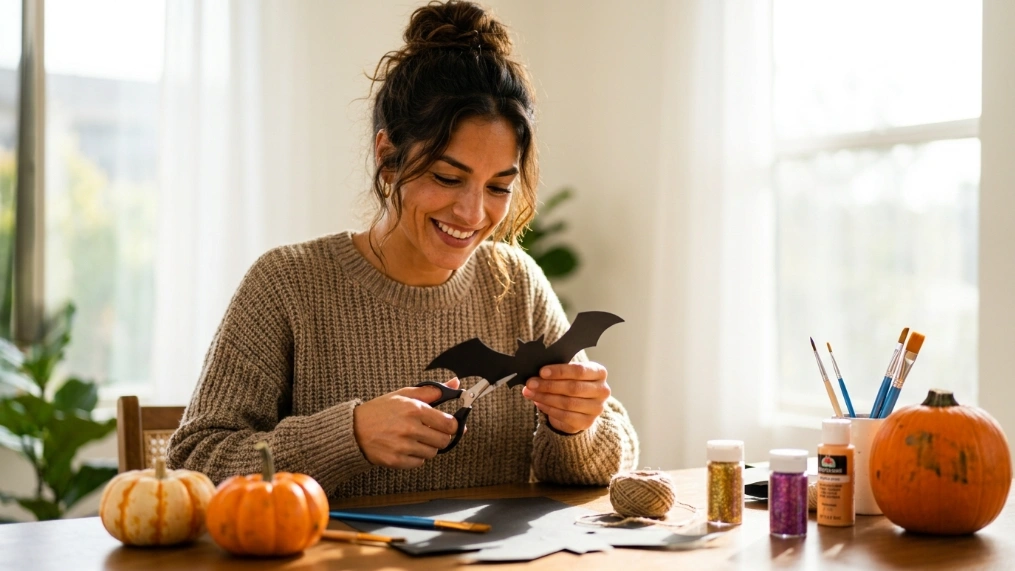
According to the National Retail Federation, Americans spent a record $13.1 billion on Halloween in 2025, with the average household putting down roughly $114 on costumes, candy, and decorations alone. If you’re a mom trying to stretch one household budget through an entire fall season of school events, sports fees, and holiday planning, that number probably doesn’t land as a fun fact. It lands as a warning.
These Halloween budget tips are built for exactly that situation. I looked at where the seasonal spending actually goes this year, and most of it turns out to be avoidable without cutting a single bit of the fun. You don’t need a smaller Halloween. You need a smarter one, and that’s a completely different project.
This guide walks through the categories that actually drain a family’s October, in the order they usually hit: the mindset shift that stops overspending before it starts, the real numbers behind where the money goes, and specific, practical swaps for costumes, décor, candy, and parties that cost a fraction of the retail version.
Halloween budget tips that actually work start with a hard spending cap set before you shop, a DIY-first approach to costumes and décor, and smart timing around markdown sales. Real savings come from shopping your own closet, hosting a potluck instead of catering a party, and buying pumpkins, candy, and décor after October 31st for next year at a steep discount.
What Most People Get Wrong About Halloween Spending
Most families don’t overspend on Halloween because they’re careless. They overspend because Halloween is made up of five or six separate small decisions, a costume here, a bag of candy there, a string of lights, a pumpkin, maybe a party contribution, and none of those decisions feels big enough on its own to trigger any real caution.
That’s the actual problem. A $12 pack of decorations doesn’t feel like spending. Neither does a $9 costume accessory, or a $6 upgrade to the “premium” candy bag at checkout. Add them up across a household with kids, and you land somewhere near that $114 national average without ever making one decision that felt reckless.
There’s also a timing trap built into the holiday. Halloween merchandise shows up in stores as early as August, months before most people are thinking seriously about the holiday, which means the earliest shoppers are paying full retail price out of habit rather than necessity. Waiting even three or four weeks changes the math significantly, and we’ll get into exactly when in the timing section below.
One more myth worth naming directly: that a “cheap” Halloween looks obviously cheap. It doesn’t, if you build it around creativity and timing instead of premium purchases. A well-made cardboard costume or a porch lit with a single colored bulb can read as more original and more memorable than something bought off a shelf, not less.

The Hard Numbers Behind an Average Halloween
Before getting into specific fixes, it helps to see where a typical household’s Halloween dollars actually go. These figures come from National Retail Federation survey data and general seasonal retail patterns, and they’re presented here as typical ranges rather than a prediction of any one family’s spending.
| Category | Typical Spend (retail default) | Realistic DIY/Frugal Version |
|---|---|---|
| Costumes (per person) | $30 to over $100 | Under $25, often under $10 |
| Decorations | Around $100 or less for most households | $15 to $30 using repurposed materials |
| Candy | Roughly $30 per household | $15 to $22 with bulk or co-op buying |
| Party hosting | Varies widely, often $75+ | $20 to $40 with a potluck structure |
I am not a financial advisor and this is not financial advice. For your specific situation, talk to a qualified professional, especially if Halloween spending is part of a larger conversation about household debt.
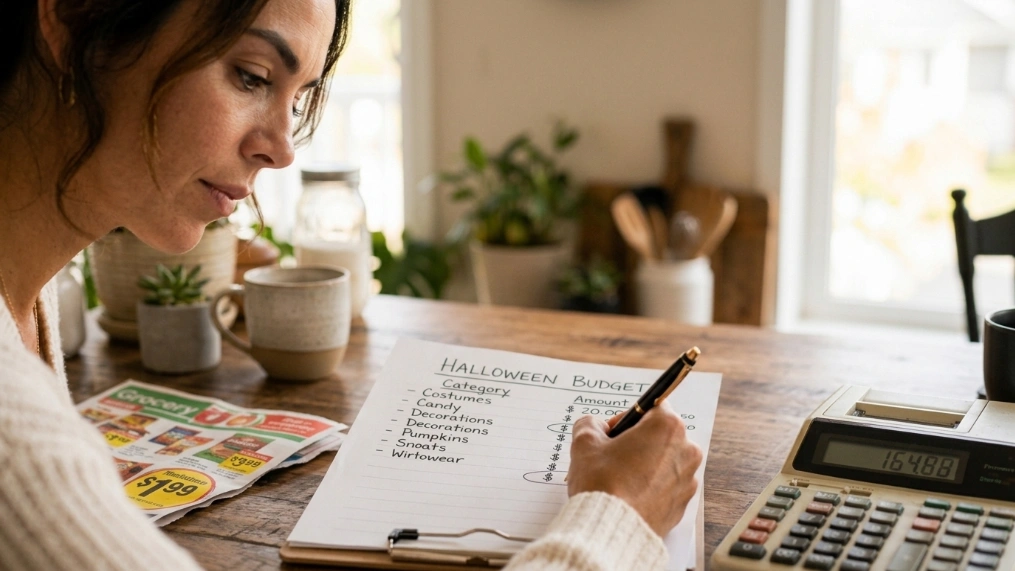
Even a modest shift in two or three of these categories, say, moving costumes and candy into the frugal column while leaving décor as is, can take a household from the $114 average down closer to $50 or $60 total. None of that requires a joyless, decoration-free Halloween. It just requires shopping differently and shopping later, which is the rest of this guide.
Halloween Budget Tips for Every Category That Actually Matters
Halloween budget tips work best when they’re specific to the category eating the money, not generic advice to “spend less.” Here’s the breakdown, starting with the two biggest line items: costumes and décor.
Costumes: Shop Your Closet Before You Shop a Store
Costumes are consistently the largest single Halloween expense, and pre-made licensed characters can run anywhere from $30 to well over $100 for a single outfit. Before spending anything, it’s worth actually looking through what’s already in the closet.
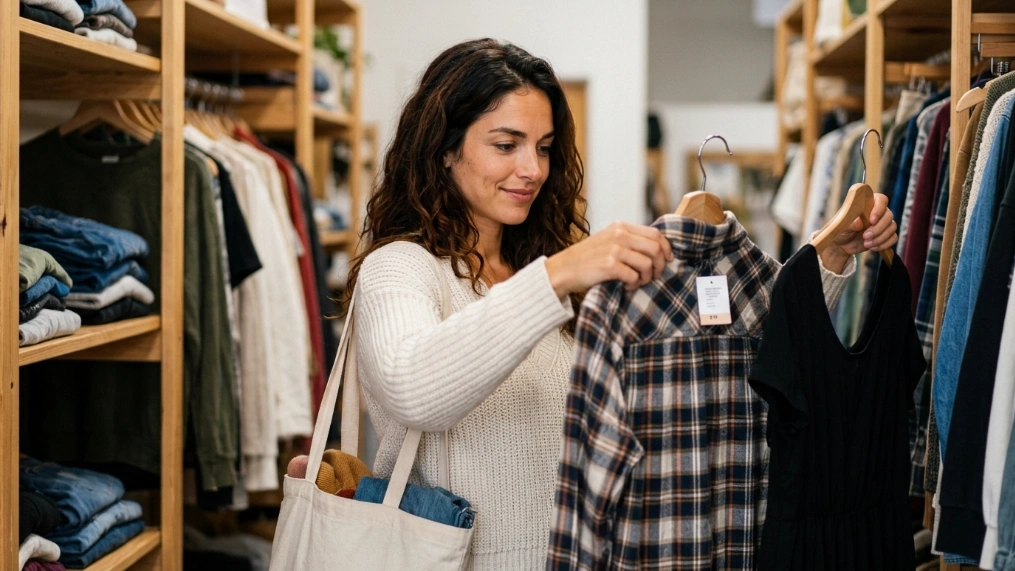
A plaid shirt and jeans becomes a lumberjack. A simple black dress with basic accessories becomes a witch or a cat. A Hawaiian shirt from a past vacation becomes a tourist. A black outfit and sunglasses becomes a spy. Dark clothes, a hat, and a magnifying glass becomes a detective. None of these cost anything beyond what’s already hanging in a closet.
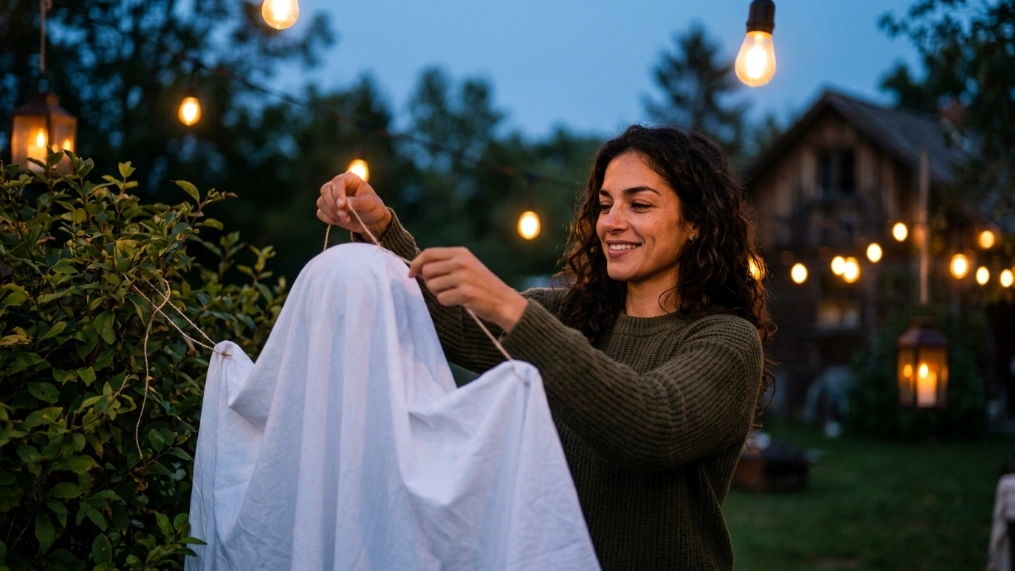
For something more built-out, cardboard and a few dollar-store supplies go a long way. A LEGO-style costume can be assembled for under $15 using one large rectangular box for the body, a smaller square one for the head, six plastic bowls glued to the front and top, and a single can of spray paint. A flower pot costume needs only artificial flowers glued to a headband and a plastic tub held up with duct tape straps over a pink shirt and leggings. A robot or vending machine costume needs little more than cardboard boxes and silver paint. A classic ghost gets elevated fast with chains, fake blood, or glow-in-the-dark paint added to a plain white sheet.
Makeup is often cheaper and safer than a full mask, particularly for kids, and a basic special-effects kit can turn a plain outfit into a sugar skull, a zombie, a mime, or a clown. For a quick zombie look specifically, shredding old clothes and adding a little flour or grey face paint does most of the work.
If none of that fits what your family wants this year, a costume swap is worth organizing three to four weeks ahead of Halloween. Everyone brings gently used costumes and leaves with something new to them, for free. Peer-to-peer rental platforms are another option for a higher-end look, since borrowing a garment typically runs 70 to 80 percent less than buying it outright.
Décor: Small, Repurposed Details Beat Big-Box Purchases
About 70 percent of households keep their decoration budget at $100 or less, and the highest-impact décor tends to lean on lighting and sound rather than expensive animatronics.
Fallen leaves, twigs, and pinecones make a genuinely convincing “haunted forest” look for free, especially once a few branches get a coat of black spray paint. Empty milk jugs turn into lanterns with a drawn-on face and a battery-powered light inside. Old cardboard becomes “keep out” signage with a marker and some torn edges. Black plastic lawn bags, cut and layered, make a weather-resistant wreath that costs almost nothing.
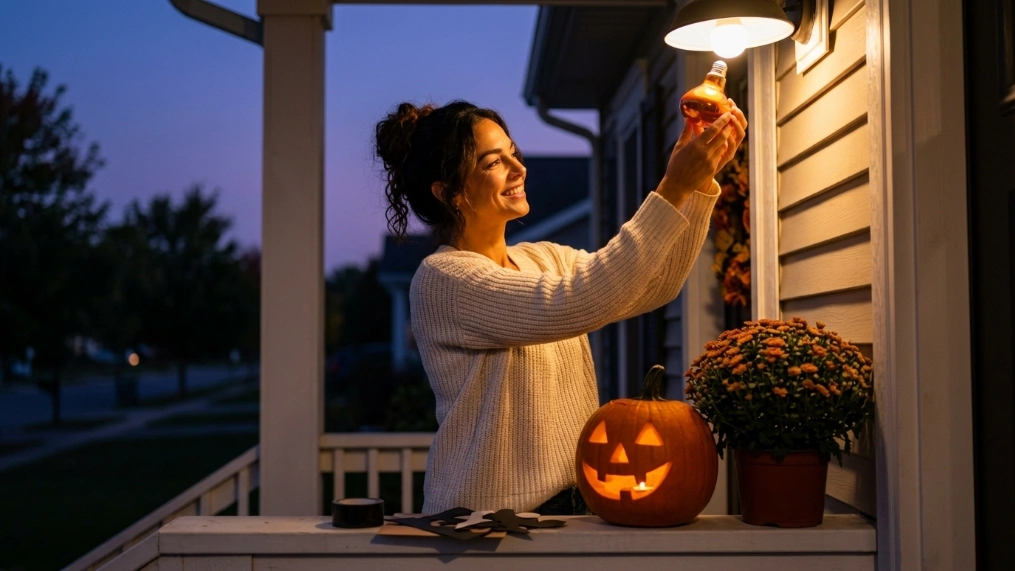
Some of the most effective atmosphere comes from what’s already in the house. Spooky shapes cut from black construction paper and taped to a window, backlit by a lamp, create a dramatic silhouette effect visible from the street for under $5. A TV or tablet running a free ambient video loop replaces a fog machine entirely. A Bluetooth speaker playing free ambient sound, wind, distant thunder, creaking doors, adds more atmosphere than most plug-in sound boxes at the store. Swapping a porch bulb for a colored floodlight, often around $4, changes the entire mood of a house instantly.
Pumpkins deserve their own line of thinking. Prices at local grocery stores typically drop noticeably in the final days before Halloween, so waiting matters here too. Roasted pumpkin seeds make a free snack afterward, and an uncarved pumpkin can go straight into a pie or soup once the holiday’s over instead of the trash.
The Ones That Actually Work Best
Out of everything above, three moves consistently produce the biggest savings with the least effort.
The cash-only method comes first. Pulling a fixed amount of physical cash and leaving cards at home before you shop removes the ability to quietly go over budget one small purchase at a time, which is exactly how the “death by a thousand small decisions” problem described earlier happens in the first place.
Buying candy through a co-op comes second. Teaming up with a few neighbors to buy in bulk at a warehouse store and splitting the total typically saves 20 to 30 percent compared to everyone buying smaller bags separately at full retail price, and it usually means less waste at the end of the night too.
Portion control on the porch comes third. Handing out one or two pieces per trick-or-treater instead of a handful stretches a single bulk bag across an entire evening, and setting a firm cutoff time (then turning off the porch light) means you’re never stuck making a last-minute candy run to cover a night that ran longer than planned.

Smart Timing: When to Actually Buy Everything
Timing changes the math on almost every category in this guide, and most shoppers get it backwards by buying too early out of habit.
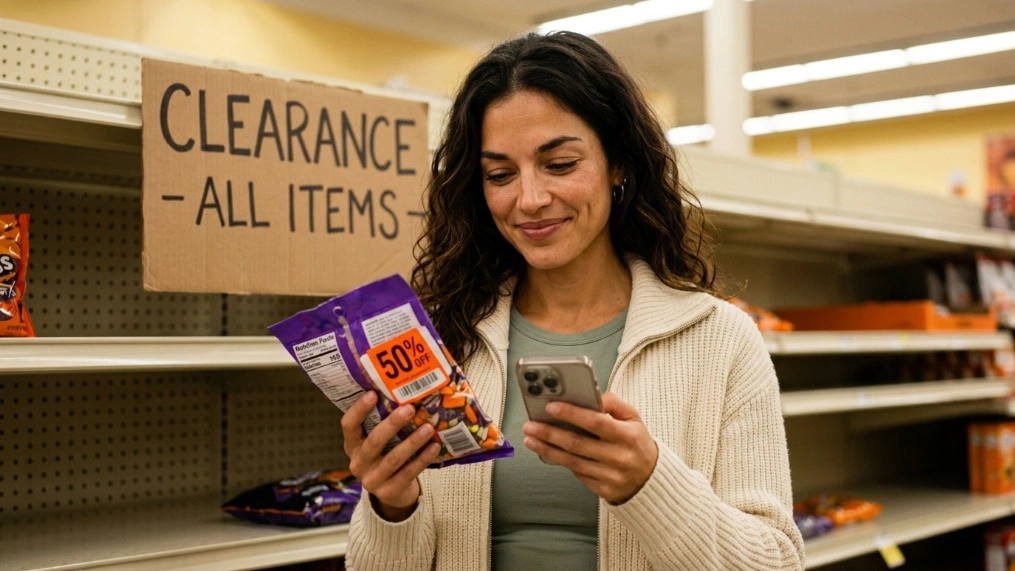
Retailers begin serious markdowns on candy and décor somewhere between October 25th and 30th, as they start clearing bulk inventory ahead of the holiday. November 1st itself is the real opportunity: prices on remaining Halloween stock typically drop 50 to 90 percent the day after, which makes it worth a five-minute stop at a grocery or big-box store on your way to whatever’s next that week. Non-perishable décor and costume pieces bought on November 1st and stored properly are effectively next year’s Halloween budget tips paid for at a fraction of the price, since many candies also have a long enough shelf life to make it to the following season.
There’s a lesser-known version of this same trick worth trying at specialty Halloween shops specifically. These stores often invest real money in elaborate floor displays, animatronics, and full prop setups to draw foot traffic during October. Once the holiday passes, storing those items for another eleven months costs the store money and shelf space they’d rather not spend. Asking a manager, politely and a few days before Halloween, whether the floor display items will be sold off on November 1st can turn up genuinely professional-grade props at a steep discount, since many stores would rather sell at 70 to 90 percent off than pay to store them.
Hosting Without the Financial Hangover
If your family or friend group hosts a Halloween gathering, that’s often where a household budget takes its biggest single hit, and it’s also one of the easiest categories to fix with a structural change rather than a spending cut.
A potluck does most of the work here. Instead of one household covering food and drink for a full group, guests bring their own themed dish, sausages arranged as “fingers,” biscuits decorated like gravestones, hot dogs wrapped in crescent rolls to look like mummies, which turns catering costs into a shared, low-cost effort and usually produces a more interesting spread than one household could manage alone. Hosting a single large pot of chili or soup as the “anchor” dish, with guests filling in sides, keeps the host’s grocery bill small and predictable.
A BYOB policy keeps drink costs off the host entirely, and a little creative naming goes a long way for atmosphere on a budget. Red punch becomes “vampire’s blood.” Cola over ice cream becomes a “witch’s brew.” A few dollars of dry ice dropped into a punch bowl creates a bubbling cauldron effect that reads as far more elaborate than it actually cost.
Entertainment doesn’t need a line item at all. Bobbing for apples, “truth or dare,” and “never have I ever” cost nothing. A mummy-wrap contest using a few rolls of toilet paper turns into the most talked-about part of the night for under $2. A free streaming service or a local library’s horror selection replaces a paid movie rental entirely. Borrowing extra plates, cups, and silverware from a neighbor instead of buying themed disposables saves money and cuts down on waste at the same time.
If Halloween hosting is part of a bigger pattern of holiday overspending across the year, it’s worth stepping back and looking at your overall household budget rather than treating each seasonal event as its own separate problem.
Where to Start This Week
You don’t need to apply everything in this guide at once. Pick the single biggest line item in your own household, usually costumes or the party if you’re hosting, and apply just one tactic from that section this week: check the closet before buying anything, or send a text to two neighbors about a candy co-op.
Next Halloween, the same $114 national average will exist for a lot of households. Yours doesn’t have to be one of them, and the version of you looking back on this October won’t be measuring the difference in what she cut, but in what she noticed she never actually needed to buy in the first place. That’s what these Halloween budget tips add up to over time: not a smaller holiday, a smarter one.
People Also Ask
What is a realistic Halloween budget for a family?
According to National Retail Federation data, the average household spends about $114 total on Halloween. A frugal version of these Halloween budget tips, shopping your closet for costumes, DIY décor, and bulk candy buying, can realistically bring that down to $50 to $70 without cutting the experience for kids.
How can I save money on Halloween costumes?
Start by shopping your own closet for costume pieces you already own, since a plaid shirt or a black outfit can become a full costume with the right accessories. Cardboard-based DIY builds like a LEGO figure or robot cost under $15, and costume swaps with neighbors offer new-to-you options for free.
When is the best time to buy Halloween decorations and pumpkins?
The final week of October, roughly October 25th through 30th, brings the first round of markdowns. November 1st brings the deepest discounts, often 50 to 90 percent off, making it the best time to stock up on non-perishable décor for next year and grab a discounted pumpkin for pie or soup.
Is it cheaper to host a Halloween party or attend one?
Hosting can actually be cheaper than expected if it’s structured as a potluck with a BYOB policy, since the cost of food and drink gets shared across the group instead of falling on one household. A hosted chili or soup base with guest-contributed sides keeps the total cost low and predictable.
How much candy should I buy for trick-or-treaters?
This depends heavily on your neighborhood’s typical trick-or-treater volume, but buying in bulk through a warehouse store or a candy co-op with neighbors, then handing out one or two pieces per child with a firm cutoff time, stretches a single bulk purchase across the whole evening without running out early or overbuying.