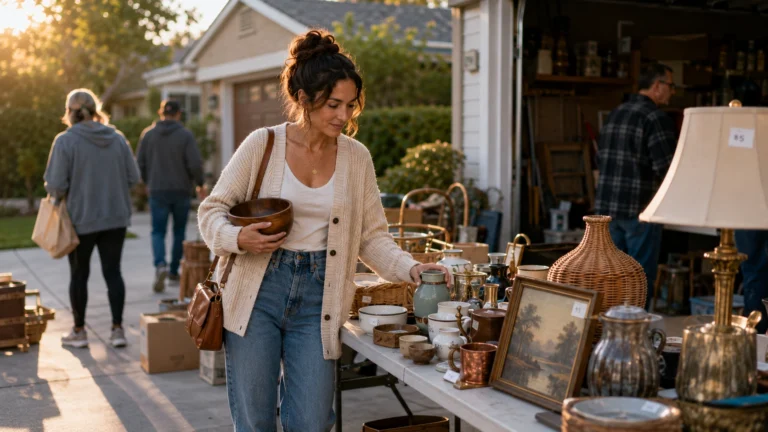

I used to walk into thrift stores and leave with nothing because I never knew what I was actually looking for. One Saturday morning I picked up a jacket that felt unusually heavy and solid in my hands, checked the brand on my phone while standing in the aisle, and discovered it was worth $140 resale. I had been walking past items exactly like that for years without ever stopping to look closer, and the only thing separating me from that $140 was thirty seconds and a phone with an internet connection. That morning was the beginning of a side income that now consistently generates between $800 and $1,200 per month from thrift store flipping, and it started with understanding one thing that most people never learn: the thrift store is not a place to browse, it is a marketplace of undervalued assets waiting for someone who knows what to look for.
The global resale market is currently valued at $350 billion and growing faster than traditional retail in almost every category. What that number means practically for a woman with a few free hours on a weekend is that there is consistent, real demand for the items sitting on thrift store shelves right now, and the gap between what those items cost at a thrift store and what they sell for online is wide enough to build a genuine income stream. You do not need a background in fashion, antiques, or business. You need a system, a phone, and the willingness to learn a handful of reliable signals that tell you when something is worth picking up.
Why Most Women Walk Past Valuable Items Every Single Week
The single most common mistake new resellers make is relying entirely on brand recognition to identify value. If you can only spot Lululemon because you already own Lululemon, you are going to miss the majority of high-value items on the rack because most of them do not announce themselves with visible logos or familiar names. Professional resellers operate on a completely different principle called sensory sourcing, and it is a skill that any woman can develop within a few trips once she knows it exists.
Sensory sourcing means evaluating an item with your hands before your eyes. High-end manufacturing leaves a physical signature that mass-market fast fashion cannot replicate, and that signature is detectable through weight, texture, and hardware quality long before you find a brand tag. A heavyweight wool fabric, solid metal hardware on a zipper, or a thick rubber Vibram sole on a boot are all immediate indicators of a retail price floor that makes the item worth investigating further. The brand name on these items is often hidden deliberately, printed on a zipper tab, stitched inside a collar, or embossed on a sole, because the brands that make genuinely expensive things rarely need to shout about it. Learning to trust your hands over your eyes is the fastest way to stop walking past the items that other shoppers, including thrift store staff, consistently overlook.
The Categories Where Thrift Store Flipping Pays Best
Not every category in a thrift store offers the same return on your time, and understanding which sections to prioritise makes every trip significantly more efficient. Clothing is where most moms find early success because they already have intuitive knowledge of what quality feels like in fabric, and the brand landscape in women’s and children’s wear is easier to learn quickly than electronics or collectibles. Within clothing, the most reliable high-margin finds fall into three specific areas that experienced flippers return to on every single visit.
Athleisure and outdoor brands hold their resale value better than almost any other clothing category because their customer base is large, loyal, and actively searching the secondary market. Lululemon pieces in excellent condition consistently sell for 70 to 80 percent of their retail price, and the quickest way to identify them on a crowded rack is to look for the distinctive three-stripe pattern on the fabric before searching for a logo. Patagonia and North Face in children’s sizes are particularly strong performers because parents who want quality outdoor gear for growing kids turn to the resale market specifically to avoid paying full retail prices. A Patagonia puffer in a kids’ size found for four dollars and sold for forty is a realistic transaction that happens regularly for women who know to look for it.
How to Spot High-Value Items in Every Section of the Store
The clothing rack is not the only place where thrift store flipping generates reliable income, and some of the most consistent margins come from sections that most shoppers walk straight past. The kitchen and hard goods area is where patient sourcing pays off in ways that have nothing to do with fashion knowledge, and several specific items appear regularly enough to be worth checking every single visit.
Vintage Pyrex in patterned designs is one of the most dependable thrift store flips available. The Butterprint pattern in particular has a devoted collector base, and individual pieces purchased for two or three dollars routinely sell for twenty to sixty dollars on eBay and Mercari. Vitamix blenders and KitchenAid stand mixers appear in thrift stores more often than most people expect, donated by people who upgraded or never used them, and even older models of both brands hold strong resale value. A Vitamix found for thirty dollars has a realistic resale price of one hundred and fifty dollars or more, making it one of the highest single-item returns available in the hard goods category. The craft section is another area that experienced flippers check specifically, because sealed or vintage counted cross-stitch kits have a small but highly motivated collector base willing to pay thirty-five to eighty dollars for the right find.
The Collectibles You Need to Know Before Your Next Trip
Studio Ghibli merchandise is one of the most consistently undervalued categories in thrift stores because most people who donate it do not recognise what they have, and most shoppers who encounter it do not recognise it either. Items featuring characters from My Neighbor Totoro have an enormous and active collector base, and a single wool Totoro wall clock has sold for over $750 on the secondary market. Loungefly bags featuring Ghibli characters regularly sell for $150 or more. These items appear in toy sections, home goods areas, and on general shelving with no particular organisation, which means the reseller who recognises them walks away with items that other shoppers handled and set back down without understanding their value.
The Practical System That Makes Every Trip Profitable
Turning thrift store visits into consistent income requires a simple operating framework that removes the guesswork from every purchasing decision. The most important rule in professional reselling is called the rule of three, and it is the single filter that separates profitable trips from wasted ones. Only purchase an item if you can sell it for at least three times what you paid for it, because that ratio creates enough margin to absorb platform fees, shipping costs, and the occasional item that takes longer to sell than expected. An item that costs four dollars needs a realistic sold price of at least twelve to meet this threshold, and anything below that ratio is better left on the shelf regardless of how interesting it seems.
Before buying anything, open eBay or Mercari on your phone and check the sold listings specifically, not the active listings. Active listings show what sellers are asking. Sold listings show what buyers are actually paying, and the difference between those two numbers is often significant. A quick search on sold listings takes under a minute in the aisle and eliminates almost all of the guesswork from the purchasing decision. When you are evaluating an item without a visible brand, search by its physical description: the material, the style, the country of manufacture, and any distinguishing details like a sole brand or construction method. The Made In tag is often more valuable information than the brand tag in vintage and no-logo pieces, because items manufactured in Italy, England, or the United States carry a quality signal that drives resale value independently of the brand name.
Where to Sell and How to Maximise What You Keep
Choosing the right platform for each item is a decision that directly affects how much of your sale price you actually keep, and different platforms serve different types of inventory more effectively. eBay remains the strongest platform for electronics, standard branded apparel, and collectibles with a broad buyer base, because its search volume and global reach give items the widest possible exposure. Depop performs better for items where aesthetic and style are the primary selling point, particularly vintage pieces, Y2K era clothing, and anything with a distinctive visual character that appeals to younger buyers. The platform fee structure on Depop makes it more profitable than platforms charging a flat twenty percent cut on many transactions, with a typical sixty dollar sale netting approximately fifty-six dollars after processing fees.
Your sourcing location is as important as your sourcing strategy, and thrift stores in affluent neighbourhoods consistently yield higher quality donations than those in areas with lower average household incomes. The reasoning is straightforward: people donate from their own wardrobes and households, and households with higher disposable incomes own more of the brands and items that carry strong resale value. Shopping on weekday mornings rather than weekends gives you first access to newly stocked inventory before competition increases, and the difference between Monday morning and Saturday afternoon in a well-located thrift store is significant enough to justify adjusting your schedule when possible.
What This Actually Looks Like After Three Months of Doing It
The realistic income trajectory for a woman starting thrift store flipping from scratch looks different from the version most social media accounts show, and understanding the honest timeline prevents the discouragement that stops most beginners before they reach the point where the system starts working consistently. The first month is primarily education. You are building pattern recognition, learning which brands and items appear regularly in your local stores, and developing the sensory instincts that make sourcing faster and more accurate over time. Income in the first month is typically modest, often between fifty and two hundred dollars, and that is normal and expected rather than a sign that the approach is not working.
By the third month, the pattern recognition that felt effortful and uncertain in the beginning becomes faster and more automatic, and the combination of accumulated inventory, growing platform feedback, and refined sourcing instincts produces a noticeably different result. Women who start with a realistic framework and consistent weekly trips commonly reach five hundred to one thousand dollars per month by the end of their third month, working an average of four to six hours per week across sourcing, photography, listing, and shipping. The resale market rewards persistence and accumulated knowledge in a way that few other flexible income streams do, and the skills you build in month one compound into month three in ways that make the early slow period worth pushing through. Thrift store flipping for beginners feels uncertain at first because every skill does, and the women generating four figures monthly from it started exactly where you are now.